Calm Comfort: A Temple Stay at a Zenkoji Shukubo
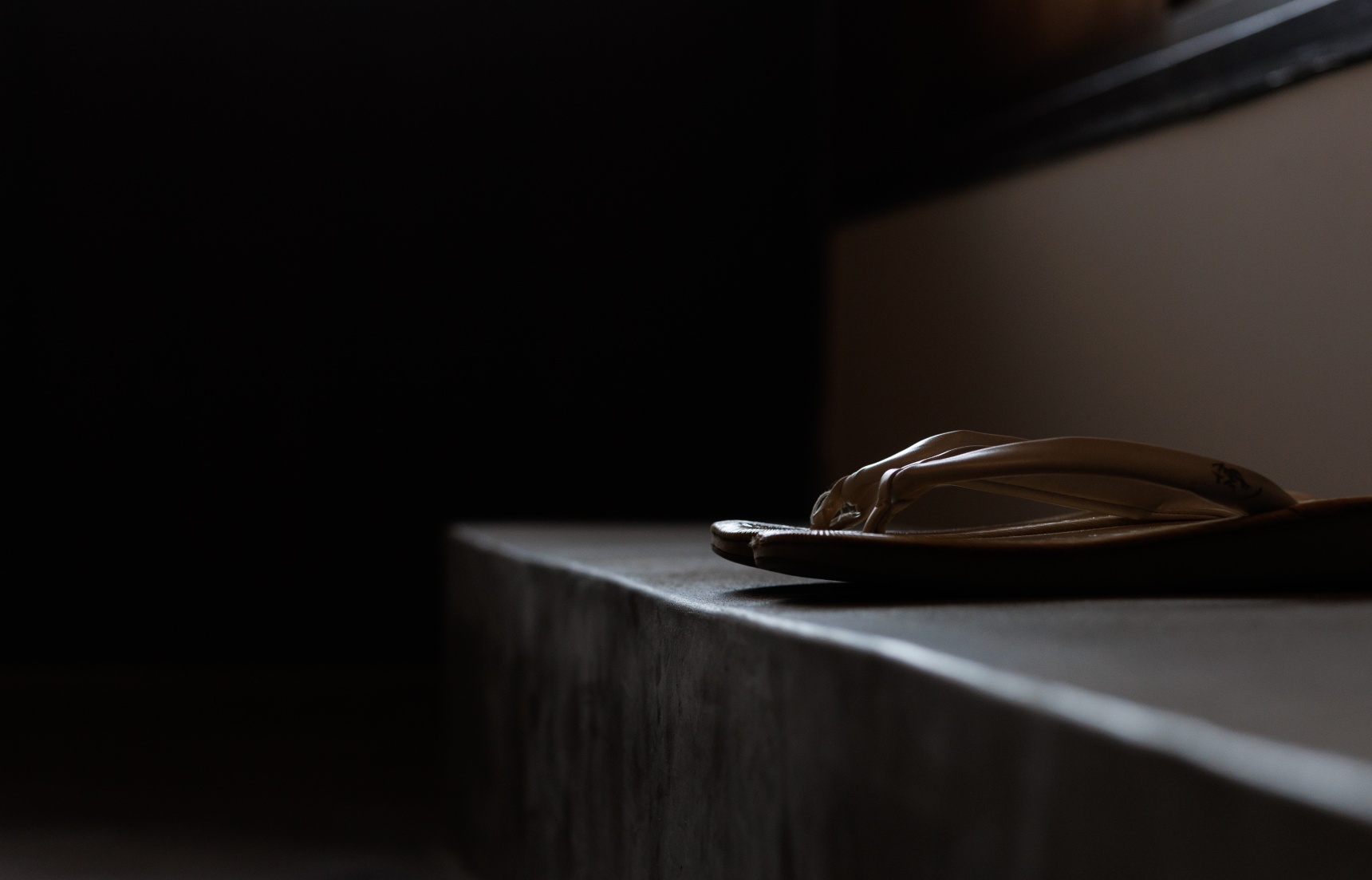
A shukubo stay is a departure from the normal tourist current into something slower--the quiet routines of a living Buddhist temple. (photo by APITS art photography)
Certain temples around Japan offer accommodation to pilgrims and other guests who would like to experience a slower, quieter encounter with the country's spiritual heritage. Here, a description of a stay at Rengein, one of Zenkoji Temple's shukubo, in the city of Nagano.
By Gregory Starr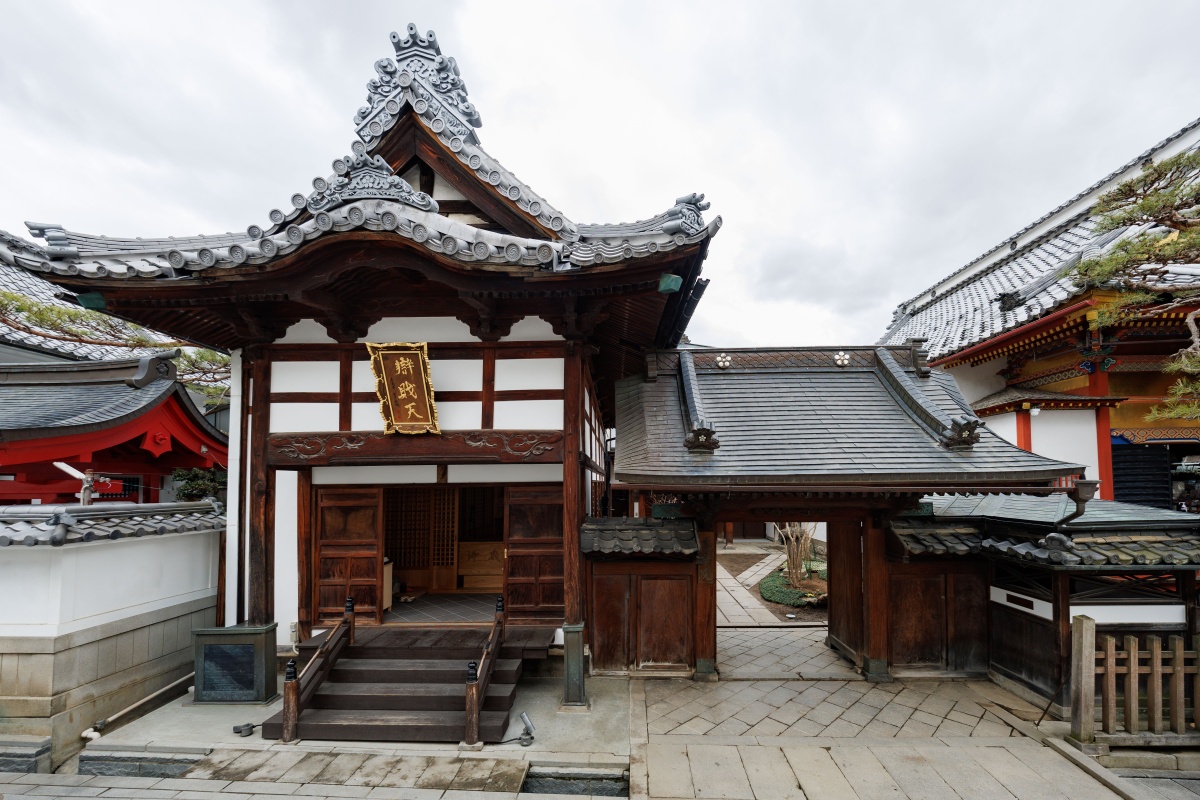
Rengein Temple, a shukubo in the city of Nagano, part of the Zenkoji temple complex. The hondo worship hall is on the left; the entrance gate to the temple accommodations on the right. (photo by APITS art photography)
The warmth of the futon is hard to leave at 5:30 am on a February morning, but we must if we want to attend the highlight of the day at Nagano’s Zenkoji Temple. The o-asaji—a daily morning prayer ceremony that has taken place without interruption for hundreds of years—waits for no one.
We’re staying at Rengein, a small auxiliary temple that operates as a shukubo, or temple lodging, for pilgrims and visitors who have made their way here. The grounds of Zenkoji cover a vast area of temple-related buildings, including 39 of these auxiliary temples. Rengein sits on a quiet back street just off of the main approach, and this morning we are joining the priest on his way to the ceremony.
The Walk to Morning Prayer
(photo by APITS art photography)
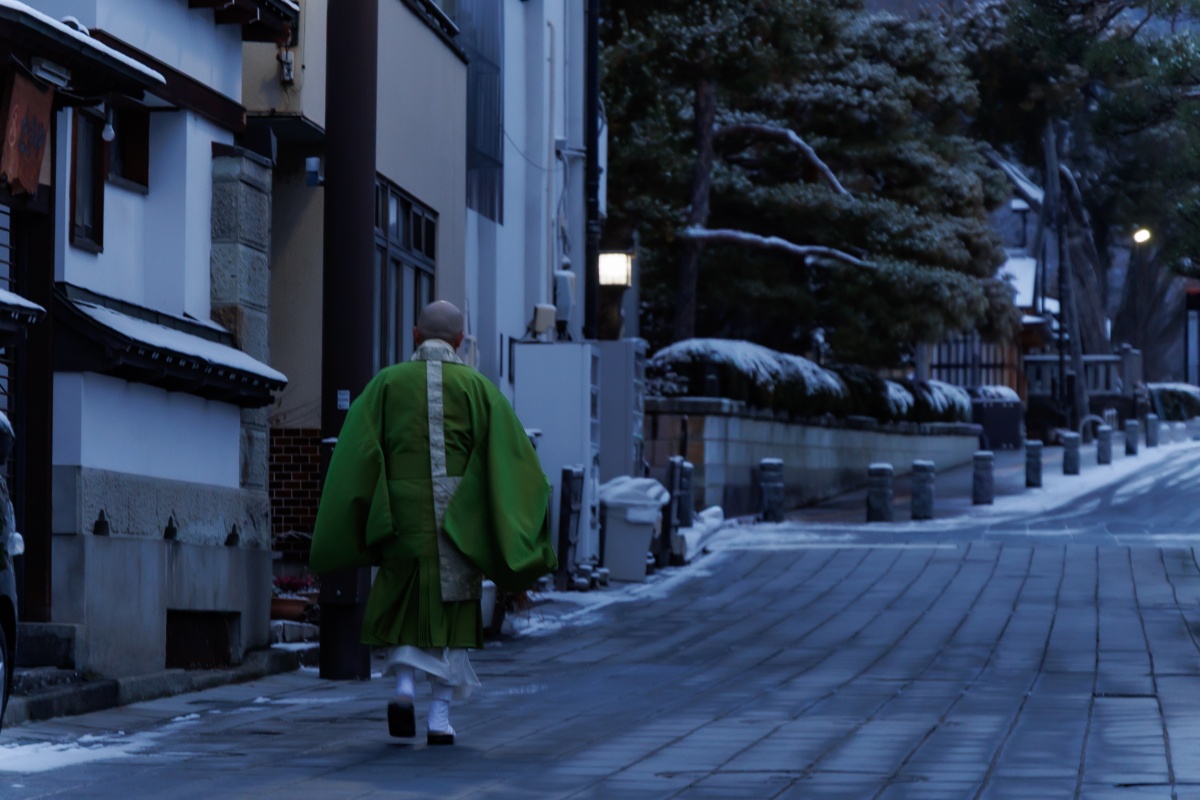
It is still dark when we gather in front of the gate. We can see our breath as we greet priest Sekiguchi Jien and the other participants. Dressed in his simple yet elegant robes despite the cold, Sekiguchi leads us through the streets—past early risers jogging, sweeping the walk, going about their morning chores—on a tour of Zenkoji’s most important structures. As he points out landmarks and architectural features, he shares the history of this ancient pilgrimage site. The temple dates back to the seventh century, when it enshrined a figure of the Amida Buddha brought from the Asian continent, thought to be the oldest such image in Japan.
What also makes Zenkoji unique is its non-sectarian attitude: run jointly by the Tendai and Jodo Buddhist sects—represented by an abbot and an abbess respectively—it has always opened its doors to worshipers regardless of gender or religious background.
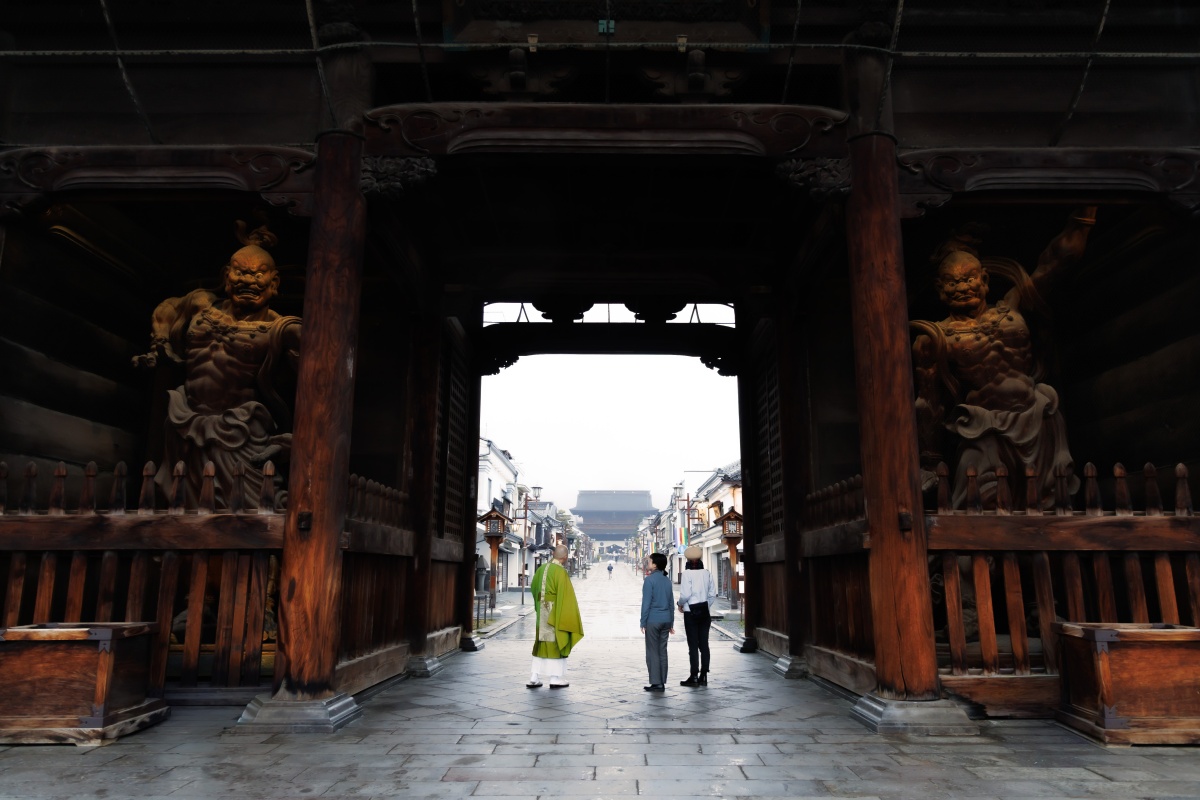
The guardian statues of Niomon Gate have seen untold numbers of pilgrims pass between them to reach Zenkoji, marking the end of one of Japan's most revered pilgrimages. (photo by APITS art photography)
As the temple bells mark the beginning of the day, we make our way to the Niomon Gate, the first of two that stand along the long stone-paved approach. Within its pillars stand a fierce pair of guardian statues, Agyo and Ungyo, representing the beginning and end of all things. As Zenkoji is one of Japan’s major pilgrimage sites, people would travel from all over Japan to pass through this gate and worship here. Ancient guideposts pointing the way here have been found hundreds of kilometers away.
We continue up the approach through the nakamise shopping street. Souvenir shops, shops selling religious items, restaurants, and cafes line both sides, though only a few are open at this hour—including, incongruously, a Starbucks designed to blend into its surroundings. We walk over some of the 7,777 stones underfoot, a long-ago donation from a wealthy merchant who made the pilgrimage in mourning after accidentally killing his son. It is the kind of detail that stops you mid-step.
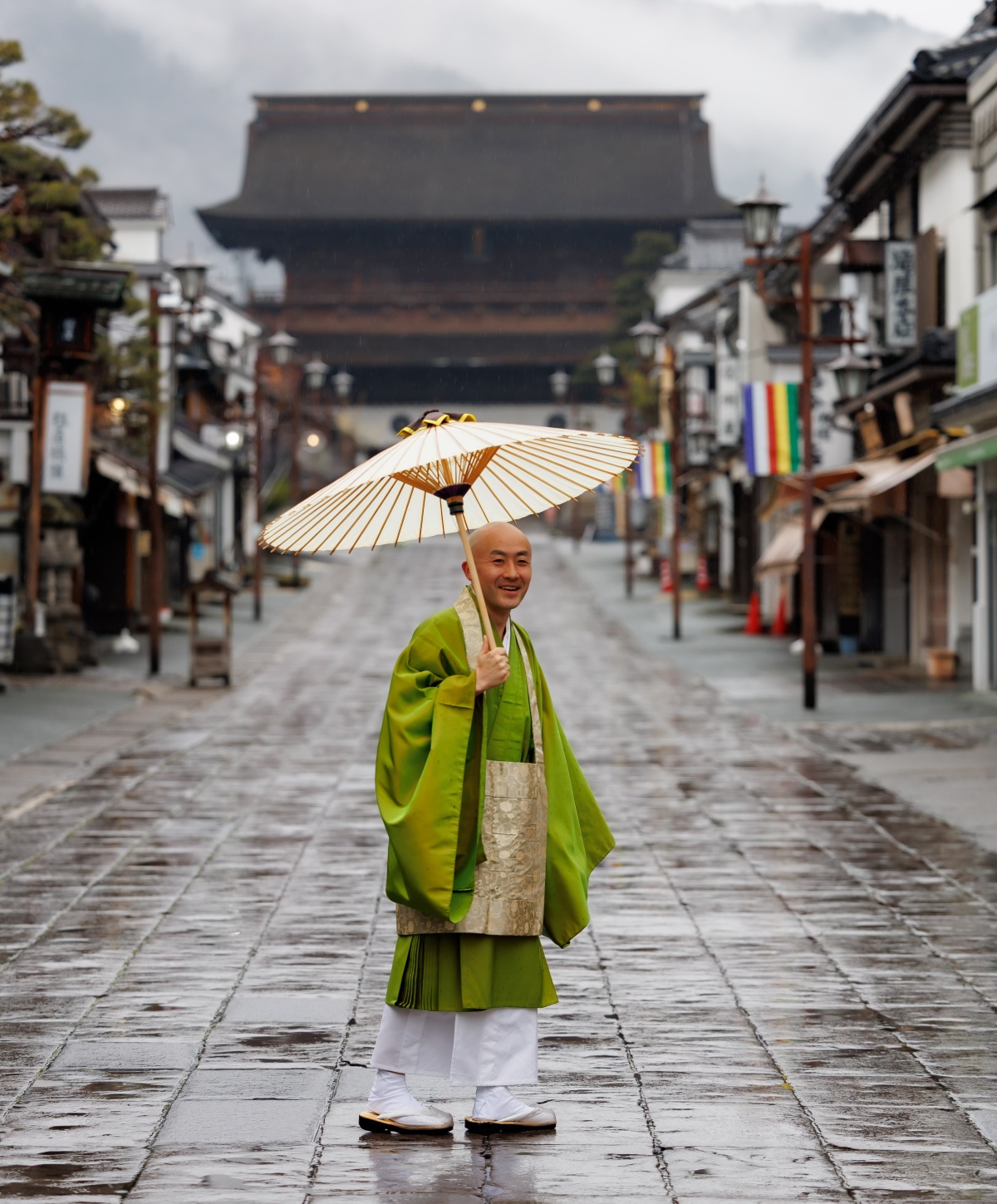
Rengein's priest, Sekiguchi Jien, on the approach road with the Sanmon Gate in the background. The shopping street leading to the temple is quiet in the early morning before the o-asaji ceremony, but things get lively later in the day (below). (photos by APITS art photography)
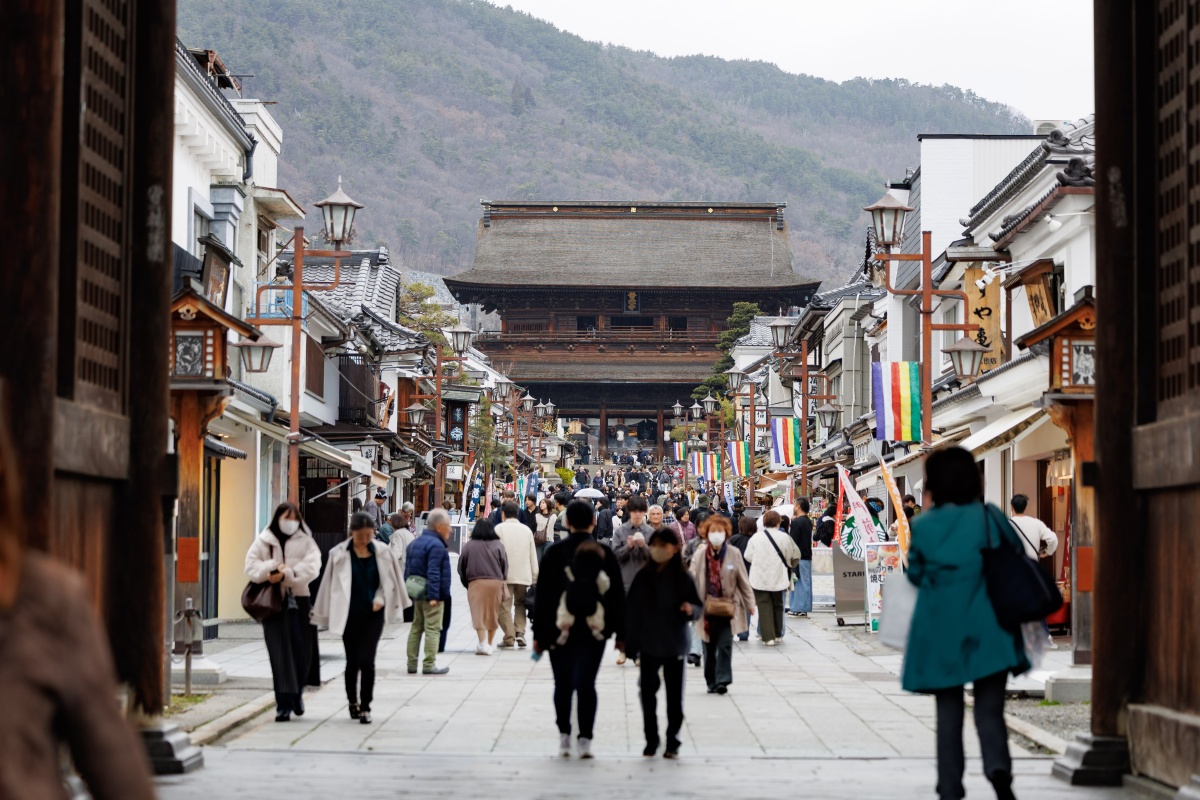
The Sanmon Gate at the entrance to the inner grounds is even more impressive. Built in 1750, and standing some 20 meters tall, it bears a large plaque inscribed with the temple’s name. Within the brushstrokes, Sekiguchi tells us, five doves have been worked into the calligraphy by the artist—and we find them after a moment of looking. Visitors are able to climb to the second floor for a small fee, with views of the sprawling city of Nagano in one direction, and the main hall—the hondo—to the north.
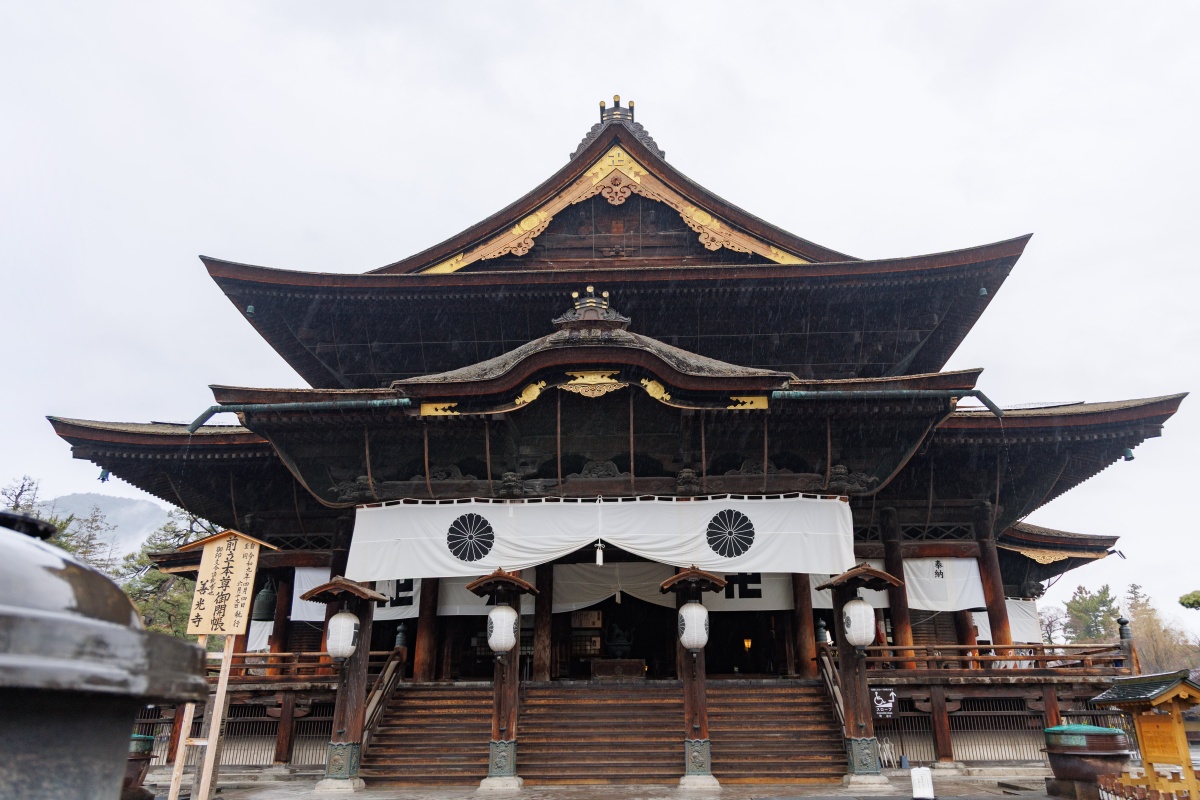
The main hall of Zenkoji, where the daily o-asaji ceremony is held, is one of the largest wooden structures in Japan, some 29 meters at its highest point. It is designated a National Treasure. (photo by APITS art photography)
The massive main hall is a reminder of just how seriously Zenkoji has been taken across the centuries. The current version, completed in 1707, is one of the largest wooden buildings in eastern Japan. It was not always this size; the hall burned down and was rebuilt multiple times over the centuries. The building standing today is the twelfth iteration—grown larger over time, to accommodate the enormous crowds that pilgrimage culture brought to Nagano.
There is activity on the approach road, and we make our way down in time to join the line of people kneeling as the abbot’s retinue makes its way toward the temple. Chanting the words “Namu amida butsu”—“I entrust myself to Amida Buddha”—the abbot touches each of our bowed heads with prayer beads as he passes.
The O-Asaji: A Ceremony Unchanged for Centuries
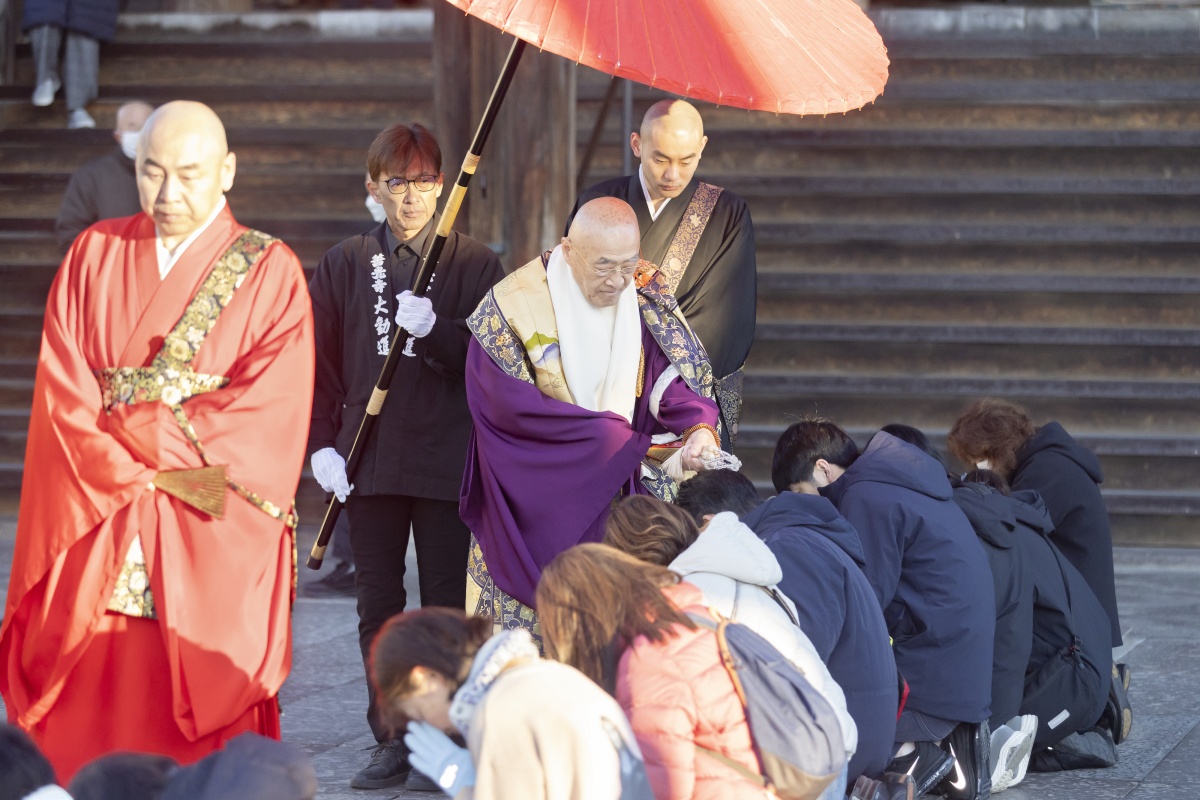
The beginning of the procession as the abbot makes his way to the morning ceremony. People kneel along the route, waiting for his blessing.
Sekiguchi leads us quickly into the inner sanctuary of the temple, where a vast room of tatami mats awaits worshipers. We take our places near the front as the temple’s priests file in and settle before the altar. Like everything with Zenkoji, the rules here are relaxed; some people sit in the formal seiza position, kneeling upright on their heels; my damaged knees require me to sit more comfortably, as many choose to do.
Although the figure of the deity enshrined here has not been seen since the seventh century—the image is considered so sacred that it remains permanently hidden, viewable by no living person—its presence seems to fill the room. The priests chant sutras in a low, steady rhythm, the hypnotic sound rising and falling like breath, punctuated by the deep resonance of a temple drum. Incense drifts through the air. Around me, some visitors sit with eyes closed; others follow along with printed sutras; a few simply take it in. There is no single correct way to participate, which feels entirely in keeping with Zenkoji's spirit.
The Tendai ceremony is repeated by the Jodo sect’s monks, and lasts less than an hour. When it ends, the priests file out as quietly as they entered, and the room slowly empties. Outside, the sky has lightened and the first sunlight is beginning to catch the eaves of the main hall. The stone approach, so solemn earlier, looks different now—busier and more familiar. A few pigeons have appeared around the incense burner in the courtyard.
Sekiguchi gathers our small group and leads us back through the gates. The morning is still cold, but the walk back feels lighter than the walk in.
Back at Our Temple Lodgings
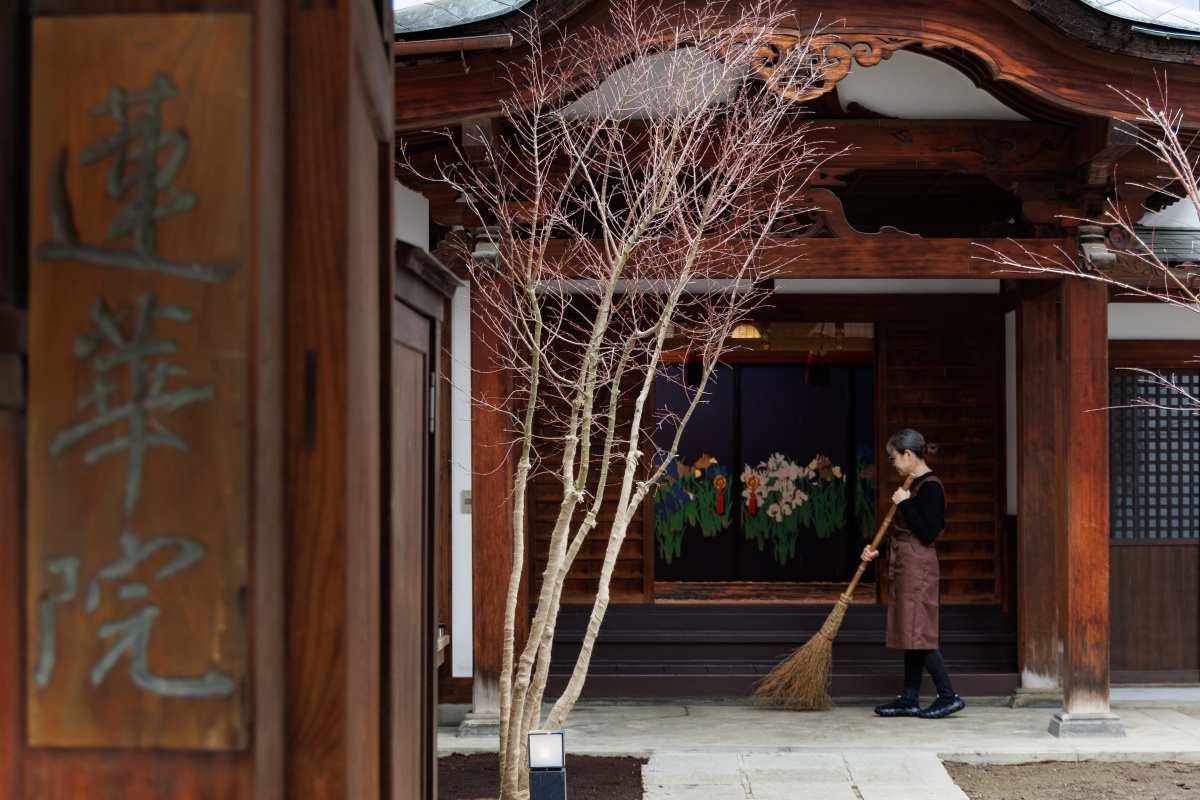
The temple grounds at Rengein are kept spotless, as is the interior. The leaves (or lack of them) of the trees in the small garden mark the season. The sliding doors visible in the temple feature a vivid painting of irises. (photo by APITS art photography)
In the entryway of Rengein, as we remove our shoes, the day feels like it is just beginning — which, in a sense, it is. A shukubo stay runs on a different clock than a regular inn. The early rising is not an inconvenience but the point; the morning ceremony is the experience around which everything else is arranged.
Shukubo have existed at pilgrimage sites across Japan for centuries, originally offering shelter to monks and lay worshippers making long journeys on foot. Today they range from the austere to the surprisingly luxurious, serving as a base for pilgrims and tourists alike. But what they share is a connection to the religious life of the site they serve. Staying at Rengein is less like checking into a hotel near Zenkoji and more like being briefly folded into the world of the temple itself. It is a functioning temple as well as a lodging, and its prayer hall—intimate in scale but carefully tended—is open to guests, visitors, and passersby throughout the day.
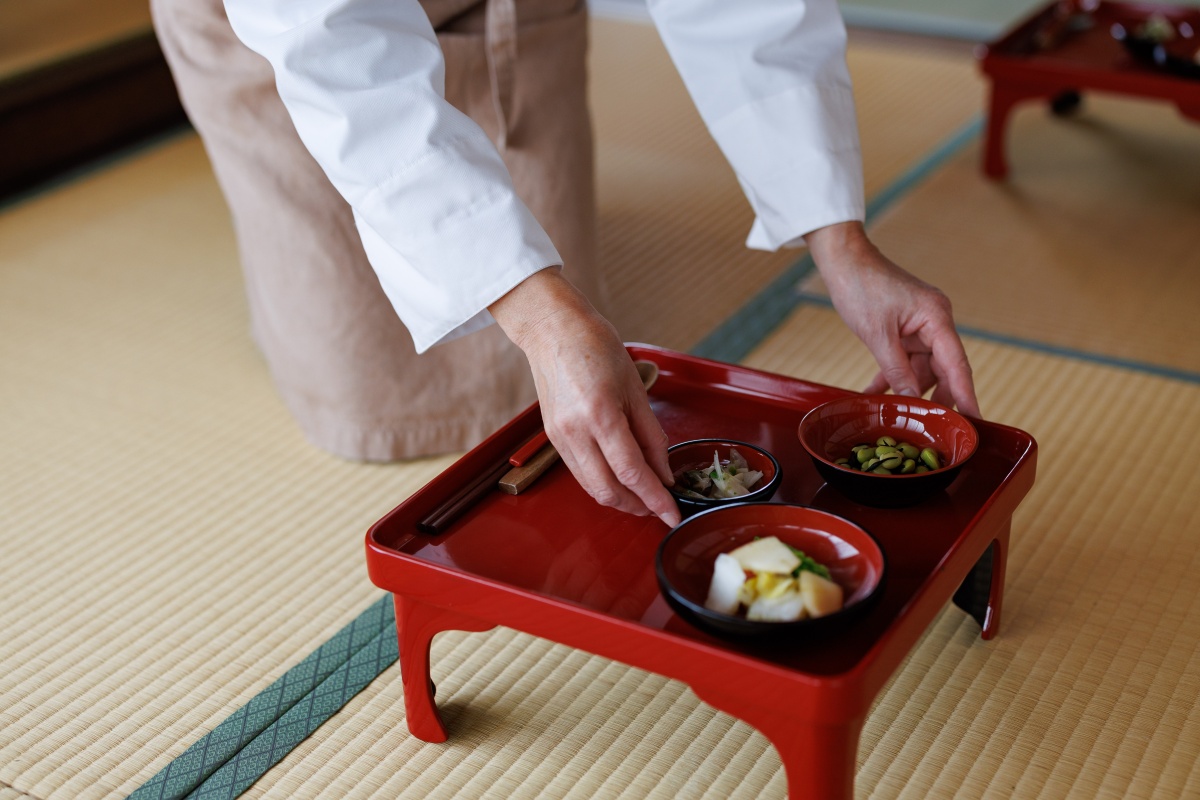
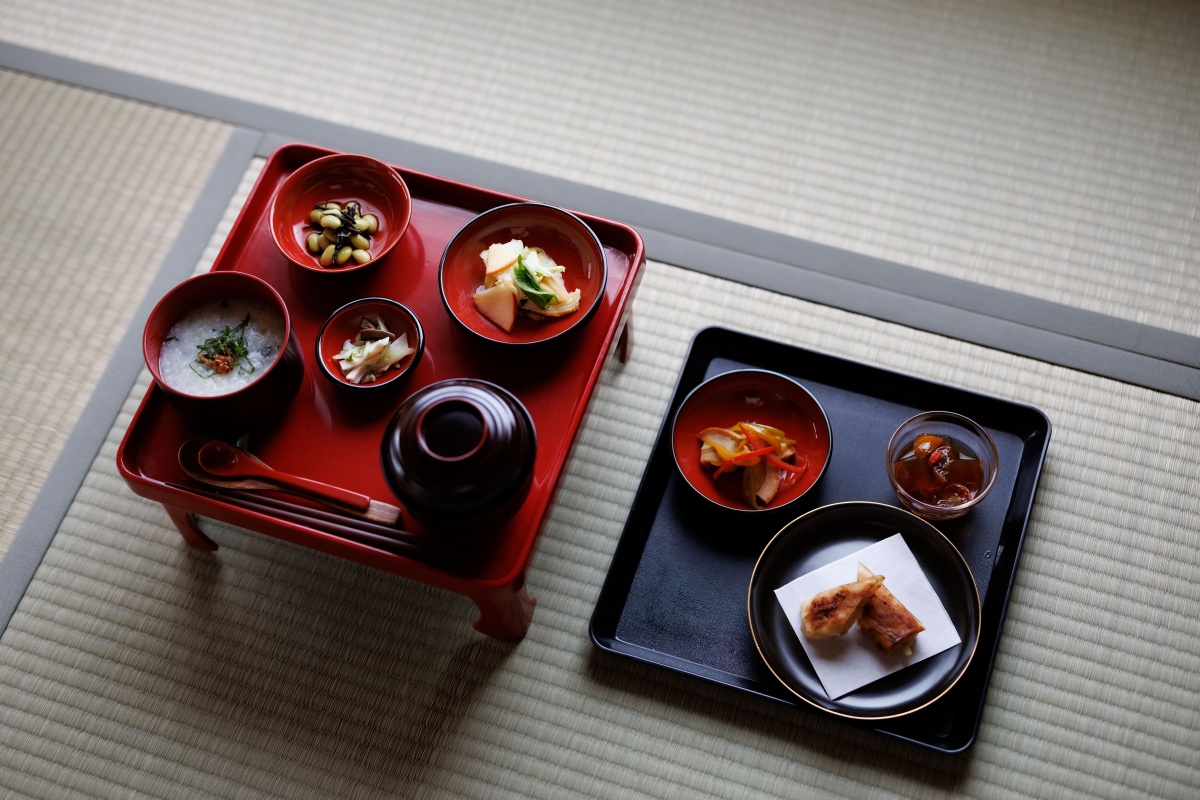
The shojin ryori breakfast is served in a communal room (above). The traditional Buddhist vegetarian meal is simple, understated, with a variety of dishes (below). (photos by APITS art photography)
Rengein is a small, quietly understated establishment—wooden corridors, paper screens, a garden visible from a common area, two baths for use on a first come, first serve basis. Our rooms are traditional Japanese style: futons laid out on tatami, a low table, a tokonoma alcove. It is not luxury in any conventional sense, but there is a quality of care in the details that makes it feel considered rather than spare.
We shed our heavy clothing in our room and head up to a communal room for breakfast. The meal is shojin ryori, the traditional Buddhist vegetarian cuisine developed in temple kitchens. It arrives as an arrangement of small dishes: miso soup, pickles, simmered vegetables, tofu, rice. Nothing is flashy, but each dish is carefully prepared, and the cumulative effect is of a meal that is modest and quietly satisfying. After the cold of the early morning and the long sit in the sanctuary, it is exactly what the body wants.
Buddhist Hospitality and a Restored Tranquility
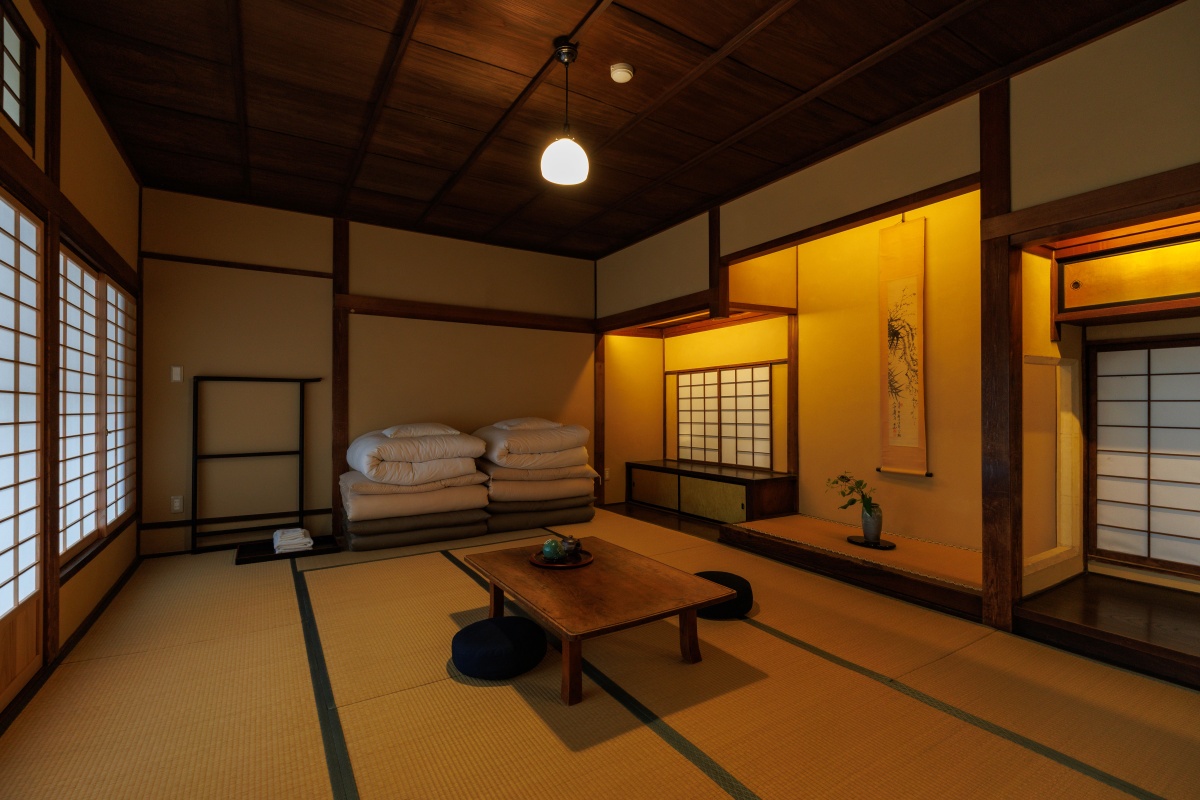
The rooms are simple, traditional, Japanese style, with futon bedding, shoji doors and a tokonoma alcove. (photo by APITS art photography)
Priest Sekiguchi joins us, and the conversation comes easy — questions about the temple, about his life there, about what draws people to Zenkoji. He has the manner of someone completely at home in his surroundings, which is its own kind of pleasure to be around. This, too, is part of what a shukubo offers that a standard hotel doesn’t: a degree of access, however brief, to the people and rhythms of a living religious community.
By mid-morning, when most tourists are just beginning to arrive at the temple gates, we have already attended a ceremony that has been performed every single day for centuries, walked the approach in the near dark, eaten a Buddhist breakfast, and had a conversation with a Buddhist priest over tea. It is barely 9 a.m.
After breakfast, we’re in no hurry to leave, and use our time to experience Rengein itself. The building has been recently restored, and the work shows—the woodwork is clean and precise, the sliding doors move smoothly, the corridors have the quiet solidity of something built to last. And while the aesthetic remains true to the traditions of temple architecture, a few thoughtful modern additions make the stay more comfortable than the word "pilgrimage" might suggest: some rooms have private toilets, all have heating and cooling.
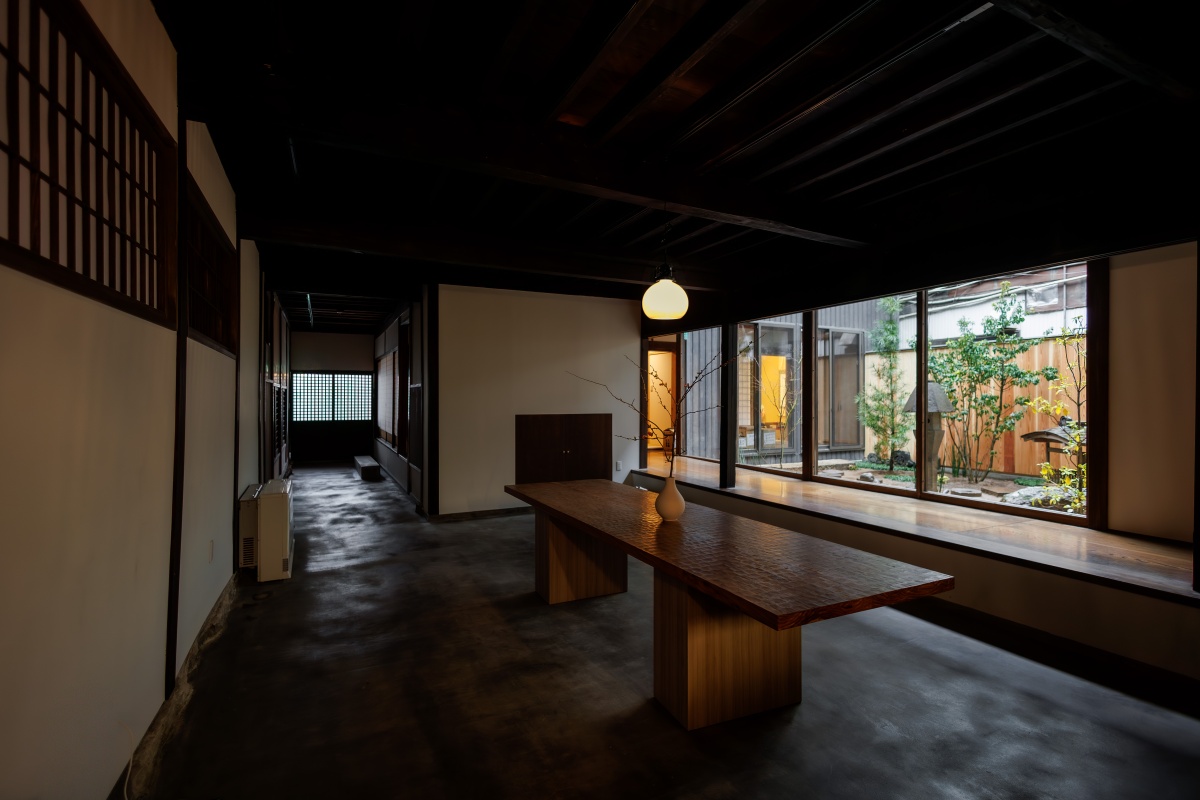
The common room is elegant in its simplicity, with an inner garden on the other side of the corridor. (photo by APITS art photography)
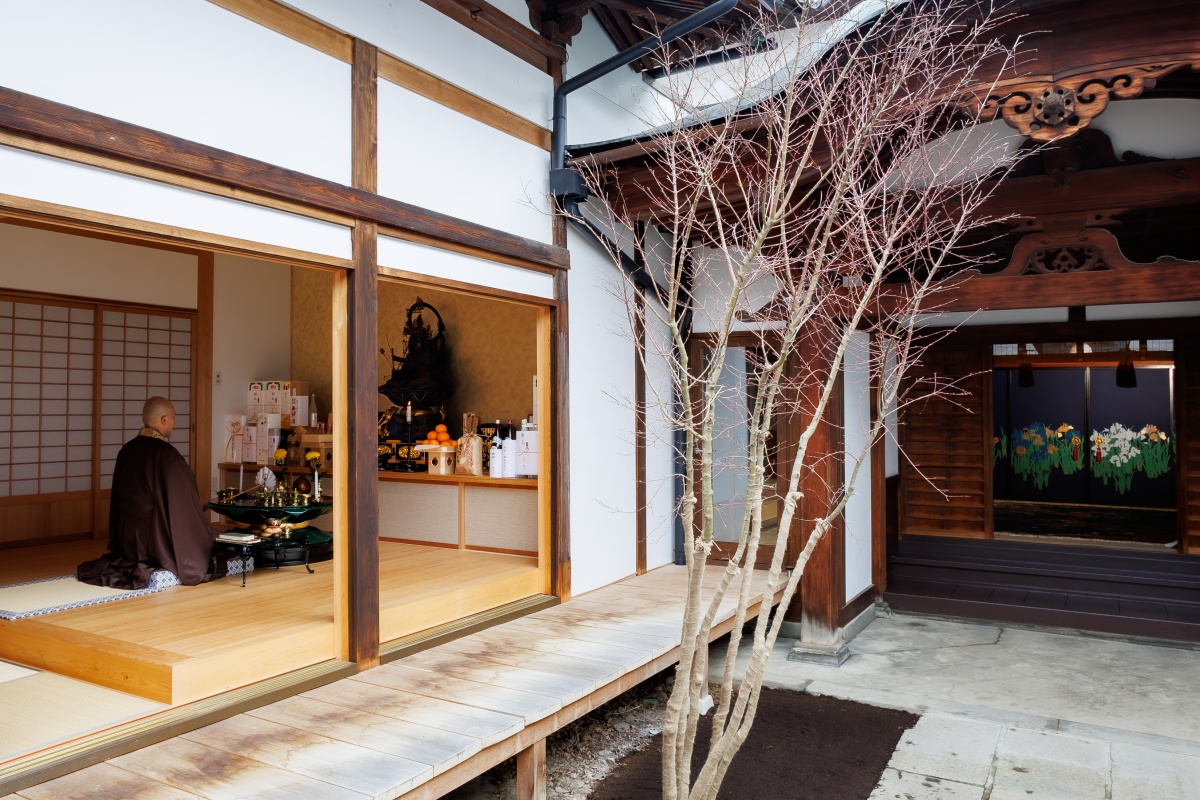
Rengein is an active temple, where the spiritual life continues along with the hosting of pilgrims and other visitors. The principal deity figure is the goddess Benzaiten, venerated for prosperity and success, and associated with arts and music. (photo by APITS art photography)
None of this feels out of place. If anything, it reinforces the sense that Rengein is a living establishment, not a museum piece—a place that takes its guests seriously while remaining grounded in the simplicity and restraint that define a proper shukubo. The tatami, the tokonoma, the unhurried pace, the smell of incense lingering in the corridors—these things remain unchanged, and they are what we will remember.
Zenkoji draws six to eight million visitors a year. Most will walk the approach, see the main hall, and move on. A stay at a shukubo like Rengein offers something different: a slower, quieter, more layered encounter with a place that has been at the center of Japanese religious life for over a thousand years. It is, in the truest sense, a different kind of trip.
(photo by APITS art photography)