

NEWoMan TAKANAWA MIMURE: Where Tokyo’s Food Future Takes Shape
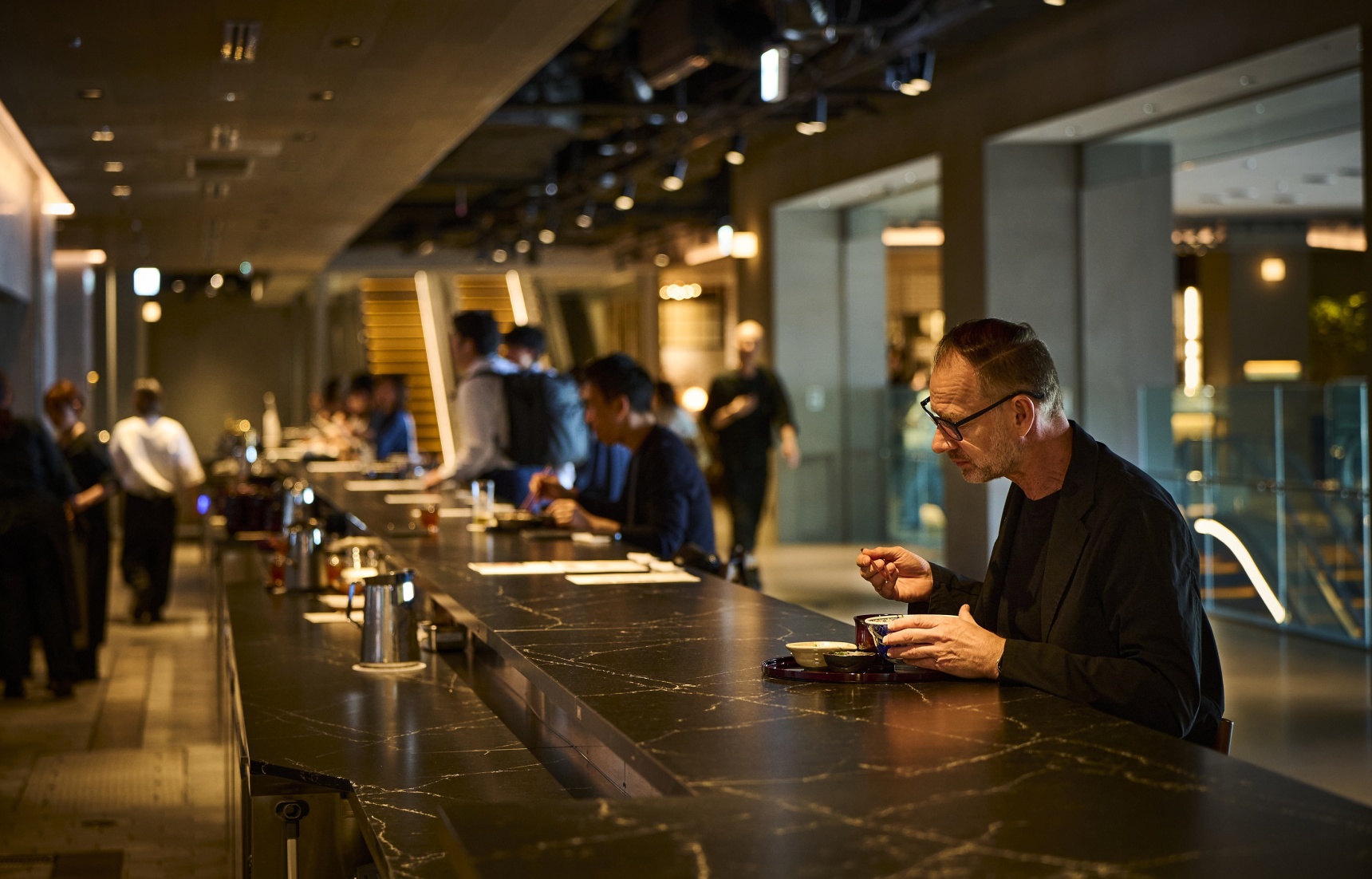
Get to Kikiya early and set up your day with their incredible wagyu beef bowl.
On two floors of the NEWoMan TAKANAWA MIMURE complex in Tokyo’s newest station district, you’ll find wagyu beef bowls, a coffee brand expanding its reach, a farm that uses fish waste to grow salad leaves, and sake from the best of Japan’s young brewers.
By Andrew Lee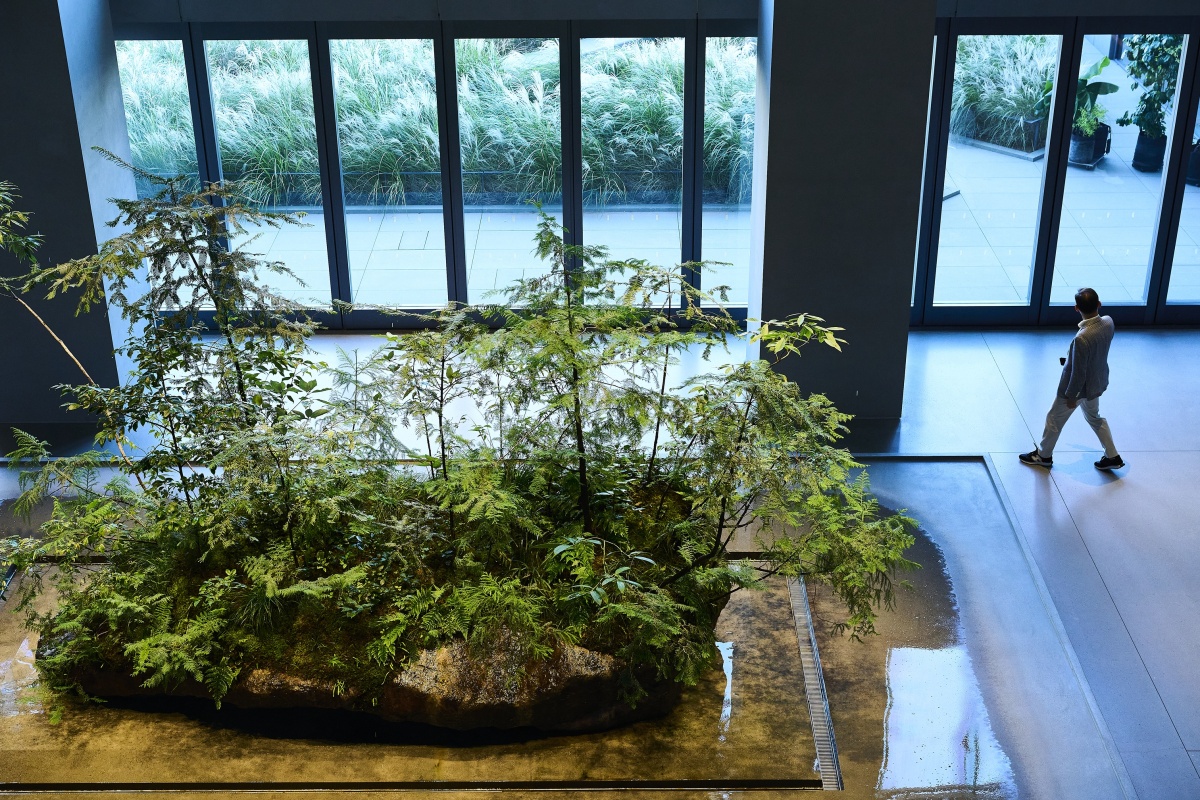
Each hour, rain falls from the ceiling onto Suigan no Oka (green rock hill), where trees and moss grow around a rock 5 meters across.
I arrived at JR Takanawa Gateway Station just before eleven on a weekday morning. I was hungry and headed to NEWoMan TAKANAWA MIMURE, a new gourmet area inside Takanawa Gateway City.
The development by JR East lies just next to Takanawa Gateway Station, the newest station on the Yamanote Line.
NEWoMan Takanawa is the district’s shopping center; at about 180 shops it is the largest in the history of its operator, Lumine. MIMURE, which is its food quarter, fills the second and third floors of THE LINKPILLAR 2 building.
The name comes from a blend of two Japanese words, mirai (future) and mureru (to gather in a group), and it’s a good match, as it is unlike any food court I have ever seen. The space is wide and dark, finished in grey, black, and dark wood. Each hour, rain falls from the ceiling onto a space beside the escalators where trees and moss grow around a huge rock some five meters across. A bulbous cluster of lightbulbs illuminates a central open space, while low ambient light filters in from large windows, beyond which Shinkansen and Yamanote Line trains race by.
MIMURE hints at what urban spaces of the future will be like, and the people who use the common areas seem to like them as quiet places where they can relax. With 22 shops, it is also a place to gather with friends or family for a meal, coffee, or a drink. I spent a day visiting six of the shops.
Gyudon Kikiya: elevated gyudon
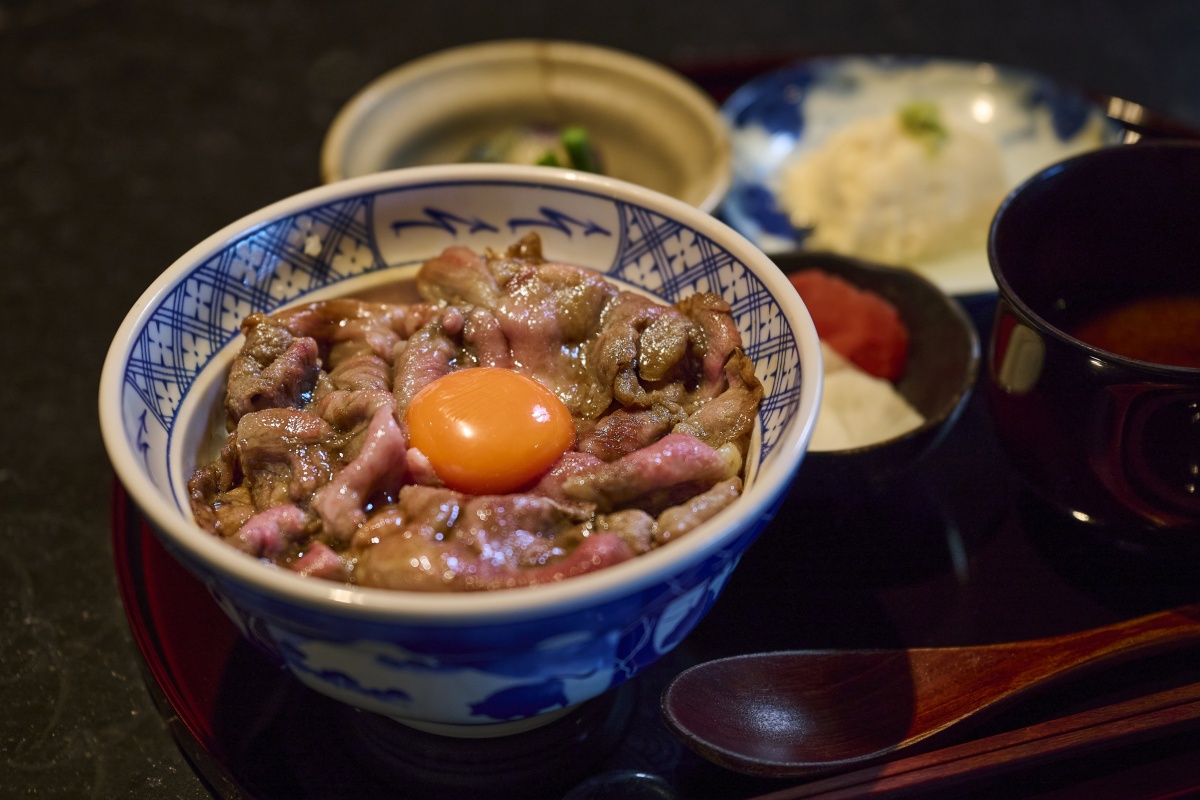
The Hitachi beef set at Kikiya, topped with the deep orange yolk of a Jurokudai Makka-ran egg from Yomogita, Aomori Prefecture. I was told to eat the beef and sauce on their own first and mix in the yolk afterwards.
In Japan, gyudon (beef bowl) is known as a quick, cheap meal, and the shops that sell it are rarely stylish. Kikiya sets out to change that. Its 60 seats line a single marble-topped counter about 50 meters long, wrapped around three sides of an open kitchen, so every diner can watch the chefs. The beef is A5-grade wagyu chosen from across Japan, including Hitachi and Kobe.
I chose the Hitachi beef set for ¥2,700. The beef comes from Japanese Black cattle raised in Ibaraki Prefecture for about 30 months by designated farmers, and it is known for its fine-grain and moderate fat marbling. Mine was tender and cooked exactly right, with just enough fat to carry the flavor. In the center sat a deep orange raw egg yolk. The egg used is a Jurokudai Makka-ran, from Sakamoto Yokei in Yomogita, Aomori Prefecture, where paprika in the hens’ feed gives the yolk its color. I suggest tasting the beef and sauce on their own first and mix in the yolk afterwards to experience the beef bowl’s two levels of flavor.
The warishita, the sweet-savoury sauce that dresses the beef, is Kikiya’s own. It is made from Sekigahara tamari soy sauce, which brings depth, with garlic and fruit added to round it out. I was told it took a lot of trial and error to make a sauce that would bring out the taste of the wagyu without getting in its way. But it worked.
The rice is Tsukiakari, a large, glossy grain with a soft, chewy bite. It is cooked in hagama, traditional iron rice pots, that sit in the kitchen with their lids on within sight of the counter. All the rice comes out of them steaming.
The beef was tender, the sauce tasty, and the egg and rice just as good. The tofu, pickles, and other small side dishes were equally good, and are seasoned lightly on purpose, as the beef is the star.
OGAWA COFFEE LABORATORY
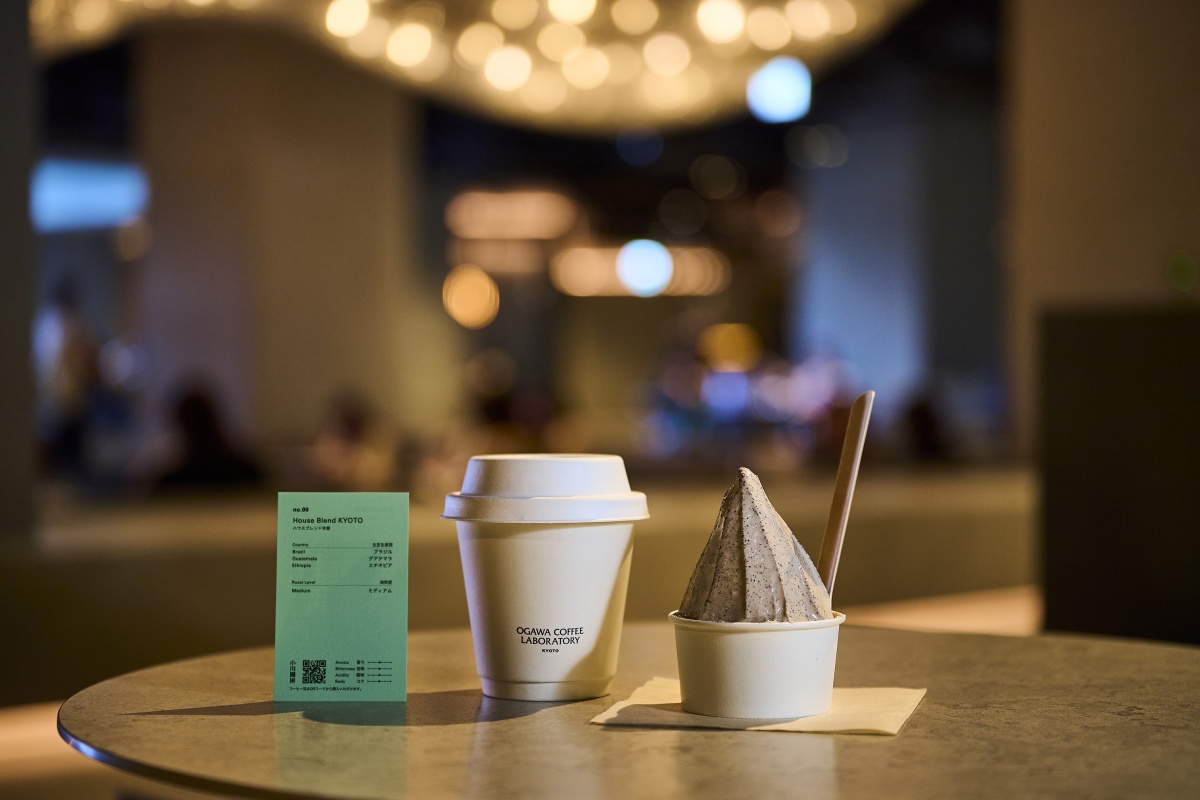
House Blend Kyoto, made with beans from Brazil, Guatemala and Ethiopia, beside the coffee gelato at OGAWA COFFEE LABORATORY.
Ogawa Coffee is a Kyoto roaster established in 1957. MIMURE is its first step is a transition from Ogawa Coffee to the simple brand, Ogawa. The Takanawa site takes up about 4,000 square meters of the second floor, divided into twelve “labs” making coffee, gelato, wine, beer, chocolate, pizza, bread, and more, while also selling books. Each lab is labeled with a code. The bakery is PAN:013, after the 13°C at which its bread dough ferments. The gelato lab is GLT:196, for the −196°C liquid nitrogen that freezes in front of you. Coffee is CUP:092, for an extraction temperature of 88 to 92°C.
The labs supply each other, so chocolate made at one, for example, turns up in the sweets at another. Guests who are seated at a restaurant table can order items from almost all the labs on the floor. Some tables belong to Ogawa Coffee Laboratory. The rest are common seats that anyone can use. Ogawa visits its producers regularly and works with the farms on producing the beans. The price of a cup of coffee varies depending on the bean and the brewing method, but averages around ¥900.
There are no tubs of ready-made gelato here. You choose a base and toppings, the nitrogen does its work, and the instant result is yours alone. I had coffee gelato made with beans from a producer in Indonesia that promotes the protection of orangutans. It tasted like a very strong caffe latte and gave me a caffeine hit that fueled me for the rest of the day.
AGRIKO × MIMURE BOTANICAL Lab.
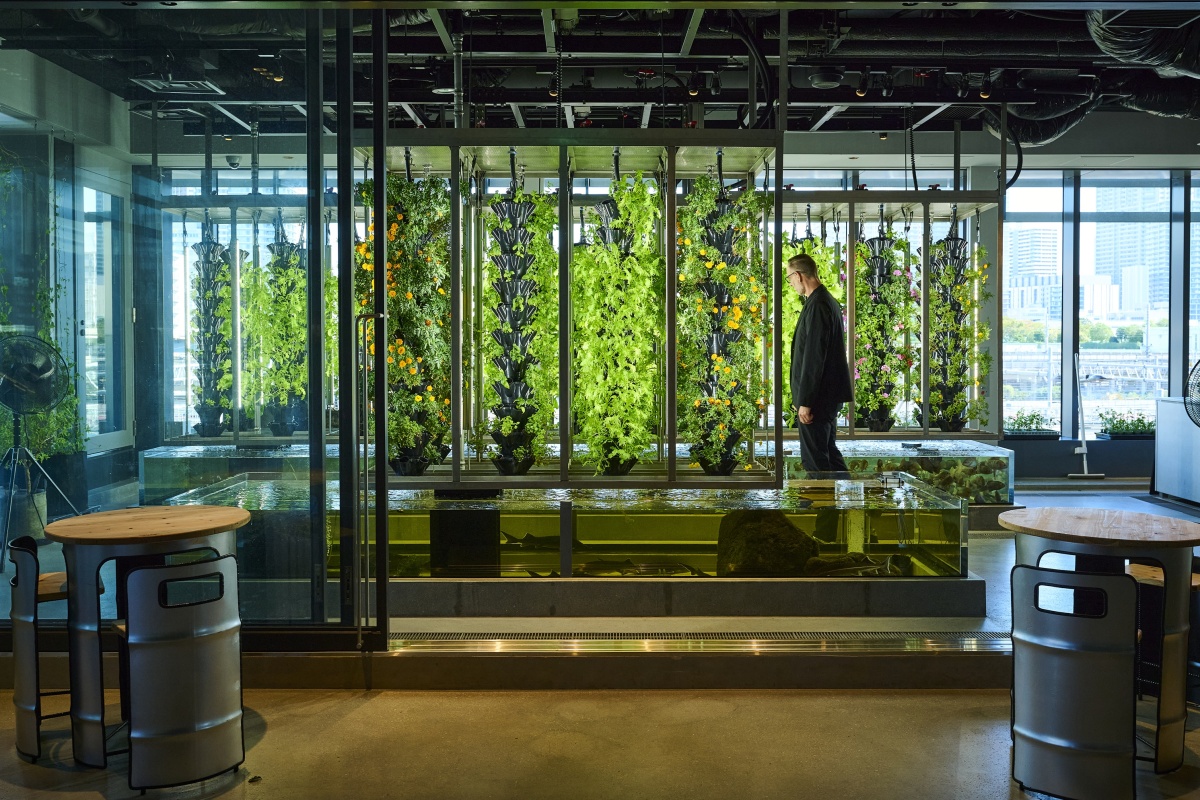
The AGRIKO×MIMURE BOTANICAL Lab. grows herbs and leafy vegetables above tanks of fish. Maybe a hint at what sustainable urban living could be like in the future.
Just outside OGAWA COFFEE LABORATORY, behind glass, is a farm. This is the AGRIKO×MIMURE Botanical Lab, which runs on aquaponics using fish tanks about six meters long. The fish waste feeds the plants in 30 cultivation towers above the tanks, and the plants clean the water that is returned to the fish tanks. It grows edible flowers, herbs and leafy vegetables, and the herbs and leaves are used by OGAWA COFFEE LABORATORY next door. The tanks hold three kinds of fish, Tilapia, Biwa moroko and, remarkably, beluga sturgeon. The hope is that Takanawa caviar will one day be on the menu at MIMURE’s restaurants.
On weekdays the farm is closed to the public while the staff feed the fish, check their health and the tank equipment, and select and ship plants grown there. It is built to be watched through the glass. On weekends and holidays it opens for workshops, such as salad bouquets, and for Farm to Table events, where participants harvest plants and fish together, carry them to Ogawa’s chef and eat what the chef makes of them. Children can also feed the fish on weekends. The operator calls it a small Earth, and I can’t help thinking it would be amazing if apartment complexes in the future all had sustainable farms like these.
ROYAL BLUE TEA TAKANAWA BOUTIQUE : tea in a wine bottle
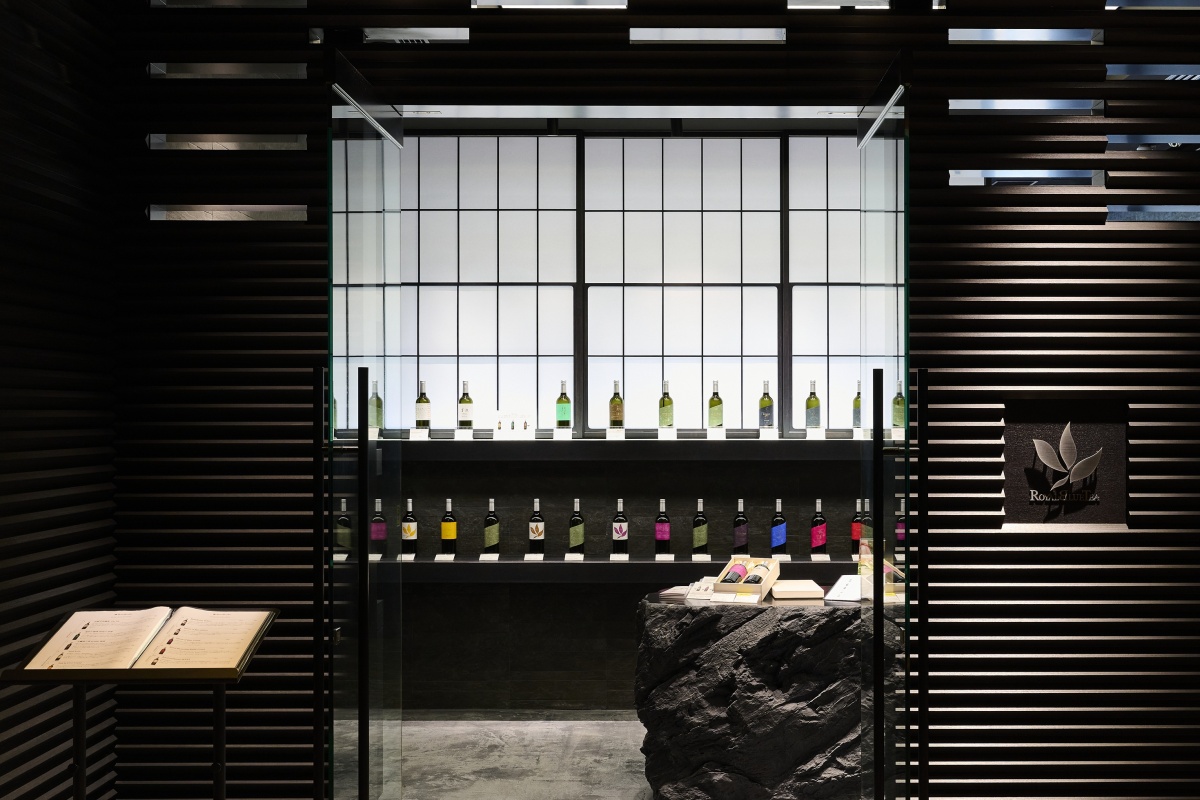
The Royal Blue Tea Takanawa boutique on the third floor looks like a wine shop. The bottles hold tea.
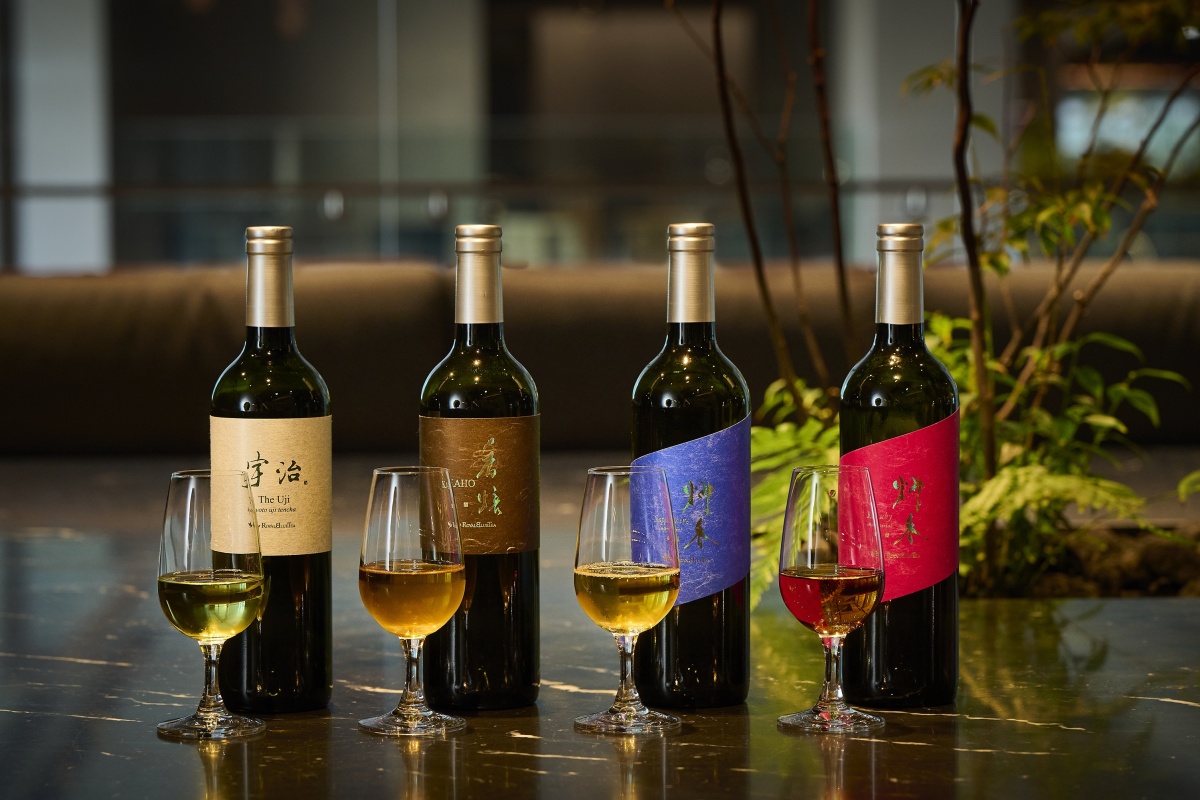
The Royal Blue Tea line-up, from left to right, is The Uji (a Kyoto tencha), KAHO (roasted gyokuro from Fukuoka), IRIKA Sapphire (pan-fired oolong-style tea from Miyazaki) and IRIKA Ruby (pan-fired black tea from Miyazaki).
At first glance, the Royal Blue Tea Takanawa boutique on the third floor looks like a wine shop. But, look closer and you’ll find the “wine bottles” actually contain tea. Among the teas offered here are those served in Japan Airlines’ international first-class cabins since 2011, as well as the welcome drink served at the 2016 G7 Ise-Shima Summit and the tea served at the 2019 G20 Osaka Summit. Every leaf is hand-picked. Then the tea is extracted without heat over three to seven days depending on the leaf, sterilized by filtration rather than heat, and bottled in a clean room with no additives. Many of the steps are done by hand.
Two varieties were created for the Takanawa opening. The Uji, ¥8,640, is made from tencha, the Kyoto leaf that is normally ground into matcha. The tasting card that came with the glass I tasted says the bushes are shaded for at least 20 days, and the leaf is then hand-picked, steamed, and dried without being rolled. This leaves the umami and astringency finely balanced, with a clean aftertaste and a calm, refined aroma. Royal Darjeeling Yankhu Premium, ¥33,000, uses Silver Needles picked by torchlight on the full-moon night nearest the summer solstice at the Yankhu estate in Darjeeling, and is sold only here. The company says it wants to convey that the value of a cup includes the land the leaves came from and the skill and time of the growers, and not simply the fact that it is a luxury only because it is rare.
sakejump takanawa
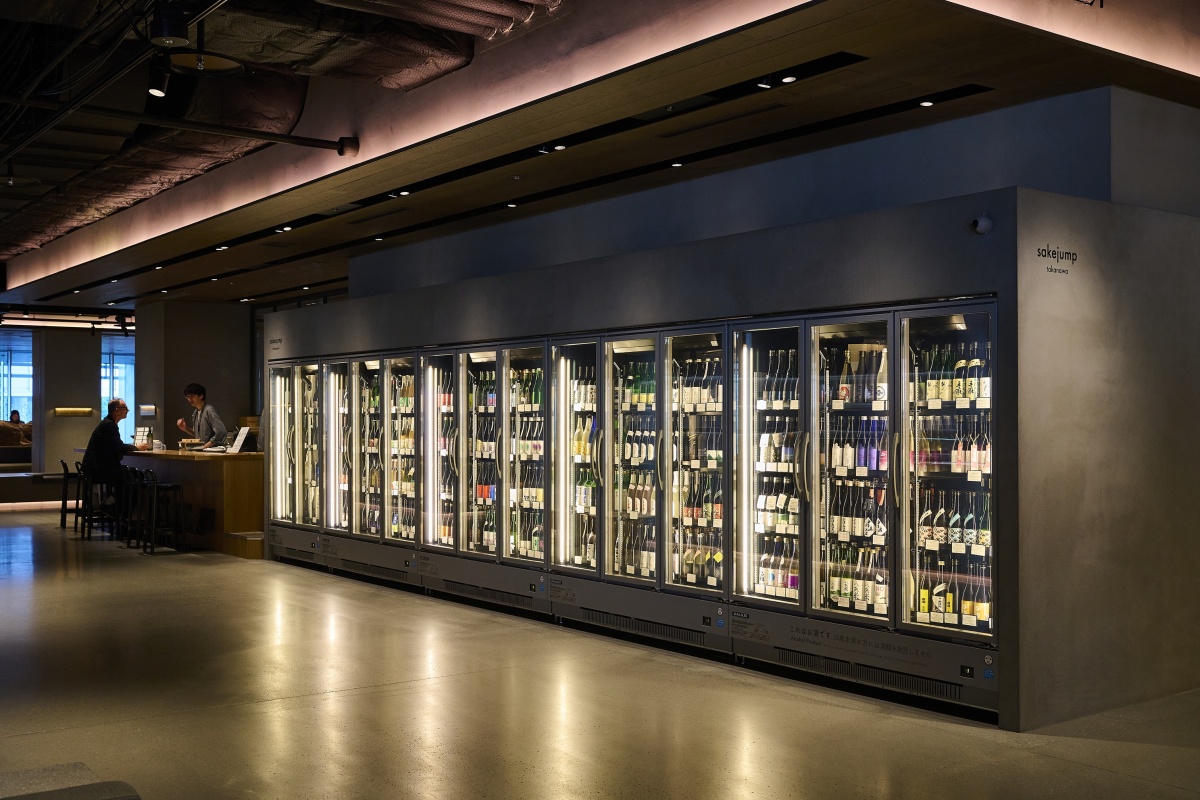
Rows and rows of sake. Sakejump takanawa stocks bottles from more than 90 breweries.
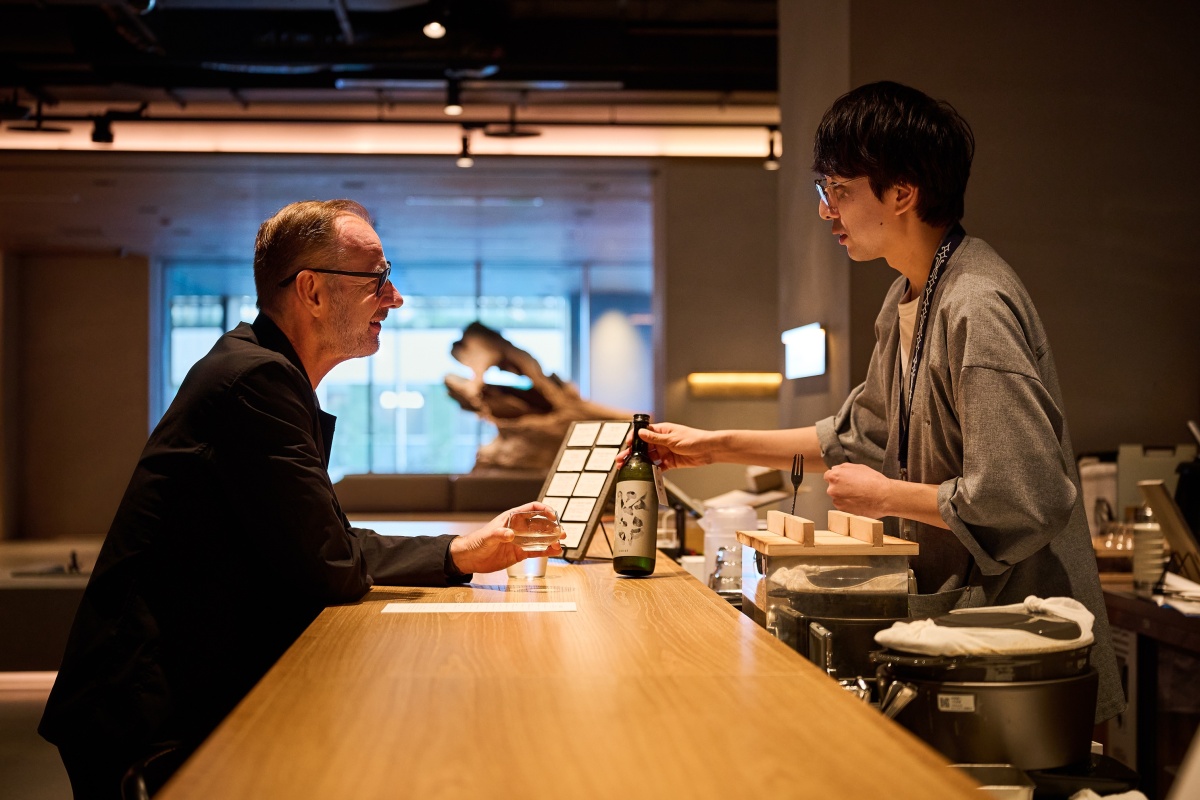
At the kakuuchi, the six-seat counter where sake is drunk in the shop that sells it.
Sakejump takanawa stocks sake from more than 90 breweries and favors two kinds of maker. One style consists of breweries where the owner or toji (master brewer) has recently returned home to take over the business. The other is a first-generation maker of craft sake, a newer category. For visitors new to sake, the staff suggest modern styles with a wine-like balance of acidity and sweetness.
I tasted a sake from Edo Kaijo, brewed by Tokyo Minato Jozo in Tamachi, one stop on the Yamanote Line from Takanawa Gateway. Its acidity seemed closer to white wine than to sake.
For drinkers with a deeper knowledge of sake, the staff offer bottles that rarely reach general distribution, aged sake, and the fuller-bodied traditional styles known as kimoto and yamahai. Tax-free shopping is available, and overseas guests are steered towards bottles that keep at room temperature on a long journey. Next to the shop’s bank of fridges is a six-seat counter for kakuuchi, the practice of drinking in the sake shop. A variety of otsumami snacks are available to order with the sake of the day. On days featuring particular breweries, the makers come in, pour free tastings, and talk about how one bottle differs from the next, the brewing process, the brewery’s history and what the future holds.
Kamakura Matsubara-an soba
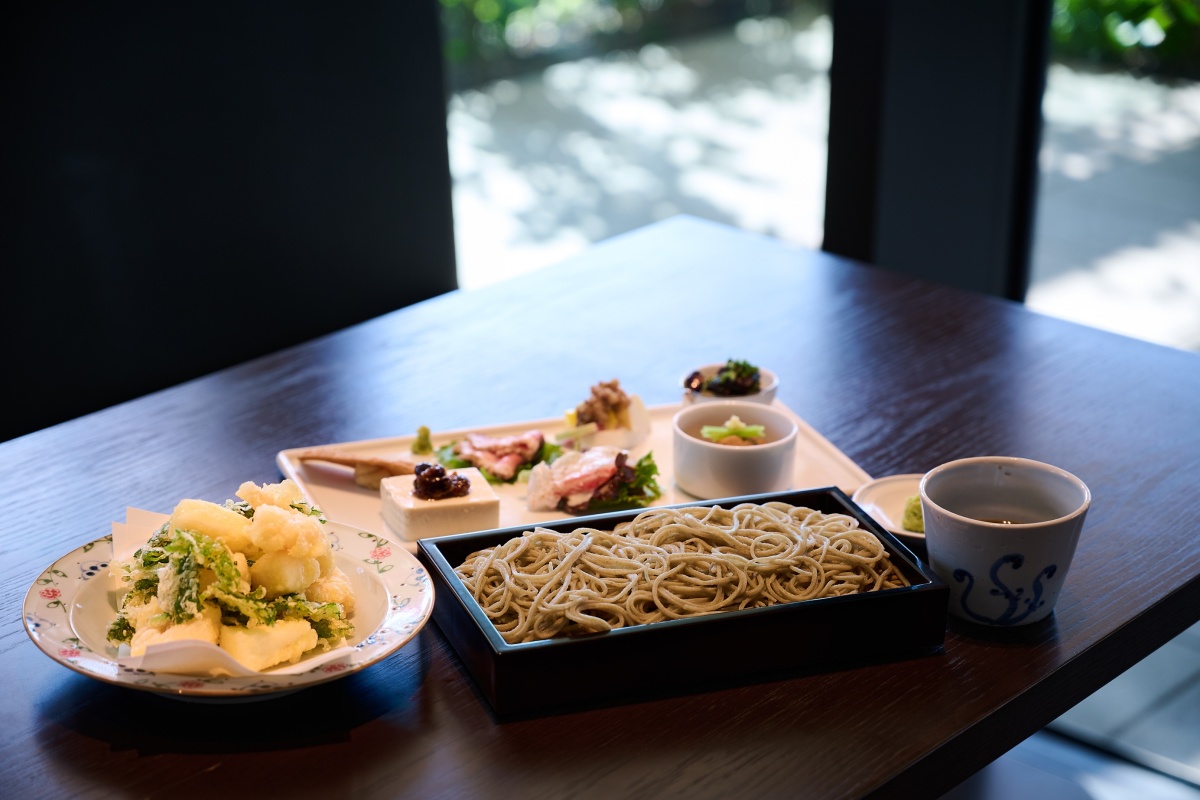
My soba lunch set at Kamakura Matsubara-an. The noodles are ni-hachi, 80 per cent buckwheat and 20 per cent wheat.
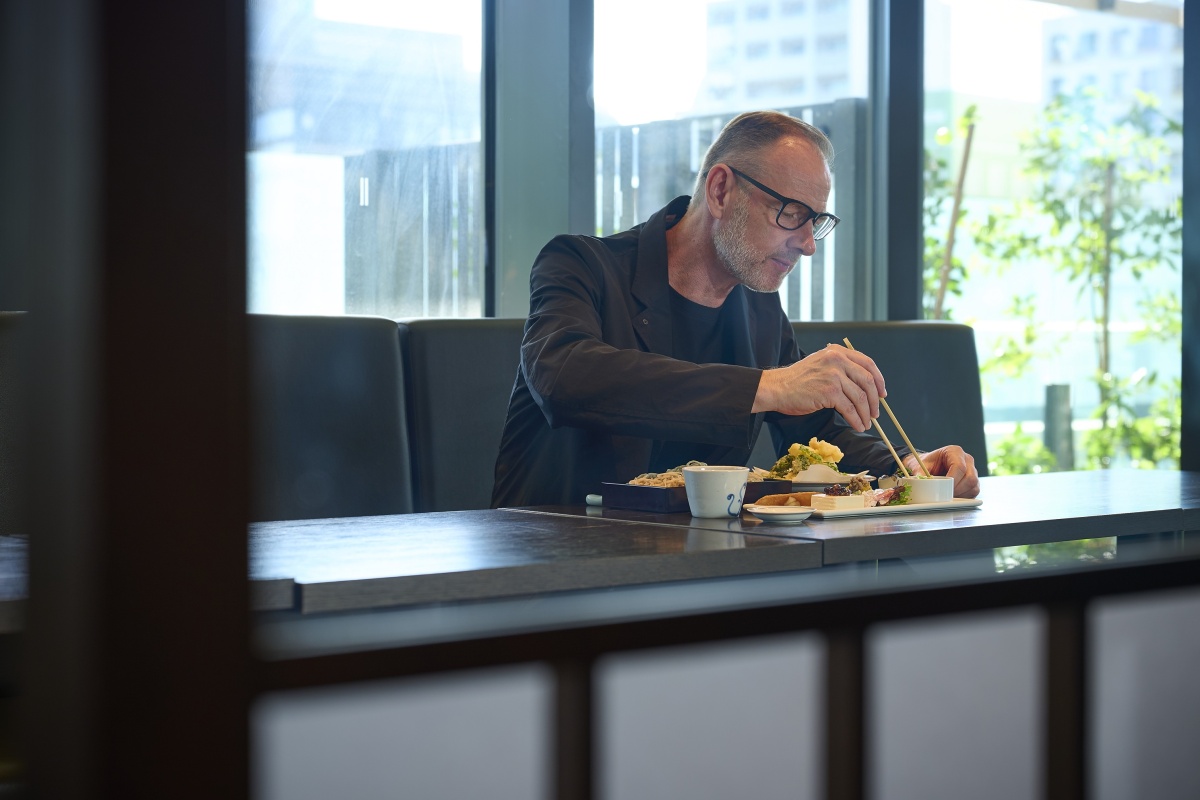
Lunch at Matsubara-an, where the noodles are made in a dedicated soba room inside the restaurant.
Lunch was soba. The Takanawa shop of Matsubara-an is a branch of the shop of the same name that opened in March 2007 in a 70-year-old house in Yuigahama, Kamakura. It came to MIMURE after looking for a central Tokyo site along the Yamanote Line. The noodles are thin ni-hachi soba, 80 per cent buckwheat and 20 per cent wheat, from a blend of three or four buckwheat flours chosen for aroma and flavor. They are made in a dedicated soba room inside the restaurant, sometimes ten times a day.
The kitchen draws on vegetables from Kamakura and the Miura peninsula and seafood from the waters off the Shonan coast. Two dishes come from the Yuigahama shop, seafood arare-age, plump shrimp and squid fried in a rice-cracker coating, and isonori seiro, chilled soba heaped with crisp Shonan rock seaweed. The lunch course, Yui, ¥3,960, brings seven seasonal appetizers, arare-age and seiro soba. One dish is served only in at this Takanawa branch: Kamakura natto and aromatic vegetable soba, ¥1,760. Its three kinds of natto comes from a Kamakura specialist: Tanba black soybean, coarse-cut hikiwari and small-grain, with rocket and shiso.
Getting there
MIMURE is on the second and third floors of THE LINKPILLAR 2 (NEWoMan Takanawa), 2-22-1 Takanawa, linked to Takanawa Gateway Station on the JR Yamanote and Keihin-Tōhoku lines.
To get from Takanawa Gateway Station to Haneda Airport, take the Keikyu Line or the Tokyo Monorail; the trip takes about 23 to 28 minutes.
NEWoMan Takanawa Official Site
OGAWA COFFEE LABORATORY
AGRIKO × MIMURE BOTANICAL Lab.
ROYAL BLUE TEA TAKANAWA BOUTIQUE
Gyudon Kikiya
sakejump takanawa
Kamakura Matsubara-an Takanawa
Photos/ Masatoshi Sakamoto
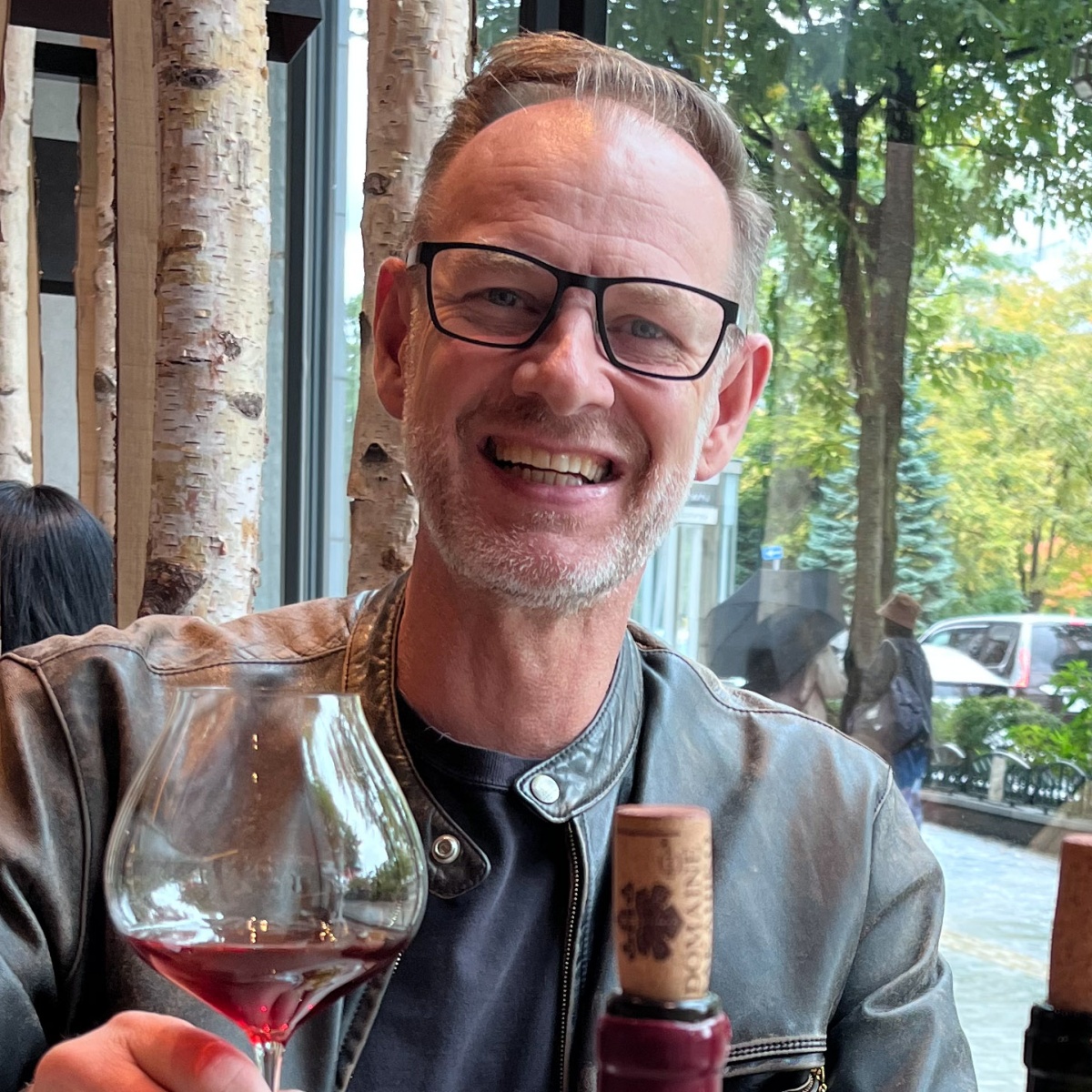
I'm a writer now, but have been a jack of all trades when it comes to publishing, including designer, editor, and creative director. I was at The Japan Times newspaper for 10 years, which I rebranded and redesigned in 2017. Since leaving the JT, I've been studying wine and I am currently doing the WSET Diploma. The main focus of my writing these days is the wine of Japan.
andrewlee.jp