Above the Clouds: Exploring Daisetsuzan National Park
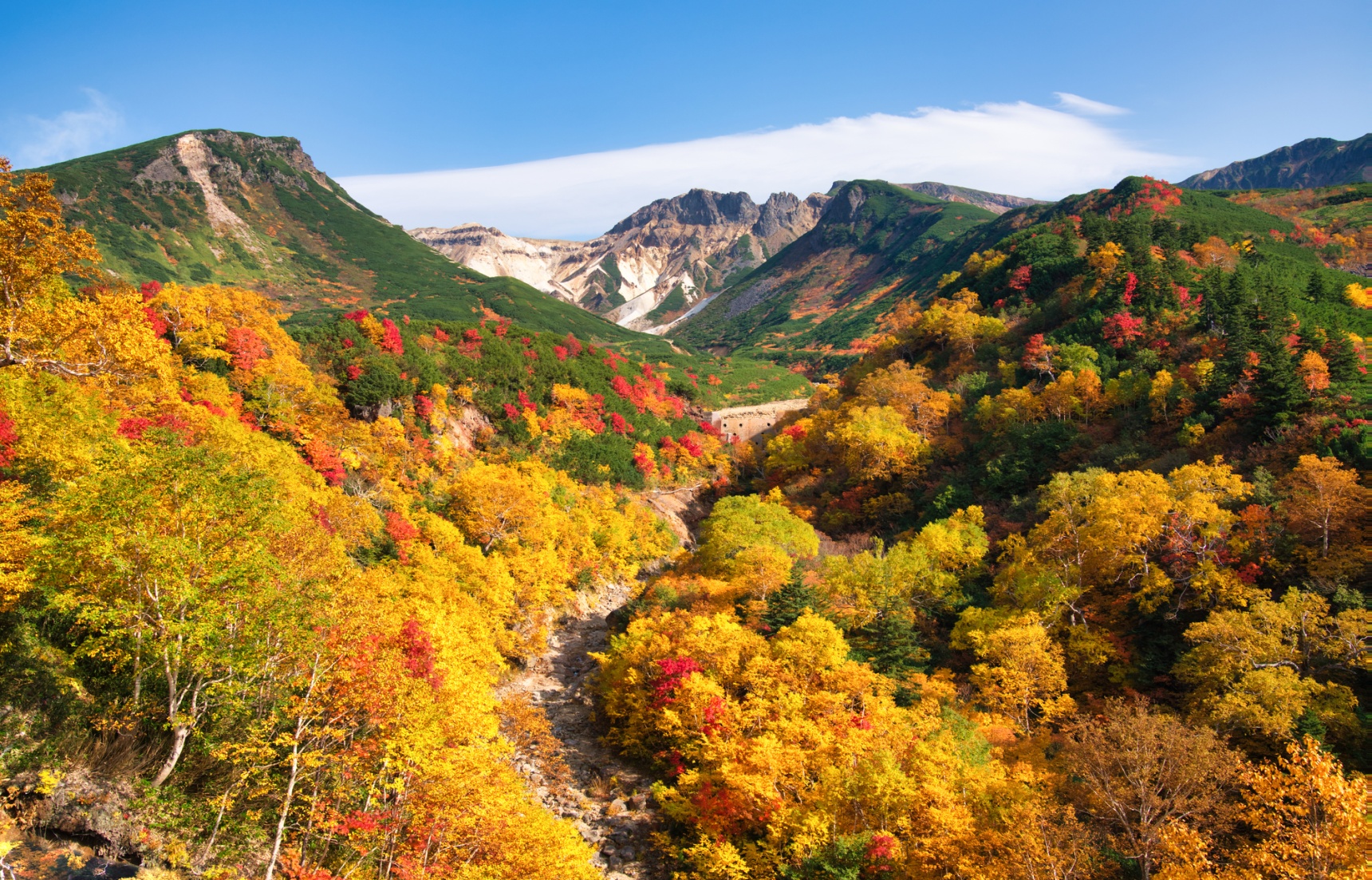
Autumn colors grace the mountainous landscape of Daisetsuzan National Park.
This vast landscape of volcanic peaks, deep forests, and wild rivers is home to hot springs, adventure, and a rich Ainu heritage. Nature and local communities coexist in one of Japan’s most awe-inspiring national parks.
By AAJ Editorial TeamSpanning the mountainous heart of Hokkaido, Daisetsuzan National Park is a place of vast skies, steaming volcanic peaks, and forests that seem to stretch without end. The park is often called “the roof of Hokkaido,” as it contains more than 16 summits exceeding 2,000 meters in elevation and has some of the island’s most dramatic alpine landscapes. It was established in 1934 as Hokkaido’s first national park, and remains one of Japan’s largest protected areas as well as one of its wildest.
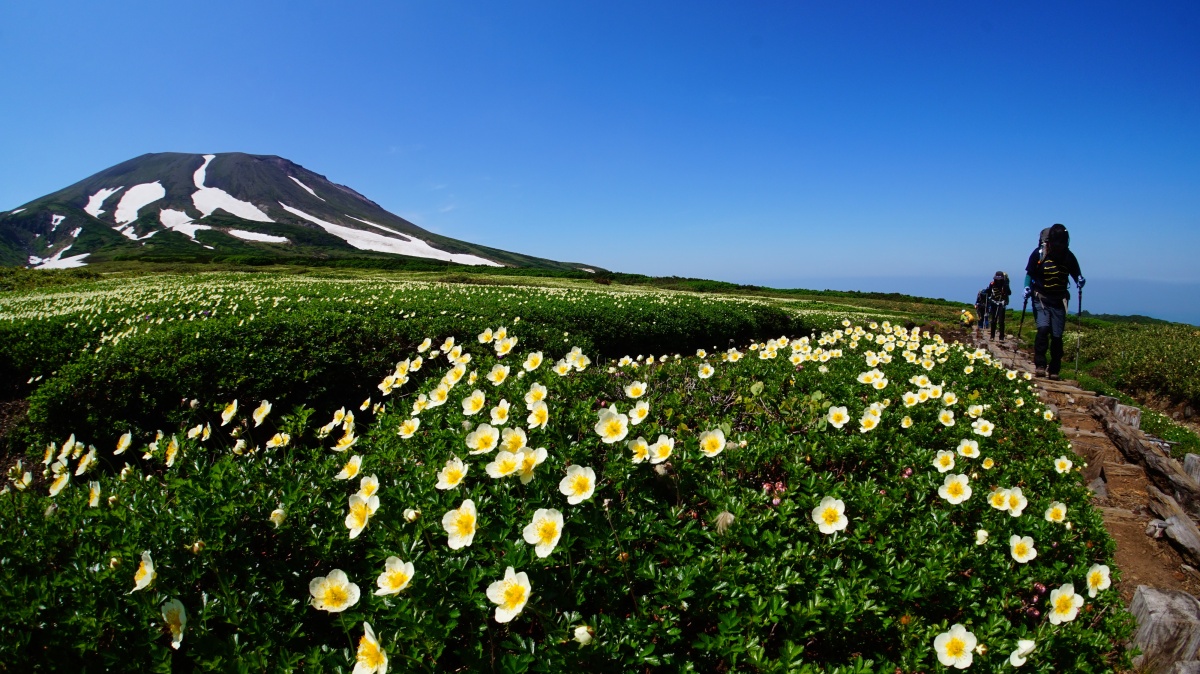
A popular hiking trail on Susoaidaira, a high-altitude plateau within the park. It’s known for its stunning alpine flora, like these chinguruma (Aleutian avens).
Daisetsuzan’s landscapes are a study in contrasts. Thick conifer forests cloak the lower elevations, giving way to sprawling wetlands and then to an alpine belt of wind-scoured ridges and hardy alpine plants. Wildlife that has adapted to these varied environments—brown bears, deer, pika, and countless bird species—find refuge here. The park’s hiking network takes advantage of this diversity, offering both short courses suitable for beginners and demanding, multi-day traverses for experienced mountaineers. While heavy snow closes most trails in winter, for much of the year the terrain invites exploration.
The seasons shape life in Daisetsuzan. Winters are long and severe, burying the mountains under deep snow and ice. Summer is strikingly brief—roughly from July to August—when alpine flowers bloom in a rush of color. For many visitors, late August to early September offers the most spectacular window, when lingering summer warmth transitions into the first hints of autumn brilliance.
For the indigenous Ainu people, however, this landscape was never merely scenic terrain. They revered Daisetsuzan as Kamuy Mintara—“the playground of the gods.” In their worldview, divine spirits dwell within mountains, rivers, animals, and plants. Life was shaped by reverence and cooperation: forests and waterways were not resources to be exploited, but living presences deserving gratitude and care. The Ainu philosophy—rooted in respect for the natural world—remains one of the most powerful lenses through which to understand Daisetsuzan today.
A Unique System of Coexistence
To fully appreciate Daisetsuzan National Park, it also helps to understand how Japan’s national parks work. Unlike parks in countries such as the United States, where land is largely government owned, Japan’s parks are a mix of private, prefectural, and national land.
Many areas were already home to villages, farms, and forests when they were designated as parks. As a result, communities continue to live and work within park boundaries. This model honors the concept of satoyama—a tradition of coexistence between people and nature—that is clearly reflected in Daisetsuzan’s activities, hot springs, and local communities.
Three Ways to Experience Daisetsuzan National Park
Soak in the Sky at at Tokachidake Onsen Ryounkaku
Tokachidake Onsen Ryounkaku, a remote mountain hot spring lodge, sits high on the slopes of the Tokachi mountain range, and offers one of the most atmospheric stays in Hokkaido. At 1,280 meters above sea level, the lodge faces a dramatic panorama of volcanic peaks and, on clear days, distant plains stretching toward the horizon.
The lodge’s open-air baths, called rotenburo, draw mineral rich waters directly from the mountain. In autumn, guests soak in view of hillsides aglow in crimson and gold. In winter, snowdrifts pile high around the baths, turning a soak into a surreal experience even under falling snowflakes. On clear mornings, the sunrise washes the peaks in soft pink light; and on clear nights, the sky is full of stars.
Ryounkaku is also a gateway to adventure. A number of nearby trailheads lead hikers into rugged volcanic terrain shaped by steam vents and past eruptions. After a day exploring the highlands, returning to a hearty mountain meal and a restorative bath can be a luxurious end to the day. The inn is a memorable base for travelers seeking comfort amidst raw nature.
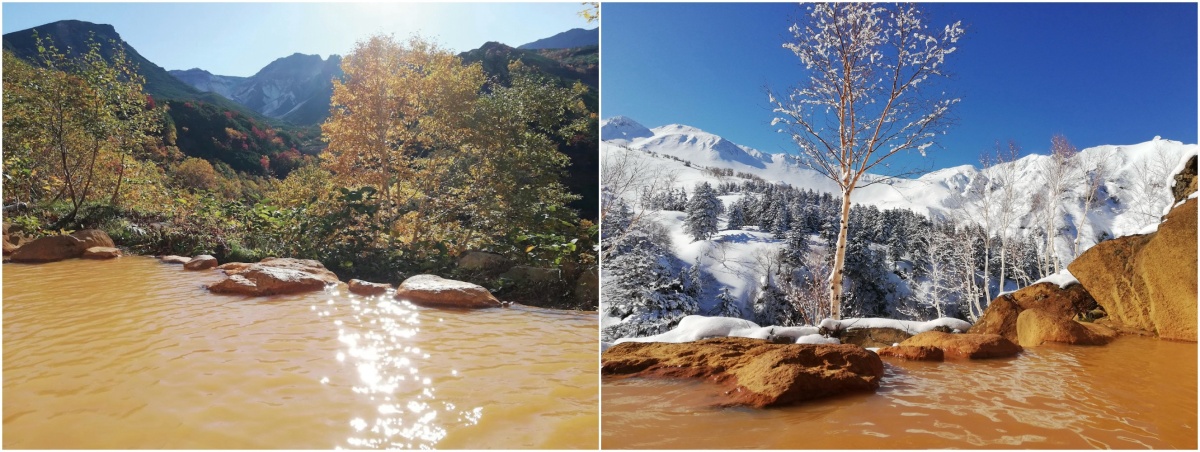
The open-air baths at Tokachidake Onsen Ryounkaku hot springs lodge offer spectacular views or the surrounding mountains at all times of the year. (Photo: Ryounkaku)
Ride the Rivers with Alpine River Guides
The rivers born in Daisetsuzan’s snowfields carve their way through forests and valleys, creating natural corridors for adventure. One way to experience the park from water level is to join a rafting trip with Alpine River Guides.
Depending on the season, you can choose a gentle scenic float ideal for families and first-timers, or a more thrilling whitewater run. On the paddle downstream, you’ll drift past towering trees, rocky outcrops, and occasionally spot wildlife on the banks. The water is famously clear, reflecting the big sky and surrounding mountains.
The expert guides not only ensure a safe trip, but also enrich the journey with stories about the region’s geology, wildlife, and seasonal features. Spring snowmelt brings energy and excitement; while summer offers calmer currents perfect for soaking in the scenery. It’s a refreshing, dynamic way to connect with the park.
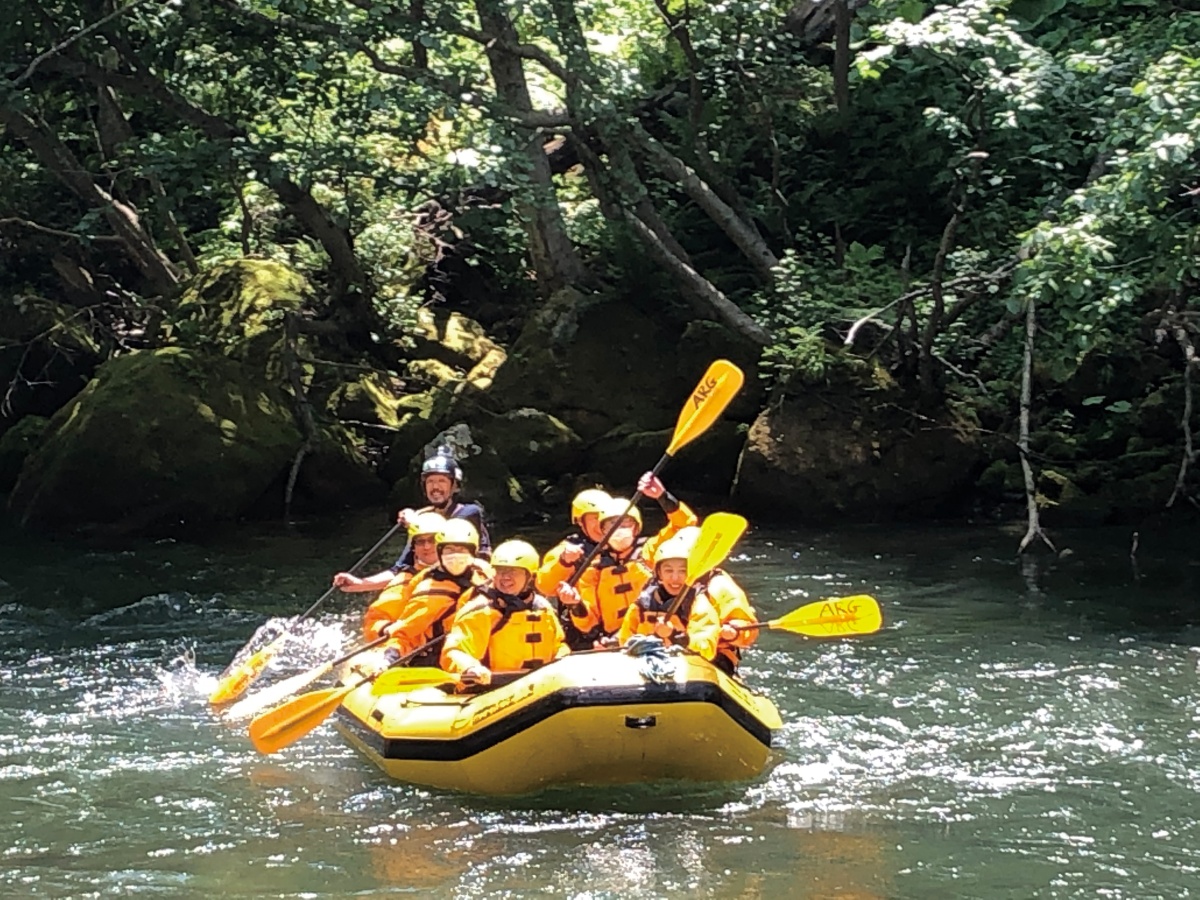
Rafting on one of the many available river tours in the area; they range from paddling gentle currents to white water thrills.
Connect with Indigenous Culture at Kawamura Kaneto Ainu Memorial Museum
A visit to Daisetsuzan can be even more meaningful when you understand the people who have long called this region home. This museum, located in nearby Asahikawa, offers visitors a change to engage with the history and living culture of the Ainu, the indigenous people whose communities once populated most of northern Japan.
Carefully preserved artifacts, traditional garments, tools, and explanatory exhibits help visitors gain an understanding of how the Ainu people lived in a close relationship with the forests and rivers of Hokkaido. Their spiritual worldview—seeing divine spirits in mountains, animals, and plants—casts the dramatic landscapes of this area in a new light.
The museum also speaks to the resilience of Ainu communities in the face of modernization and historical challenges. A visit here adds cultural depth to a journey through Daisetsuzan, reminding travelers that these landscapes are not empty wilderness but homelands layered with memory and meaning.
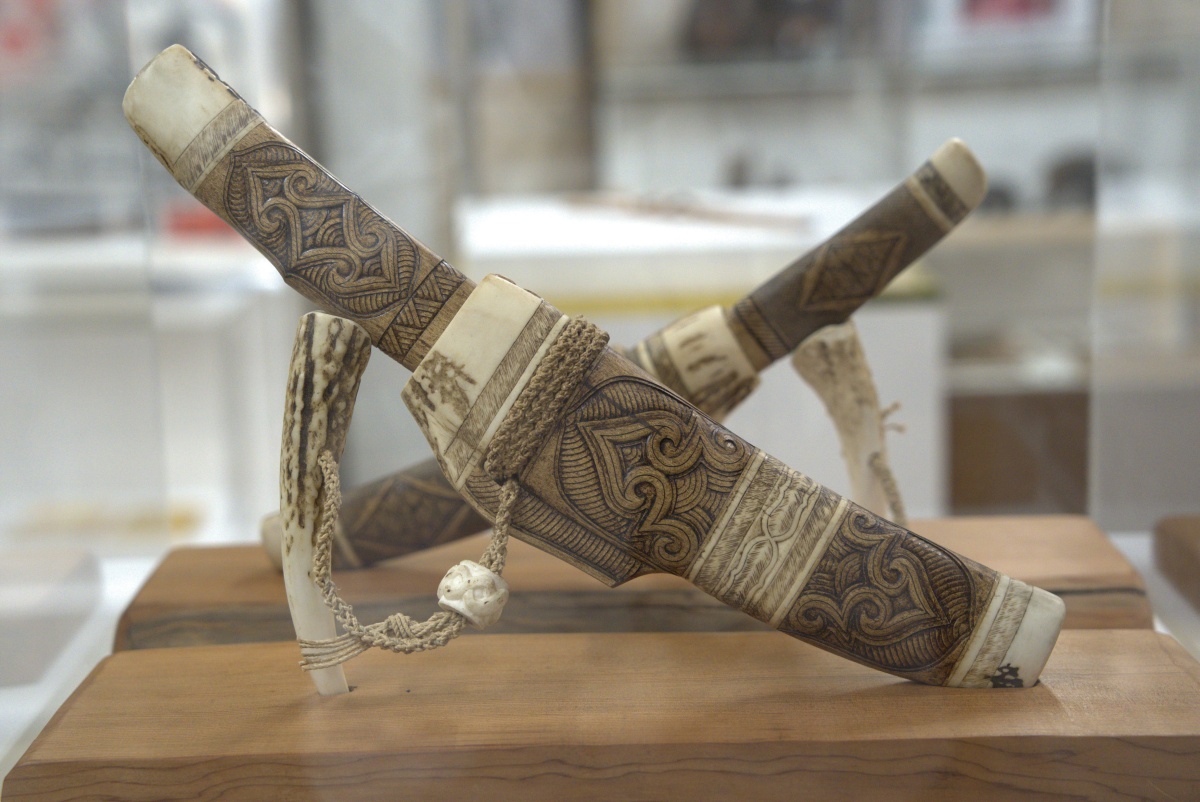
A makiri, a traditional small Ainu knife, used for hunting, fishing and carving. While practical, they are intricately decorated, like this one made by Yukio Fujito, on display at the museum.
Stories from the Roof of Hokkaido
Daisetsuzan’s grandeur can be measured in peaks, rivers, and forests, but its deeper significance lies in human stories. As part of the Project for the 100th Anniversary of Japan’s national park system—set to culminate in 2031—a series titled “Stories from the National Parks of Japan” has been compiling oral histories from each park.
Across Daisetsuzan, the project gathered the voices of those who dwell among the park’s volcanoes, forests, and lakes: longtime residents who have endured cycles of growth and decline; individuals who continue traditional livelihoods while adapting to modern realities; and newcomers whose journeys eventually brought them to settle beneath these peaks. Among the six groups interviewed are the proprietor of Tokachidake Onsen Ryounkaku, the founders of Alpine River Guides, and the family directors of the Kawamura Kaneto Ainu Memorial Museum.
Together, their stories reveal a park that is not only a sanctuary of dramatic landscapes but also a home. They remind us that conservation in Japan has always involved coexistence—an ongoing dialogue between human aspiration and the rhythms of nature. These accounts paint Daisetsuzan not only as a destination, but as a community shaped by memory, resilience, and respect.
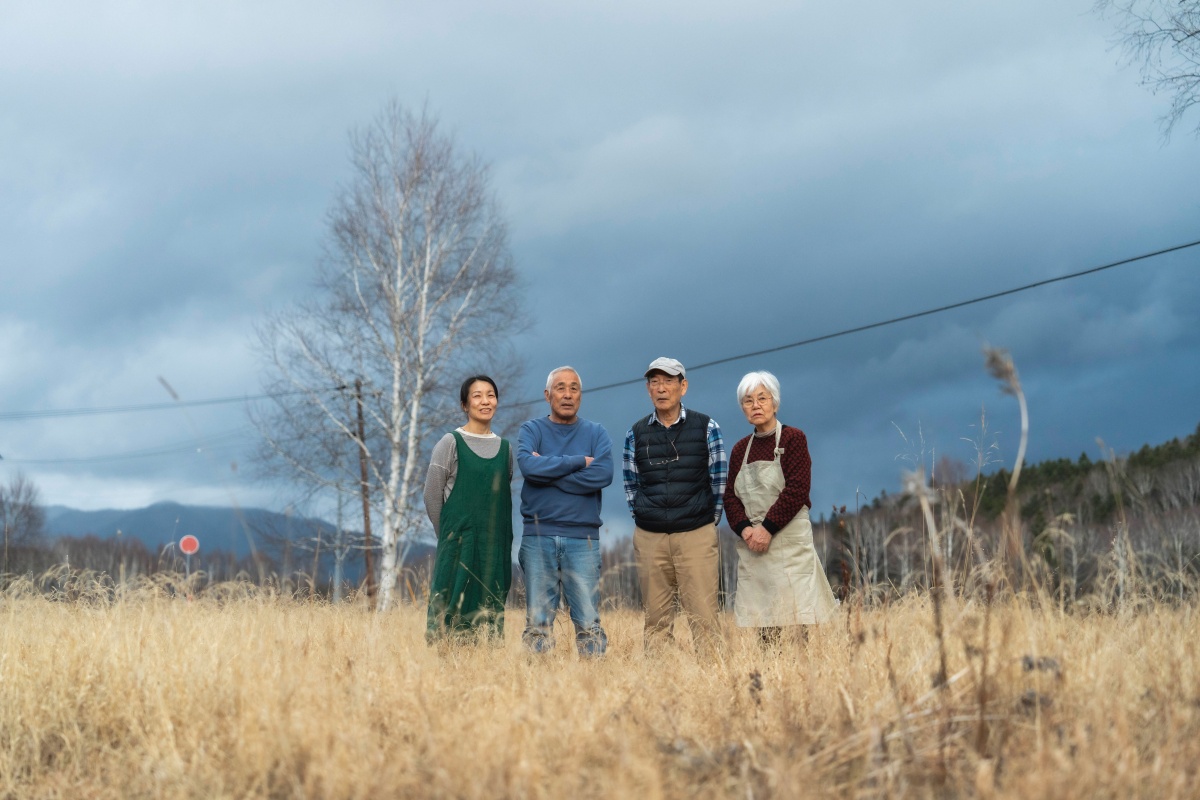
From left, Yukie Tanaka, Hiromi Miyauchi, Yasuo Tanaka and Tamie Tanaka. The stories of their lives in the Mitsumata district are among the voices in “Stories from the National Parks of Japan.”