A Great Wetland Wilderness: Exploring Kushiroshitsugen National Park
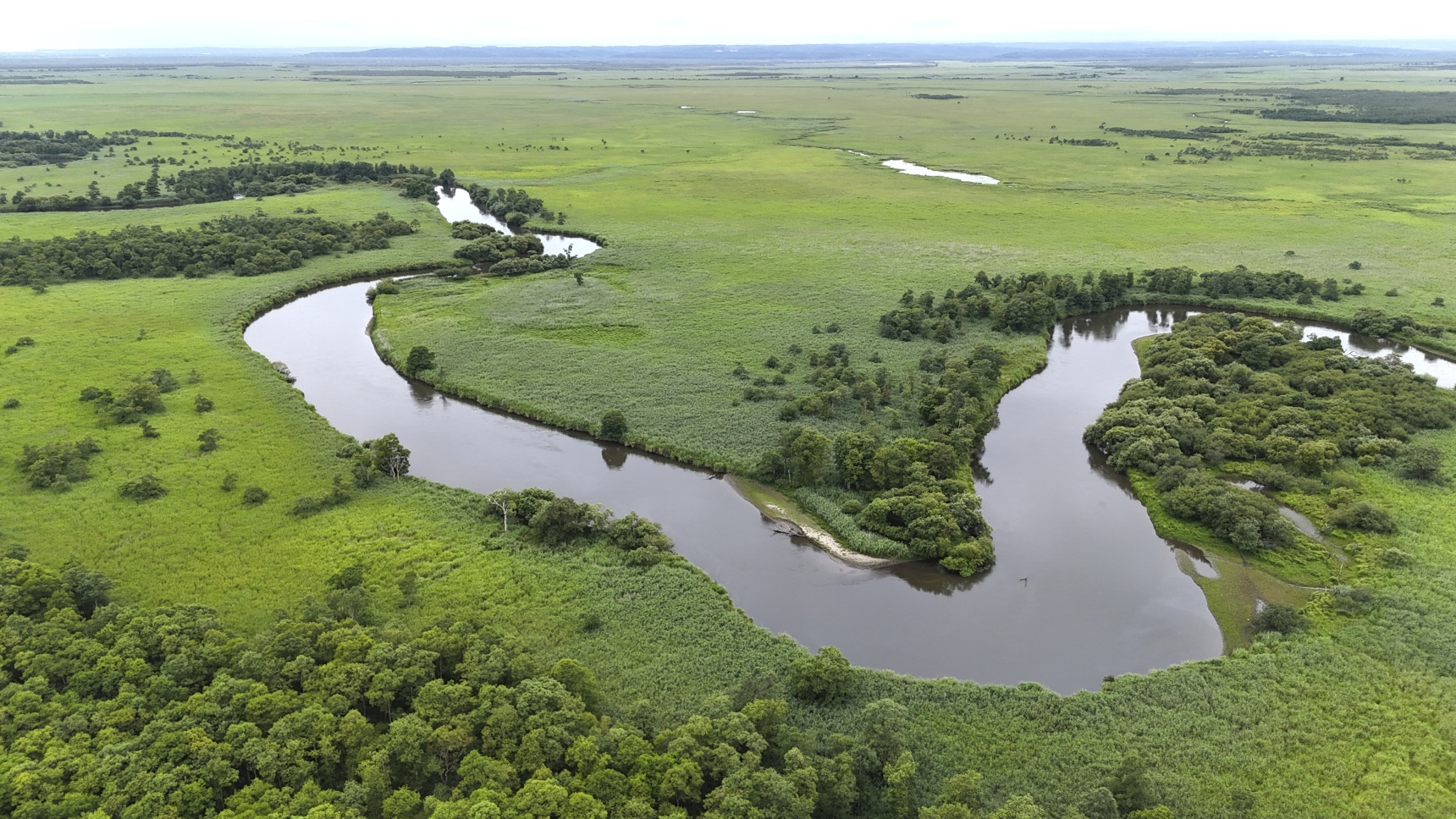
One of several rivers winding its way through Kushiroshitsugen National Park.
This sprawling land of reeds, winding rivers, and open sky is Japan’s largest wetland and a sanctuary for rare wildlife. Ancient marshlands and local communities exist in careful balance, shaped by water, conservation, and time.
By AAJ Editorial TeamKushiroshitsugen National Park, Japan’s largest wetland, lies in eastern Hokkaido, where the land flattens and the sky seems to stretch the horizon. A world apart from Hokkaido’s rugged mountains, this vast expanse of marsh, lakes, and slow-moving river channels offers a quieter, more contemplative form of natural grandeur. Designated a national park in 1987, Kushiroshitsugen protects an ecosystem shaped over thousands of years; it is now recognized as one of Japan’s most important natural treasures, and is Japan’s first Ramsar Site, internationally recognized for the ecological importance of its wetlands.
The western side of the park is dominated by open marshland, while the eastern side features a chain of lakes, rolling hills, and forested terrain. To the south lies the coastal city of Kushiro, one of Japan’s busiest seafood ports—a reminder that the wetlands and the sea remain deeply connected.
The story of the wetlands began around 20,000 years ago, when the area was submerged beneath the sea. As sea levels gradually fell, the waters receded, leaving behind peaty marshes, ponds, and lakes. Over the millennia, the placid Kushiro River began to meander through this lowland basin, creating the largest marshland in Japan. Today, vegetation blankets roughly 80 percent of the wetlands, forming a rich, waterlogged habitat unlike anywhere else in the country.
The park is a haven for wildlife. Most famously, it is home to the elegant red-crowned crane, one of Japan’s most iconic birds and designated a Special Natural Monument. Once thought extinct in Japan, a small flock was discovered here in 1924. Thanks to decades of careful conservation, their population has rebounded to around 1,700 birds. So successful have these efforts been that the cranes no longer migrate; many now remain in the wetlands year-round, even through Hokkaido’s harsh winters.
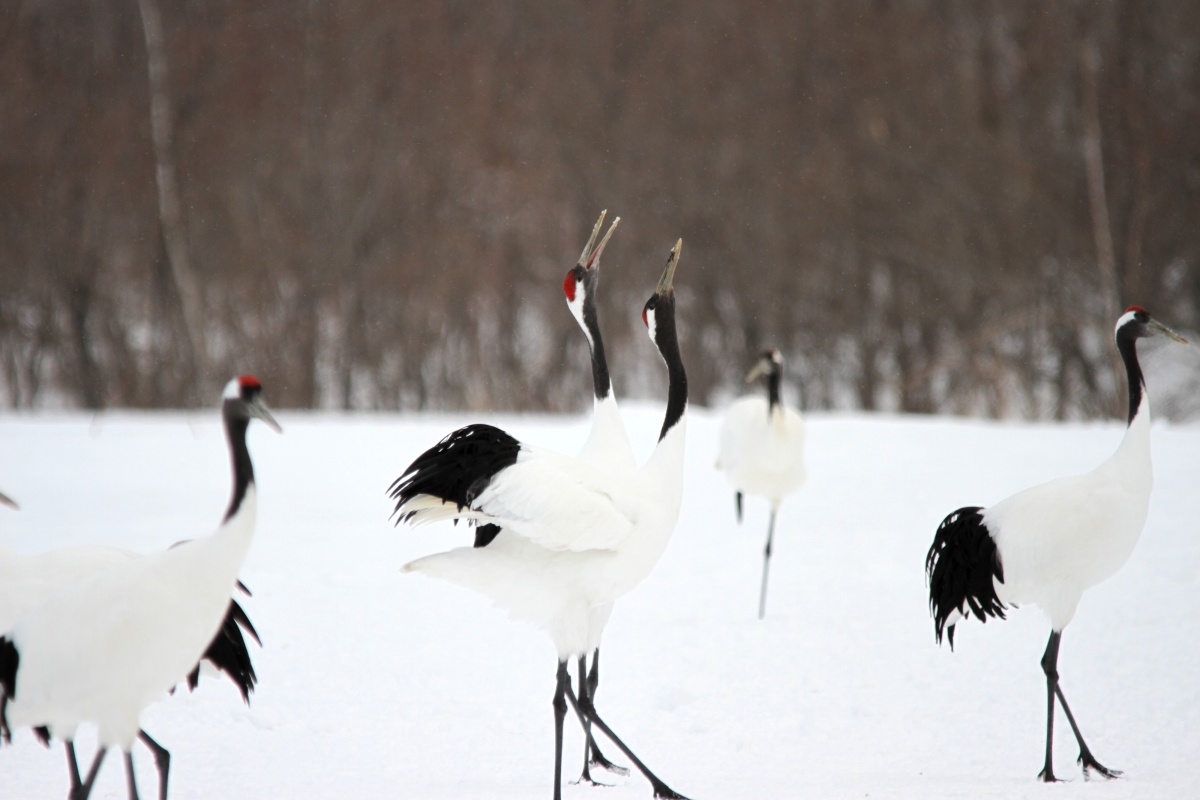
Many visitors visit the park to catch a glimpse of the red-crowned crane, one of Japan’s most iconic animals. Once on the brink of extinction, they have recovered to form a flock of some 1,700 birds, thanks to conservation programs.
Like all of Japan’s national parks, Kushiroshitsugen is managed under a distinctive conservation model. When Japan’s park system was established, many designated areas already included private land, villages, and working landscapes. As a result, national parks today are a mix of national, prefectural, and private ownership. Carefully managed zoning protects sensitive ecosystems while allowing local communities to continue living and working within park boundaries. In Kushiroshitsugen, this balance between preservation and coexistence has been central to the wetlands’ survival.
Three Ways to Experience Kushiroshitsugen National Park
Take in the Vastness at the Kushiro Marsh Observatory
To truly grasp the scale of Kushiroshitsugen, its best to begin above it. The Kushiro Marsh Observatory offers panoramic views over an ocean of reeds and winding waterways that stretch to the horizon. From the viewing deck, the marshland appears as an immense green tapestry broken only by silver threads of river and distant tree islands.
Well-maintained walking trails extend from the observatory, allowing you to step closer to the landscape without disturbing its fragile ecology. Elevated boardwalks wind through the vegetation, offering opportunities to spot deer, birds, and seasonal wildflowers. Satellite observatories along the 2.5 kilometer loop trail give visitors more extended views. On clear days, the sense of openness is exhilarating; in misty weather, the marsh takes on a mysterious, dreamlike quality.
The observatory is accessible year-round, and the view transforms with the seasons. Summer brings lush greenery and birds in flight. Autumn paints the grasses in warm gold. In winter, snow blankets the marsh, and lucky visitors may glimpse red-crowned cranes standing stark and elegant against the white expanse.
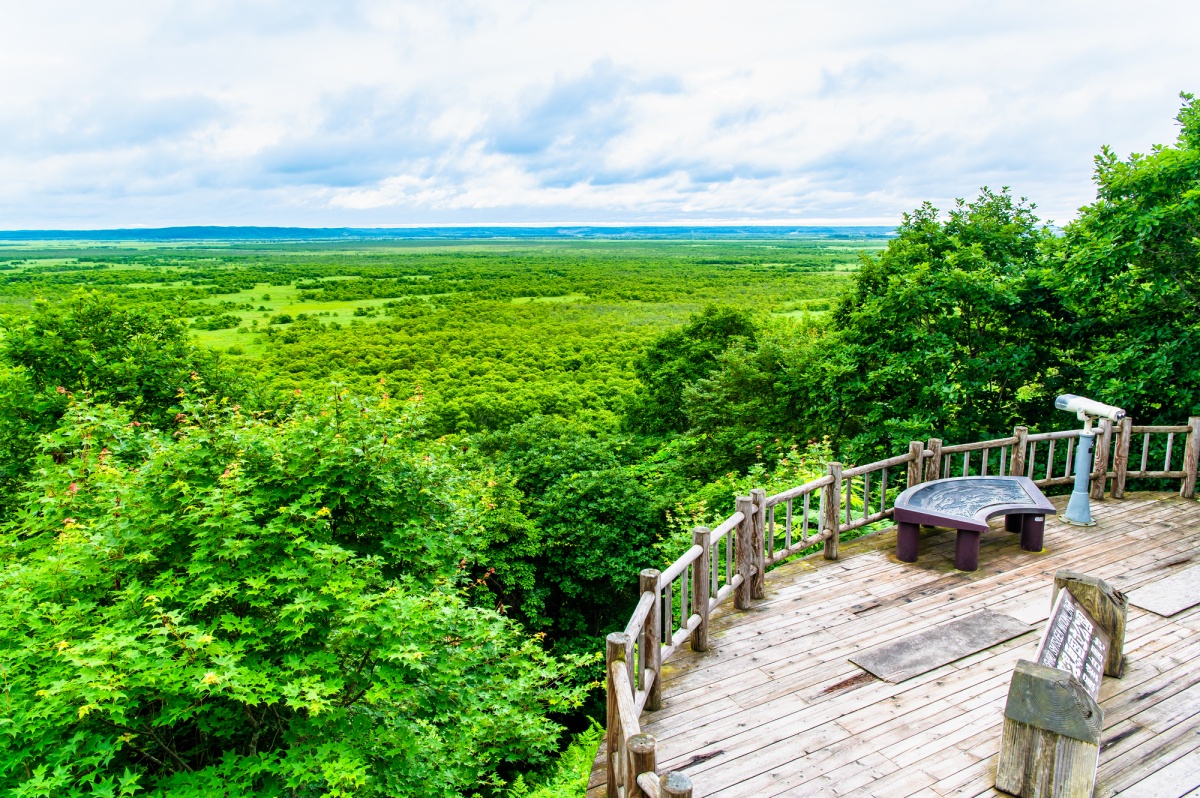
From its perch above the trees, the Kushiro Marsh Observatory offers panoramic views of the vast wetlands stretching to the horizon.
Canoeing the Gentle Waters of Kushiro River
There may be no more immersive way to experience Kushiroshitsugen than from water level. Canoeing along the Kushiro River allows visitors to move quietly through the heart of the wetlands, following gentle bends beneath wide skies.
These guided canoe tours run by the Toro Nature Center cater to a range of abilities, with a variety of courses available. Tours run up to 4.5 hours for the longest, and one course is even available in winter, when the surrounding wetlands are clad in white hoarfrost. The river’s calm current makes for a relaxed journey, ideal for families and nature lovers. Because the wetlands are largely inaccessible by road, paddling offers rare proximity to untouched scenery. As your Canadian canoe glides forward, reeds whisper in the breeze and birds call from hidden perches.
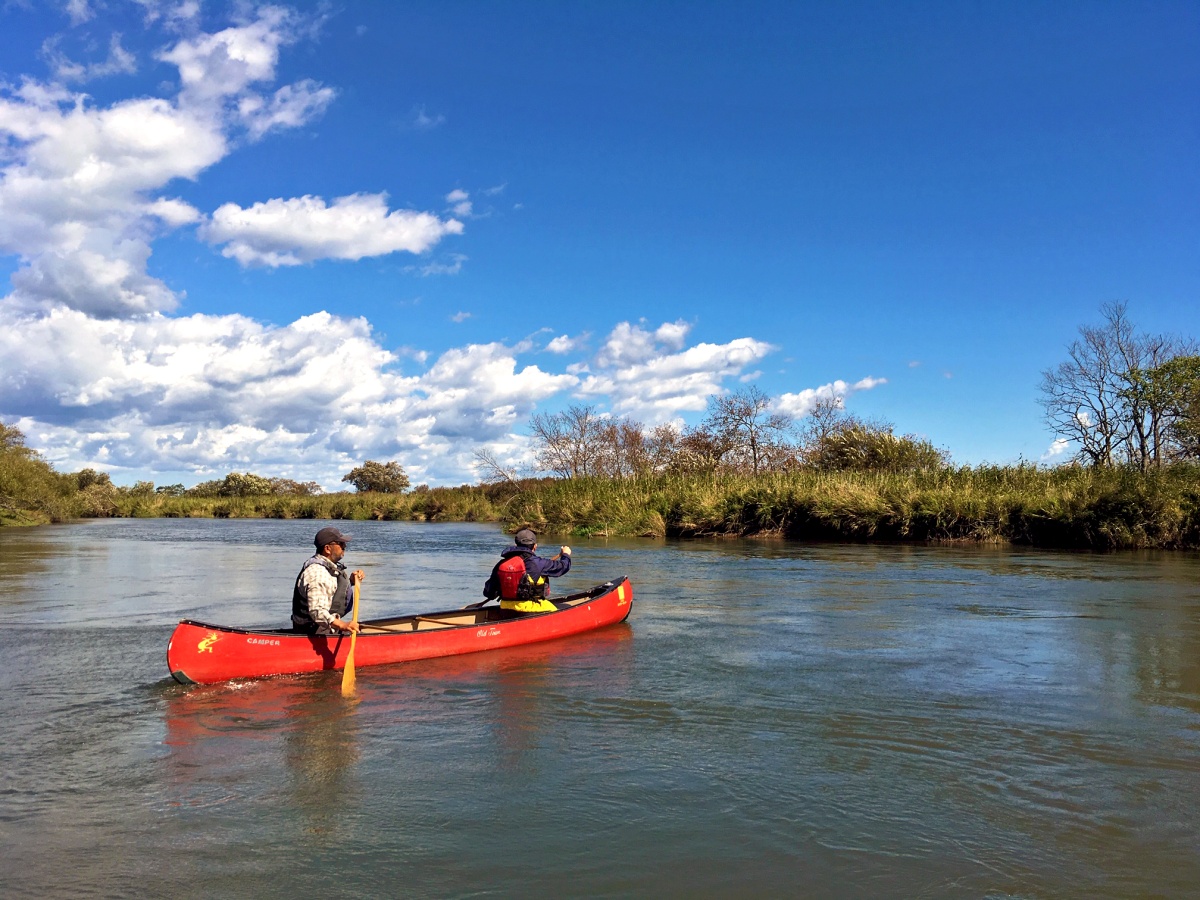
Quietly paddling the Kushiro River by canoe is an ideal experience for anyone interested in seeing the wetlands in all their glory. Glimpses of the area’s wildlife are frequent. (Photo: Toro Nature Center)
Hike the Protected Lands of Cape Kirakotan
For travelers eager to venture beyond the boardwalks, a guided trek to Cape Kirakotan offers a rare opportunity to enter one of the most protected corners of Kushiroshitsugen National Park. Designated a special protected area and part of a Natural Monument zone, the cape can only be visited with approval from the Agency for Cultural Affairs—permission that is arranged as part of this safety-focused tour.
Cape Kirakotan is one of the marsh’s historic capes, in a landscape that was once part of the sea. It is also known as one of the sites where the red-crowned crane—believed extinct in the 1920s—was rediscovered, adding to its significance as a sanctuary within the wetlands. Even today, its remote atmosphere makes it feel set apart by the vastness of reeds, sky, and winding water.
The trekking route stretches about two kilometers one way, with no major elevation changes, making it accessible while still immersive. Along the way, participants encounter sweeping views of meandering rivers, reed beds, and open horizons—scenery whose quiet beauty leaves a lasting impression.
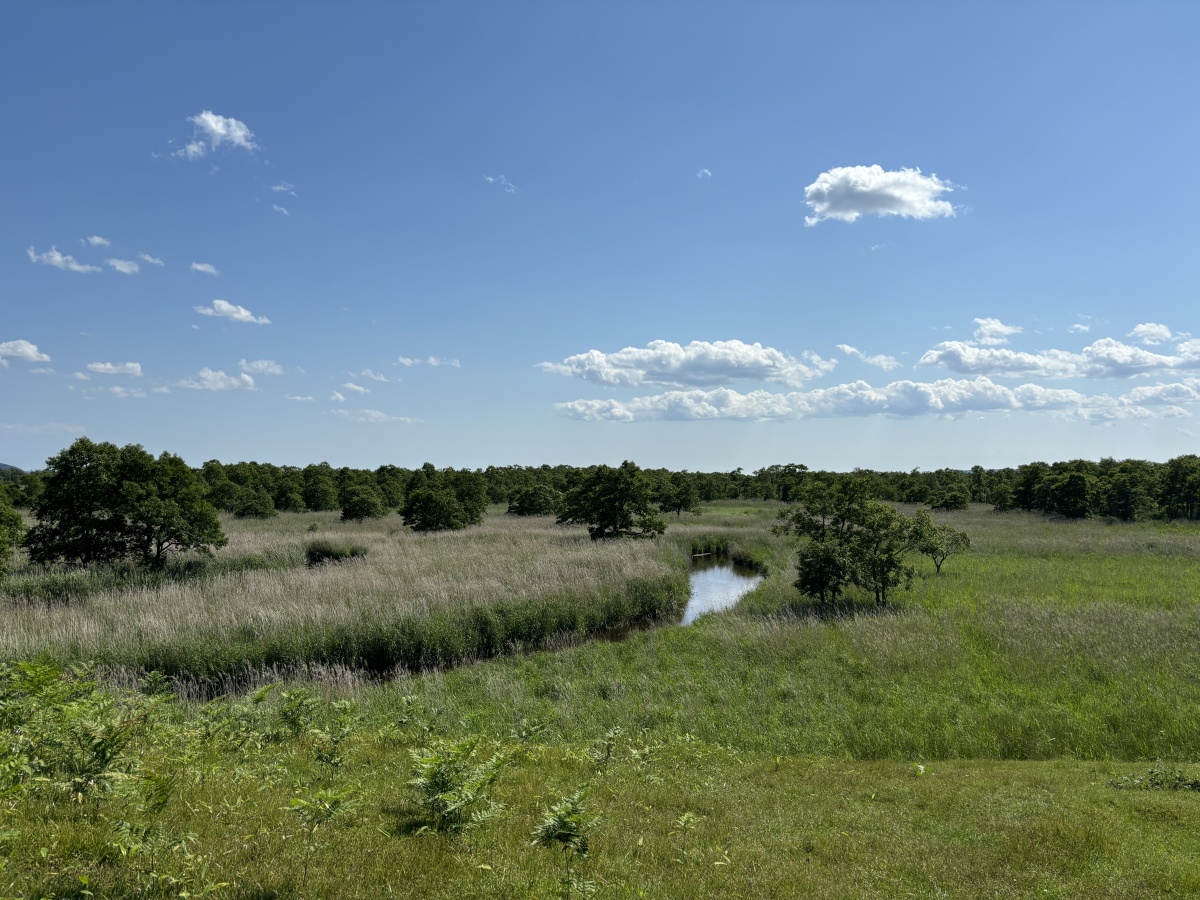
Cape Kirakotan is one of the most protected areas of the national park. Permission from the Agency for Cultural Affairs is required—something that can be handled by the tour company.(Photo: siretokokiyosato ueneusarumidori)
Stories from the Wetlands
Kushiroshitsugen’s wetlands were not always regarded as valuable. For many years, local residents referred to them as yachi—“wilds” or wasteland—unsuitable for farming or development. During Japan’s postwar economic boom, proposals surfaced to drain and convert the marshes for industrial and agricultural use.
But there were also voices who saw something irreplaceable in this watery expanse. Conservationists, researchers, and community members began advocating for protection, arguing that the wetlands were not empty land but a living ecosystem worthy of pride. Their efforts gradually gained momentum, leading first to international recognition as a Ramsar site and ultimately to designation as a national park in 1987.
Today, the “Stories from the National Parks of Japan” project—part of the initiative marking the 100th anniversary of Japan’s national park system in 2031—captures these voices and preserves them for future generations. The Kushiroshitsugen volume brings together the recollections of those who fought to protect the marsh, those who inherited that commitment, and those now working to sustain it. Among the six people featured are an educator who worked for recognition of the area, a former rock star who now canoes its waters, and a researcher of the Siberian salamander.
Through their stories, the wetlands emerge not merely as habitat for cranes or scenic backdrop for canoeists, but as a community landscape shaped by conviction. Their narratives stretch from the geological birth of the marsh thousands of years ago to the modern movement that secured its protection, a story of the enduring relationship between people and place that ensures these wetlands will endure for generations to come.
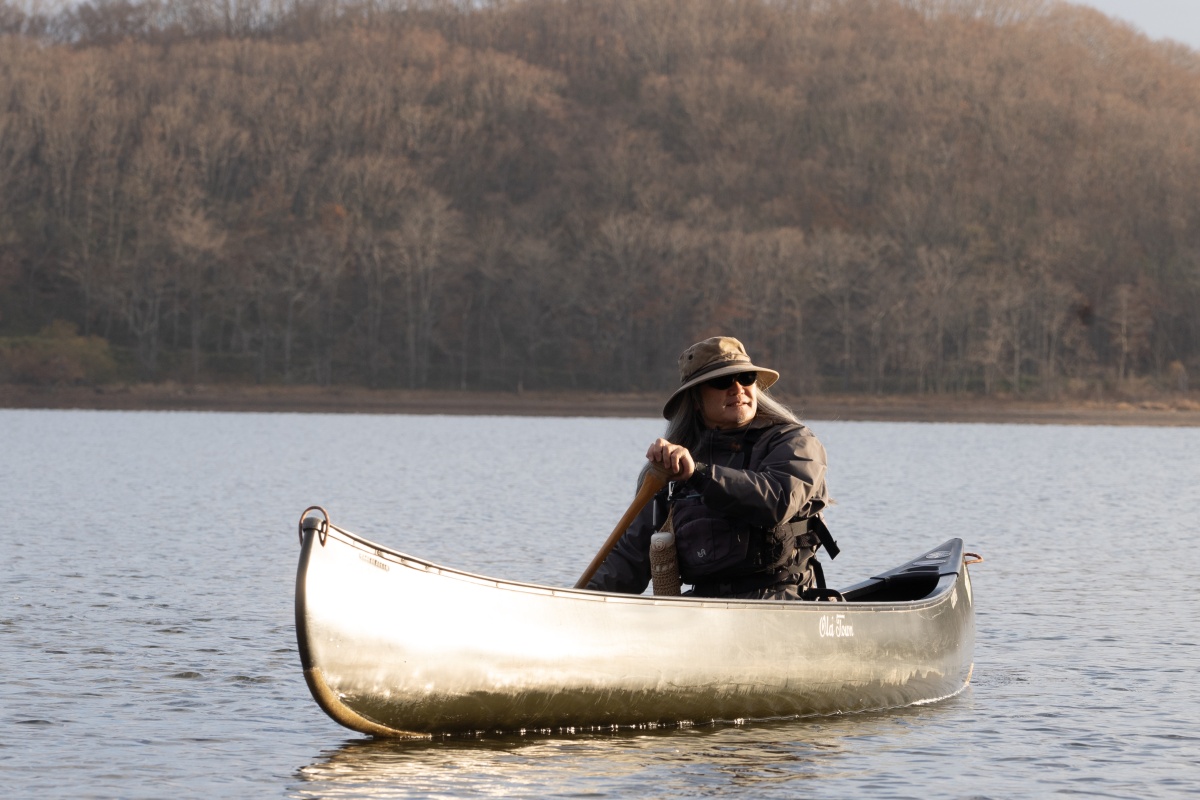
Kiyoshi Ogawa moved to the Toro area of the park in 2004, where he operates an inn and leads canoe tours of the rivers and wetlands. The tale of why he settled down in Hokkaido can be found in “Stories from the National Parks of Japan.”