Living with Fire and Sea: Exploring Unzen-Amakusa National Park
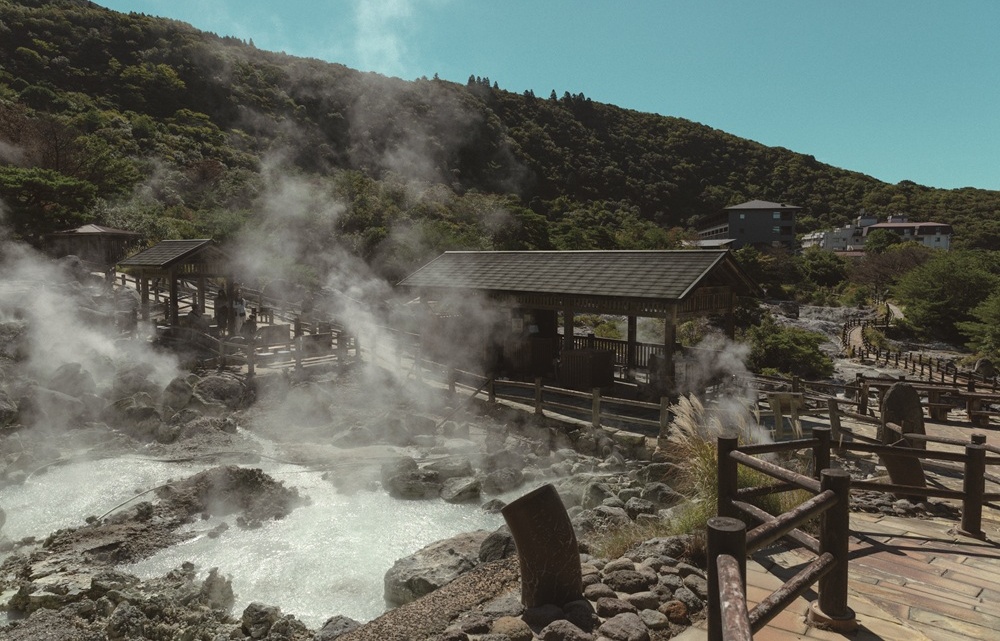
Unzen jigoku (hell) is a sprawling site of steam and bubbling hot springs in Unzen-Amakusa National Park. (Photo: UNZEN Destination Service)
This dynamic landscape of volcanic peaks, steaming hot springs, and island-strewn seas brings together fire and water in one of Kyushu’s most distinctive national parks.
By AAJ Editorial TeamStretching across parts of Nagasaki Prefecture, Kumamoto Prefecture, and Kagoshima Prefecture, Unzen-Amakusa National Park is a land of dramatic contrasts. Volcanoes rise from fault-lined peninsulas. Sulfuric steam drifts through historic hot spring towns. Offshore, more than 120 islands are scattered across seas alive with dolphins and coral. Gothic churches stand in secluded fishing villages. Few places in Japan bring together geothermal intensity, maritime beauty, and layered cultural history so vividly.
Designated in 1934 as one of Japan’s first national parks, the park originally protected only the Unzen region of the Shimabara Peninsula. Twenty-two years later, it expanded to include the Amakusa archipelago. The result is a park divided into two distinct but deeply connected realms: the volcanic Shimabara Peninsula and the island-strewn Amakusa seas.
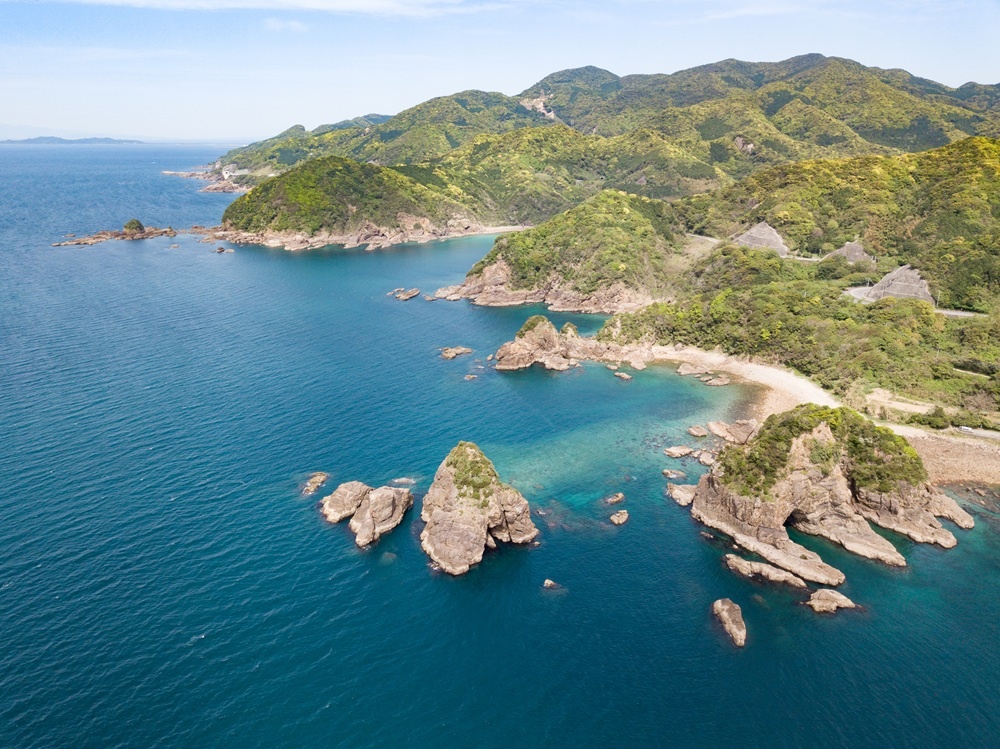
The coastline of Myokenura features a rocky reef and many spectacular rock formations rising from the sea.
Mount Unzen dominates the skyline of the Shimabara Peninsula. Between 1990 and 1995, eruptions reshaped the terrain and created Japan’s newest volcano, Mount Heisei-Shinzan. Though the peak itself remains off-limits due to unstable lava blocks, visitors can observe its raw slopes from surrounding peaks and trails—a rare opportunity to witness a landscape still in formation.
At the volcano’s base lies the Unzen Jigoku hot spring area. Jigoku means “hell,” a fitting description of a place where sulfur vents hiss and mineral-rich waters bubble from the earth, creating a terrain both stark and mesmerizing. Across the water in Amakusa, the mood shifts entirely: calm coves, pine-fringed islets, and open seas define a region shaped by tides rather than magma.
The park lies in an area marked by age-old communities and a remarkable remnants of a complex history, including the snow-white exterior of Shimabara Castle and the gothic-style architecture of Sakitsu Church.
Three Ways to Experience Unzen-Amakusa National Park
Taste Yu-senpei Rice Crackers at Unzen Jigoku
In Unzen, geothermal energy is not just observed—it is savored. Not far from the steaming pathways of Unzen Jigoku, the Tohtoumiya Honpo shop bakes delicate rice crackers made using mineral-rich hot spring water by hand. Called yu-senpei, their traditional method involves pouring the batter into molds and baking them in small lots, preserving a technique that once defined the atmosphere of the hot spring town. The crackers are thin and crisp, lightly sweet with a subtle mineral flavor.
For generations, Unzen has welcomed visitors, many from overseas, seeking the healing properties of its baths and enjoying the taste of these crackers. Eaten warm, they pair perfectly with a walk through the Jigoku’s drifting plumes of steam. The experience feels elemental: volcanic heat rising from below, and travelers pausing to taste something born directly from the land.
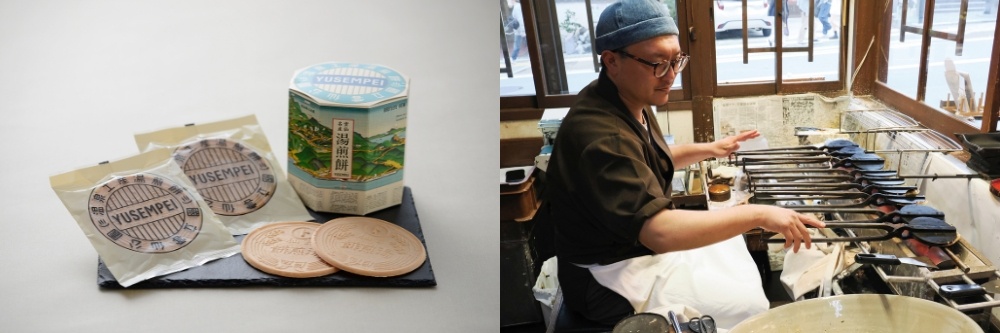
At Tohtoumiya, fifth-generation owner Ryuta Kato bakes yu-senpei, crackers that can be eaten freshly baked, or are ideal light-weight souvenirs. Visitors to Unzen can watch them being made on weekends and public holidays. (left photo: Tohtoumiya Honpo)
Walk the Highland Meadows of Tashirobaru
North of the main Unzen hot spring district, the atmosphere changes. Oku-Unzen’s Tashirobaru plateau sits at 620 meters above sea level along the Chijiwa Fault, forming a broad basin at the foot of Mt. Kusenbu (1,062m).
This highland meadow is quieter than the dramatic volcanic slopes below. Designated as part of the Shimabara Peninsula Geopark, seasonal change defines the plateau. In spring, Miyama Kirishima azaleas paint the hillsides pink. Early summer brings dogwood blossoms. Autumn colors the grasslands in fiery hues, while winter frost traces delicate patterns across open fields.
Walking trails, a campground, and an educational trail center make Tashirobaru a gathering place for families and students. The area has long been associated with the spiritual training known as shugendo, and nearby caves are linked in local tradition to the early ascetics. Today, visitors come to hike, camp, and rediscover a slower rhythm of life.
From certain ridgelines, you can glimpse the profile of Mount Heisei-Shinzan rising beyond—a reminder that even these peaceful meadows sit atop a restless geology.
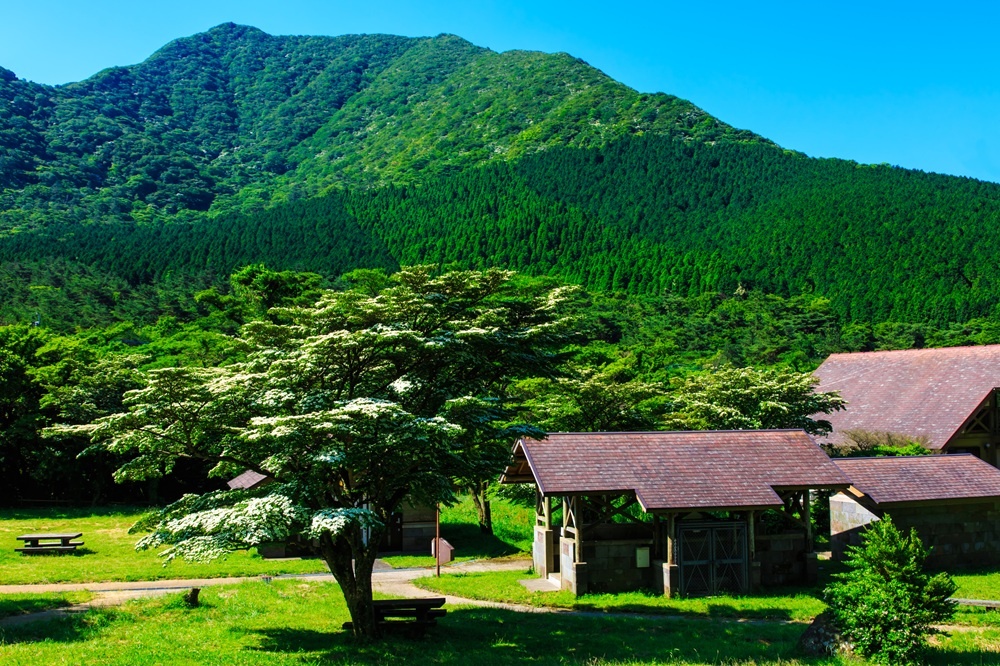
The administration building of the Tashirobaru Campground features a large dogwood tree that blooms in early summer.
Sea Kayak Through the Amakusa Archipelago
If Unzen is defined by its volcanic terrain, Amakusa is defined by its coastal geography.
The Amakusa region comprises more than 120 islands, connected by bridges and ferries to mainland Kumamoto. Pine-covered islets rise from calm inland waters, creating one of Kyushu’s most scenic marine landscapes.
A guided sea kayak tour through the islands offers an immersive way to explore this archipelago. Tours typically operate in both morning and afternoon session, with generally calm conditions suitable for beginners and families. Basic instruction and safety equipment are provided by professional guides.
Routes often include stops at uninhabited islands, where participants can land in rocky coves or small sandy inlets. Kayaking offers a sea-level perspective on the scale and layout of the islands, allowing visitors to understand how the archipelago is structures and how the local communities relate to the seas.
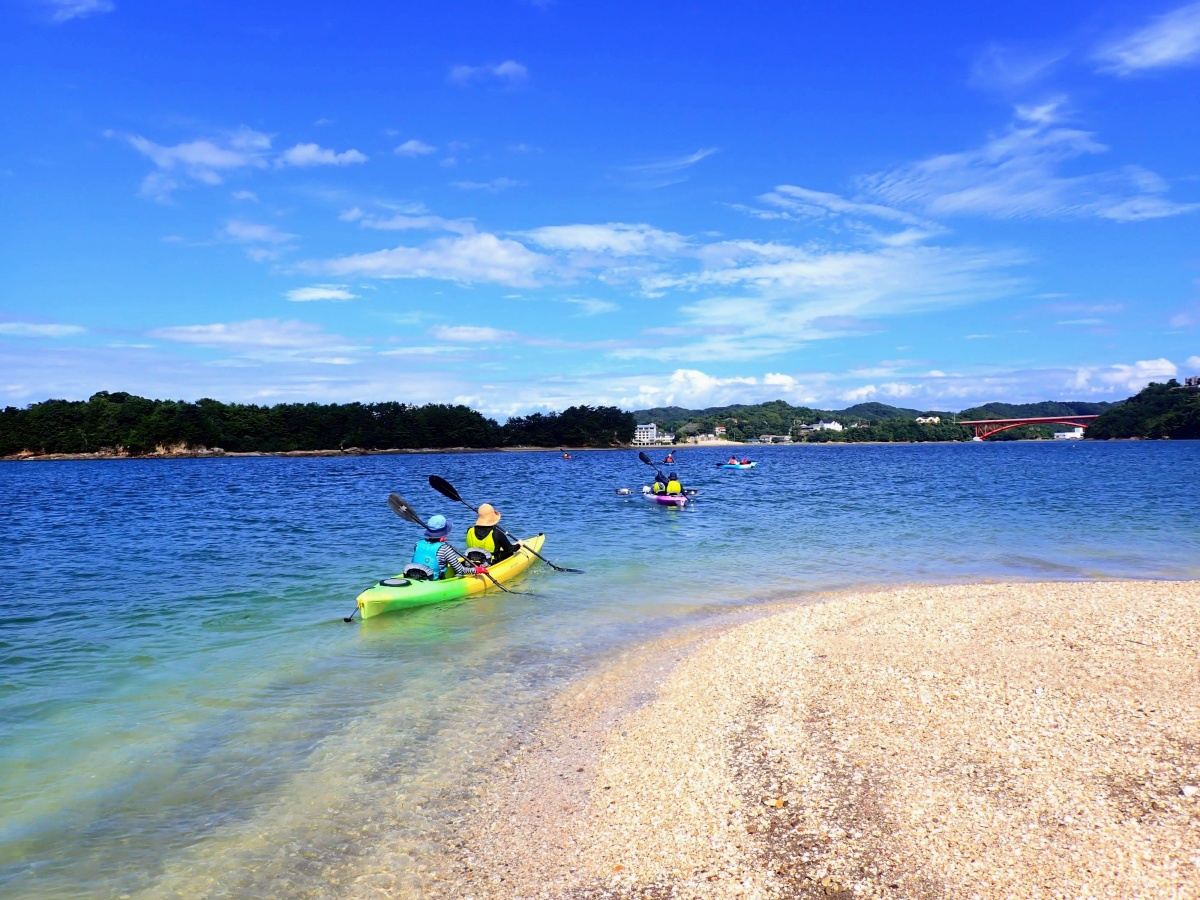
The kayak tours are an excellent way to view the white sand beaches and the emerald waters of the national park. (Photo: unplugged)
Stories from the Archipelago
Unlike national parks in some countries—including the United States—Japan’s national parks encompass places where communities actively live and work within park boundaries. Farming, forestry, and fishing continue alongside conservation. This integration requires careful coordination between park authorities and local residents, balancing environmental protection with the realities of daily life.
Beyond its scenic appeal—the lively Unzen Onsen district, dynamic volcanic terrain, and Amakusa’s island-dotted seas—the park is defined by a distinctive culture shaped by multiple historical layers. Unzen once flourished as a summer retreat for foreign residents in East Asia. The mountains have long served as sites of spiritual training and worship. Amakusa carries a complex Christian heritage rooted in centuries of faith, persecution, and resilience.
As part of the national “Stories from the National Parks of Japan ” initiative leading up to the 100th anniversary of the park system in 2031, oral histories are being compiled to capture these lived experiences. The goal is not only to showcase natural beauty but to preserve the voices of those who have long lived in harmony with it. Among the people heard are a Buddhist nun and conservationist, a yusenbei cracker maker determined to promote Unzen to a wider audience, and a volcanologist whose research approaches for coexistence with volcanoes.
In Unzen-Amakusa, the story of the land is inseparable from the people who call it home—and who continue to shape its future. Their efforts to revitalize communities while safeguarding forests, coastlines, and marine habitats reflect a shared commitment to future generations.
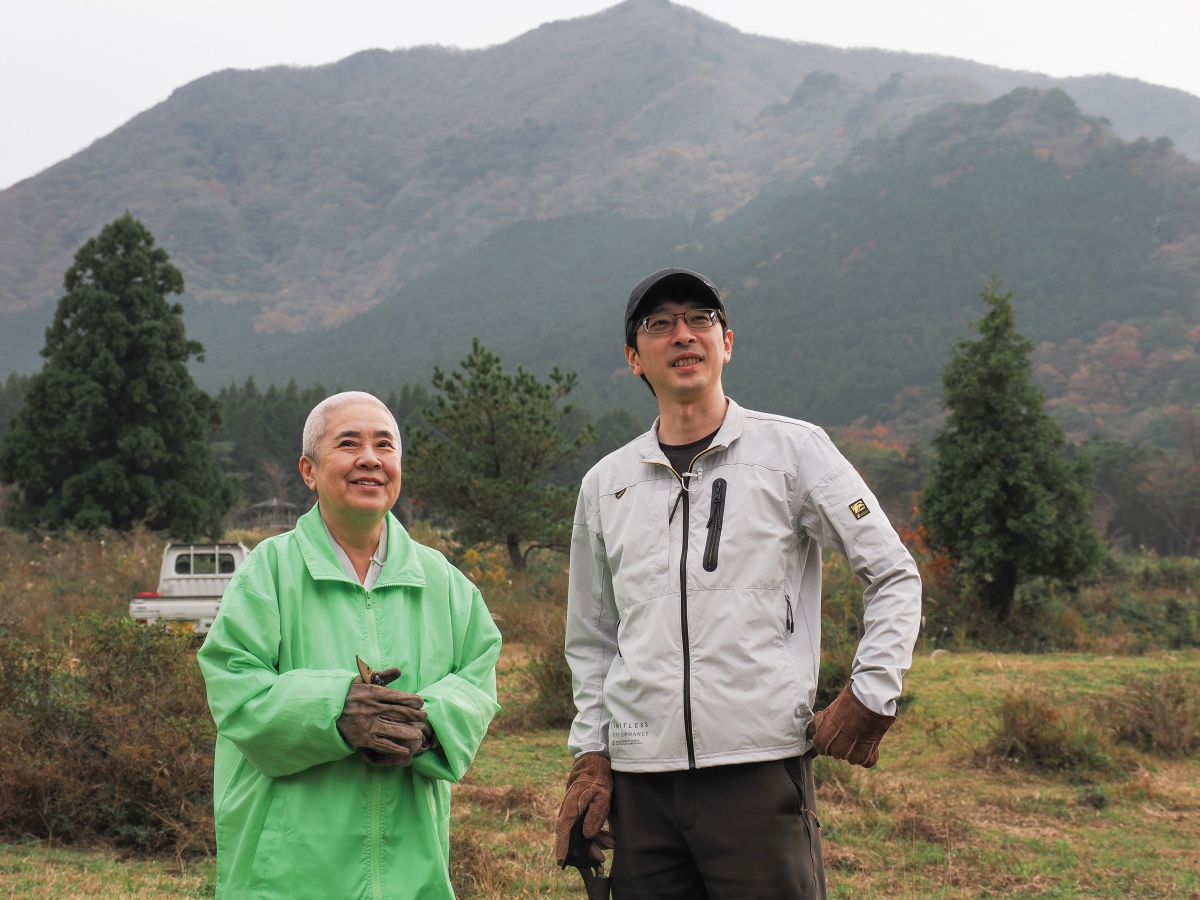
Taeko Nakata (left) and Tetsuya Yamamoto are conservationists who work to preserve the natural beauty of the Unzen-Amakusa National Park. They are among a number of local residents featured in the “Stories from the National Parks of Japan” project.