Seascapes and Island Traditions: Exploring Saikai National Park
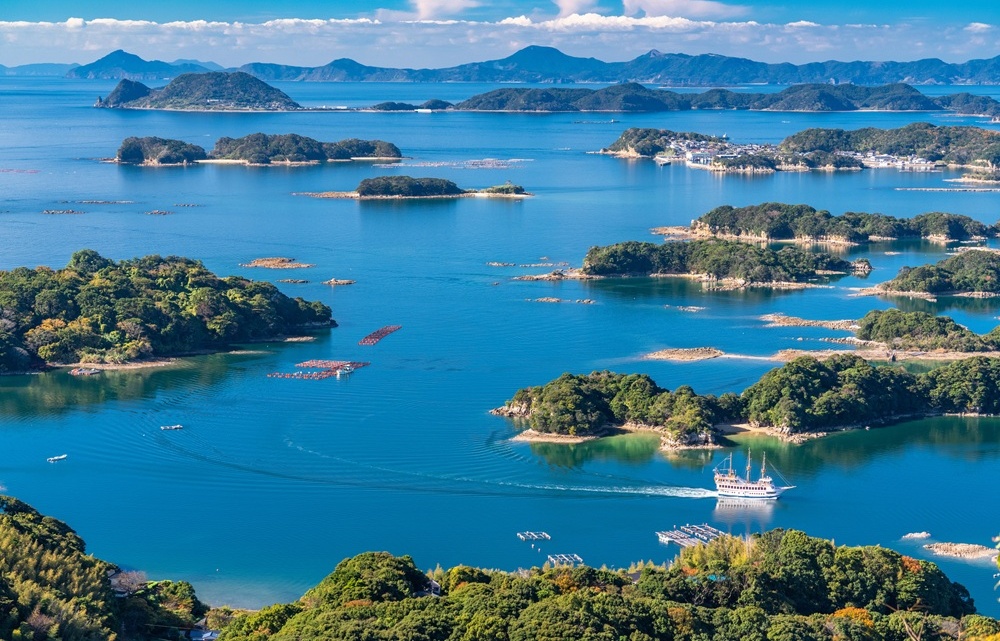
Some of the nearly 400 islands that are found within the Saikai National Park.
From former whaling ports and hidden Christian sites to coral-rich seas and quiet farming villages, this maze of islands form a maritime landscape shaped by wind and tide—and faith, community, and commitment.
By AAJ Editorial TeamSaikai National Park lies in the far northwest of Kyushu, where the warm Tsushima Current threads its way through scattered archipelagoes. Nearly 400 islands—large and small—are located within its boundaries, forming a landscape of serrated cliffs, sheltered coves, and white-sand beaches. Designated a national park in 1955, Saikai is defined as much by water as by land. Intricate coastlines and island-dotted horizons make up an environment where life remains deeply anchored to the rhythms of the sea.
The park stretches from the Kujukushima area near Sasebo northward to Ikitsukishima and Hiradojima, and southwest across the Goto Islands. This complex geography has nurtured remarkable biodiversity. Tidal flats serve as breeding grounds for rare species such as the Japanese horseshoe crab. Migratory birds cross these skies in great seasonal waves, some traveling westward in autumn while others head south, making the park a crossroads of avian movement between Japan and the Asian continent. The flora, too, reflects this connection, with continental species mingling among coastal grasses and volcanic highlands.
Yet Saikai is not only a natural landscape. Its communities have been shaped by its isolation and its encounters with the outside world. Fishing, whaling, farming, and maritime trade have sustained the island communites for generations. Christianity, introduced to Japan in the sixteenth century, found refuge here during centuries of persecution. Churches such as those on Nakadorijima and Fukuejima speak to the faith of Hidden Christians who fled persecution during the Edo period. On Hisakajima stands the former Gorin Church, Nagasaki Prefecture’s second oldest wooden church with a rare blend of Japanese and Western architectural styles. On the island of Nozakijima—once home to 650 residents, but now down to one—Nokubi Church overlooks grassy hills now roamed by deer.
Elsewhere, history takes different forms. Remnants of fortifications near Sasebo recall the strategic importance of these waters. Whaling museums preserve memories of an industry that once shaped island economies. These cultural landmarks are inseparable from the sea that both protected and sustained their communities.
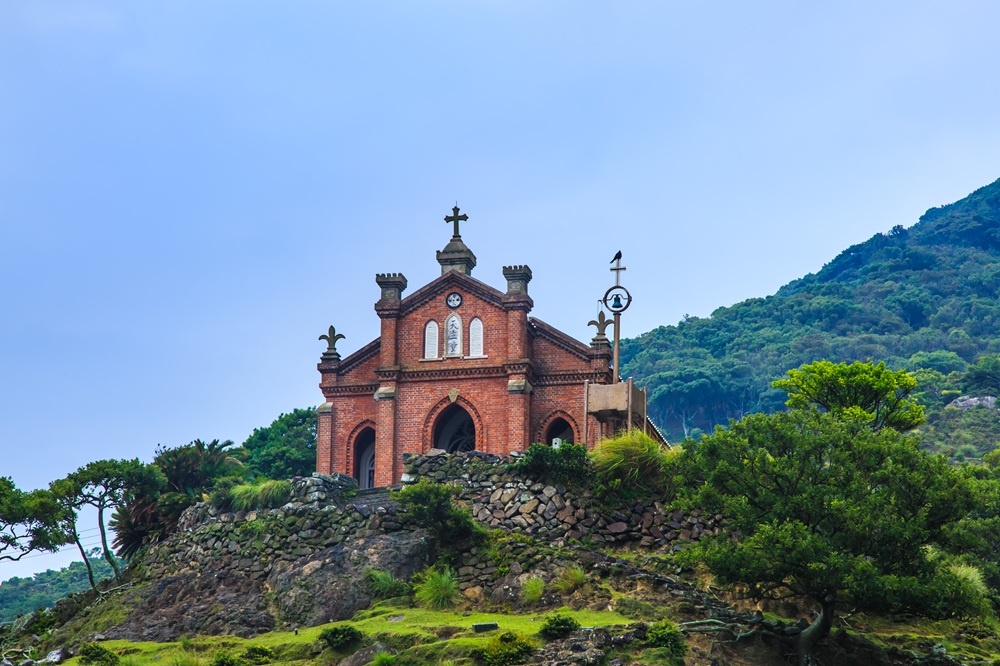
Nokubi Church on the island of Nozakijima. The island was once home to three villages, but only one resident remains, managing the only accommodation facility.
Three Ways to Experience Saikai National Park
Experience Island Life through a Farm Stay on Ojika Island
To understand Saikai’s appeal, it helps to slow down. On Ojika Island in the Goto archipelago, visitors can experience this slower rhythm through a traditional farm stay, or minpaku. Guests are welcomed into local homes, sharing home-made local dishes prepared from island-grown vegetables and freshly caught seafood.
Spend time with a local family in their daily routine. You can participate in such activities as fishing for your dinner from a local harbor, picking vegetables from a kitchen garden, or visiting the village’s temple to ring the temple under the monk’s supervision. Or you can just completely relax, spending your time walking quiet village lanes, or gazing out at the harbor as fishing boats return at dusk. Over 20 local families open their hearts and homes to visitors—sharing stories of generations of island life, and how they sustain their communities in the face of depopulation.
This intimate exchange transforms travel into participation. The sea that surrounds Ojika is not merely scenic backdrop but livelihood and inheritance. Through a farm stay, visitors glimpse how Saikai’s landscapes are lived in, not merely admired.
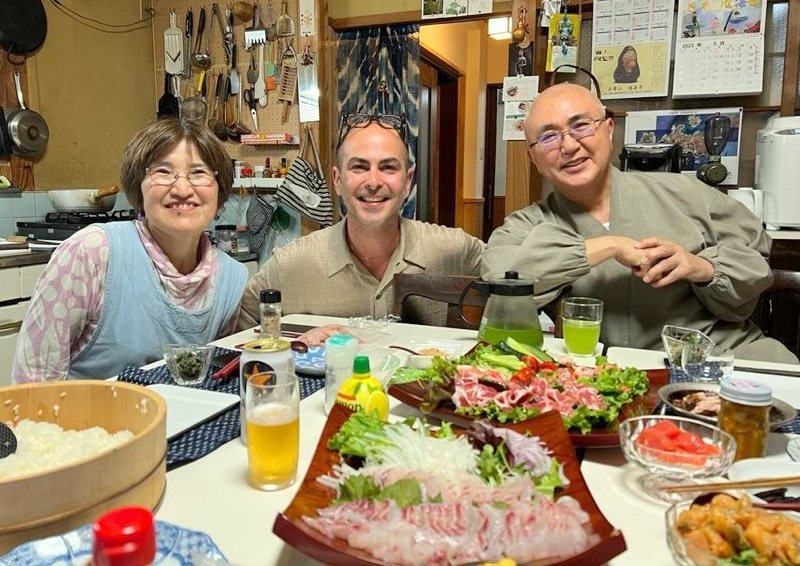
An increasing number of visitors from overseas are taking advantage of the warm hospitality of the farm stay program on Ojika Island. (photo: Ojika Island Tourism)
Cruise Historical and Modern Highlights of the Wakamatsu Seto Strait
If Saikai is best understood as a tapestry of islands, then the Wakamatsu Seto Strait offers one of its most intricate patterns. Situated between Nakadorijima and Wakamatsujima in the Goto Islands, this narrow channel stretches some 15 kilometers and is dotted with around 30 small islets.
On Goto Shinko Cruise’s 34-foot cruiser, visitors can enjoy traversing these calm waters for views of the sculpted beauty of the coastlines. Steep slopes descend into deep blue channels; forested ridges rise sharply from the sea. The perspective from the water underscores how geography shapes life here—villages tucked into protected coves, boats threading between islands, churches appearing unexpectedly along the shoreline.
The journey includes a visit to a Christian cave only reachable by boat, a place believers hid to escape persecution. Some visitors may have a chance, if the timing is right, to visit a bluefin tuna farm to observe feeding and, possible, a catch. The cruise offers both panoramic views and close encounters, a reminder that Saikai’s grandeur lies in the subtle interplay of sea, land, and sky.
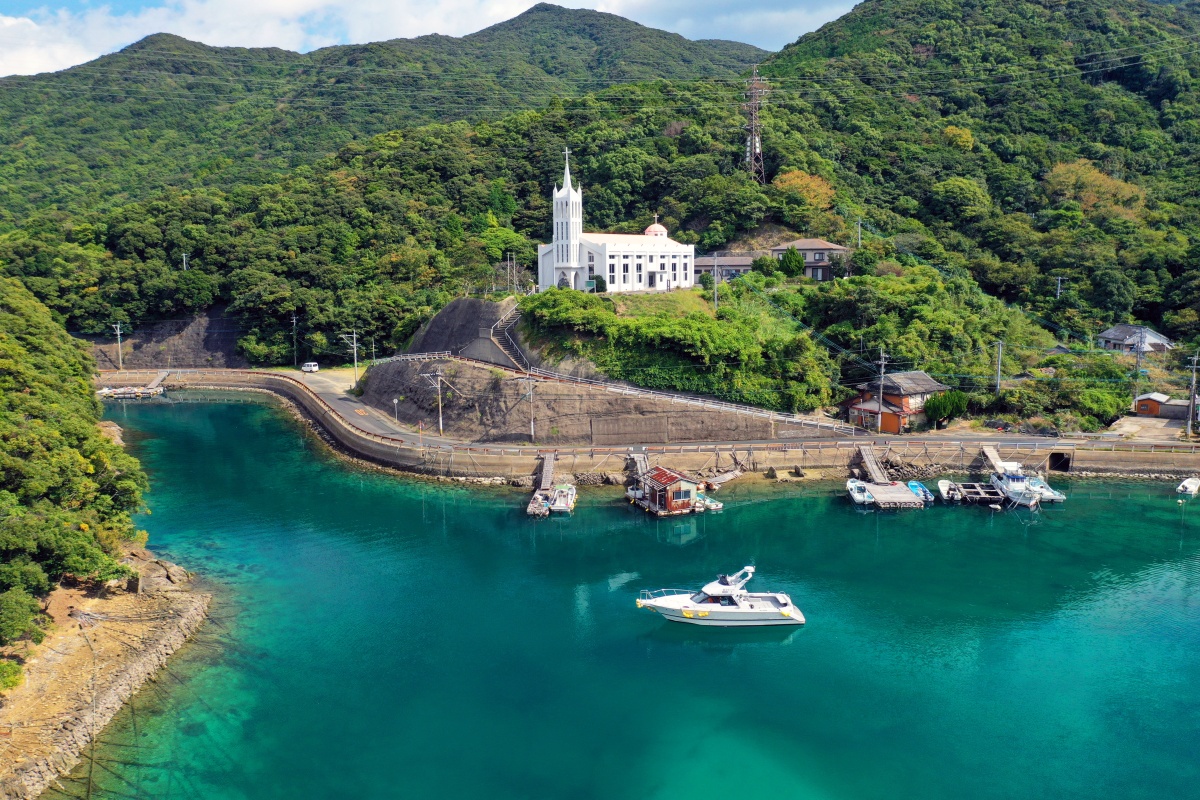
Participants in the cruise are rewarded with a spectacular view of Kiri Church, established in 1897. (photo: Goto Shinko Cruise)
Dive the Emerald Waters of the Goto Islands
Around the Goto Islands, clear seas nurtured by the Tsushima Current support vibrant marine ecosystems. Goto Kaiyu is a dive shop that offers a variety of guided diving tours to coral formations, schools of fish, and underwater rockscapes shaped by volcanic activity. The clarity of the water—particularly near Fukuejima—creates an almost weightless sense of immersion. Sunlight filters downward in shifting patterns; rocky outcrops give way to sandy seabeds. In calmer areas, beginners can explore shallow reefs, while more experienced divers can venture deeper along the dramatic underwater contours.
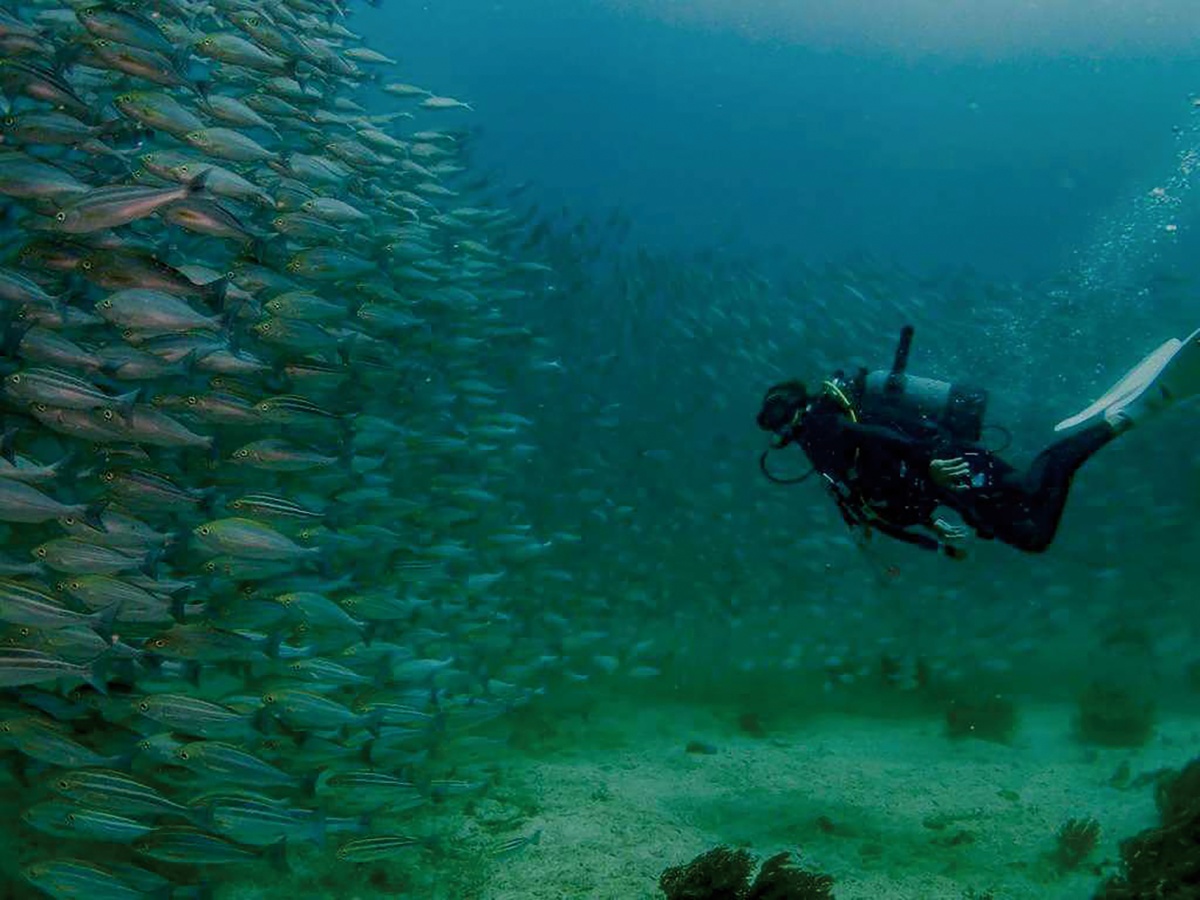
The Goto Kaiyu dive shop has a variety of tours for divers to experience the teeming sea life of the area’s waters.
Stories from the Islands
Like all of Japan’s national parks, Saikai operates within a distinctive conservation model. Unlike some park systems abroad—such as in the United States—Japan’s parks include communities within their boundaries. Farming, fishing, and forestry continue alongside conservation efforts. This integration requires careful coordination between park authorities and local residents, balancing ecological protection with sustainable livelihoods.
Coastal areas make up the bulk of Saikai National Park, and for those who live here, its intricate shorelines and blue expanses are daily companions. While some young people leave the islands, others remain—or return—drawn by a deep attachment to place. They become fishermen, farmers, conservationists, tour operators, and cultural stewards.
The “Stories from the National Parks of Japan ” project, part of the initiative marking the 100th anniversary of Japan’s national park system in 2031, seeks to capture such voices. Each park has its own volume of oral histories. In Saikai’s collection—Living with the Sea: Where Time and Nature Intertwine—residents share their experiences of growing up among these islands, working the waters, and welcoming visitors. Among the people featured are the director of a local visitor center, a couple who run sightseeing cruises, and a dive shop operator.
Through these testimonies, Saikai emerges not merely as a scenic destination but as a living landscape shaped by devotion and endurance. Conservation here is not only about protecting cliffs and coral reefs, but about sustaining communities whose lives remain entwined with the natural environment.
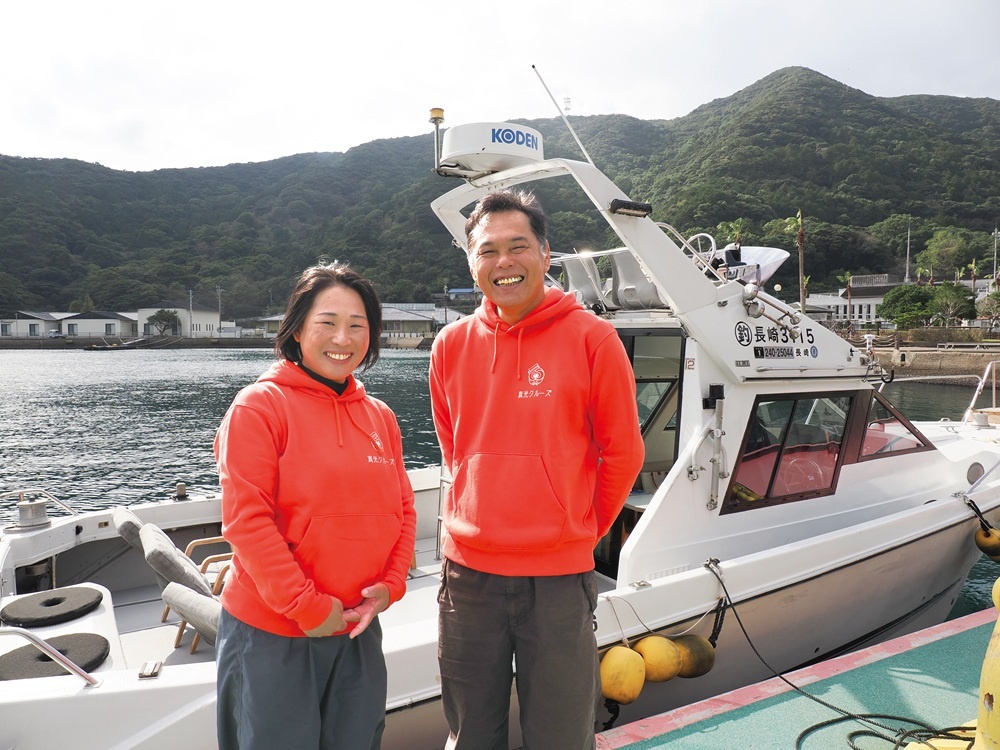
Rie (left) and Sumio Osera of Goto Shinko Cruise tours. They are two of the local residents featured in the “Stories from the National Parks in Japan” project.