

Shodoshima: Fermentation, Art, and an Island Shaped by Time
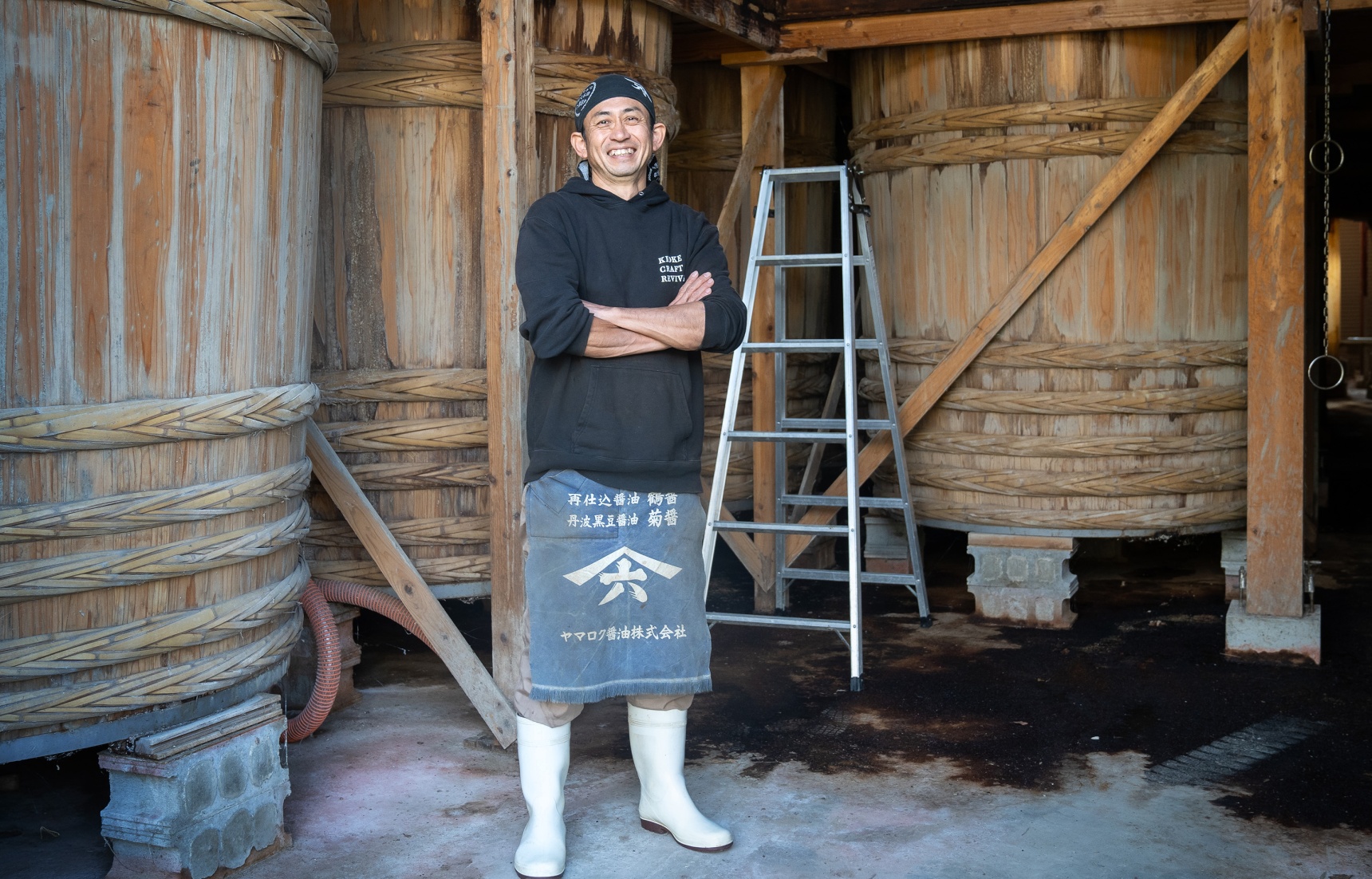
Yasuo Yamamoto, fifth-generation owner of Yamaroku Soy Sauce, poses among the massive traditional wooden barrels (kioke) where his soy sauce matures over years. (Photo: Cindy Bissig)
Floating in the calm waters of the Seto Inland Sea, Shodoshima is a place shaped by climate, by centuries of small-scale industries, and most of all by the people who live here. It is often associated with olives or soy sauce, but offers much more: unique sake, a revival of almost lost traditions, and a quiet but growing reputation for contemporary art.
By Cindy Bissig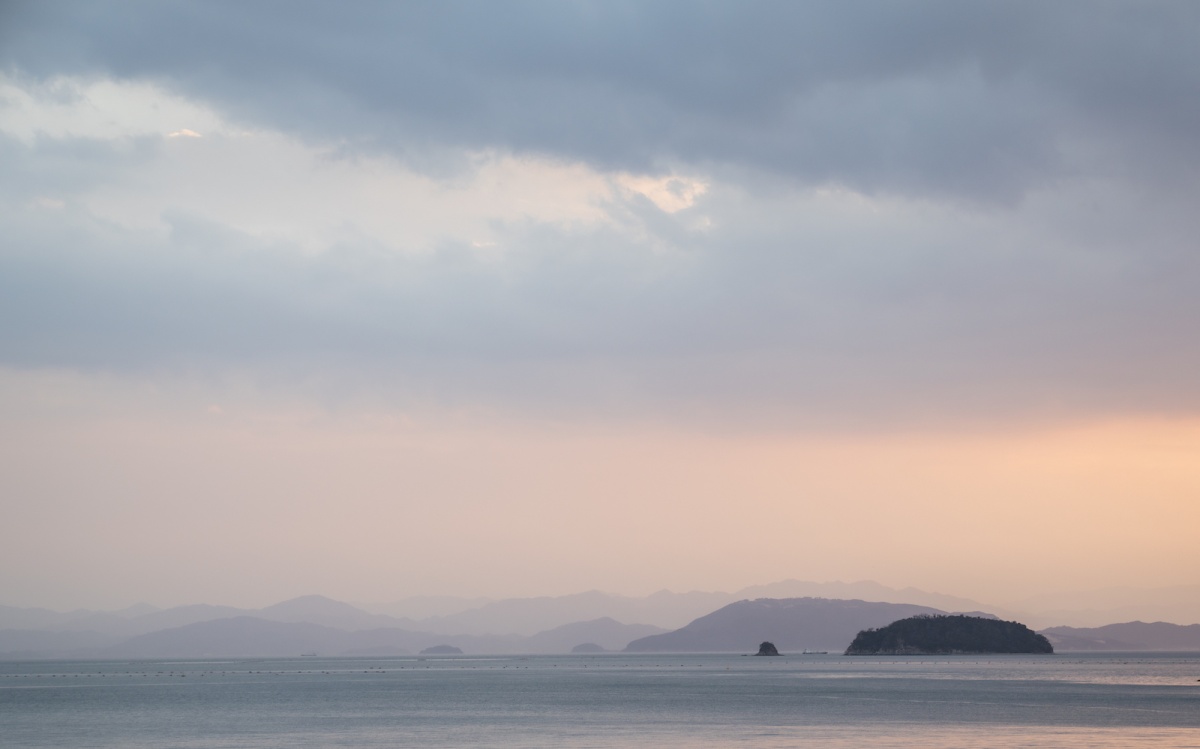
The Seto Inland Sea at dusk. (Photo: Cindy Bissig)
Shodoshima has been on my bucket list for years, and it took far longer than expected for me to finally make the journey. Part of the reason was practical: it is an island, and although accessible, getting there requires a commitment. Ferries must be timed, routes considered, and the weather watched. It is not a place to be stumbled across by accident.
When I did get to Shodoshima, it felt very familiar. In some ways, it reminded me of the island of Sardinia, where I spent many summers.There was the rugged terrain, the sloping village streets, and the olive trees dotted among the landscape. Since that first visit, I have returned several times. Partly, it is a personal desire to deepen my understanding of the island’s fermentation culture—soy sauce, sake, olives, and the patient work behind them. But just as importantly, Shodoshima has become a place I return to to slow down, and with every visit, I somehow discover more.
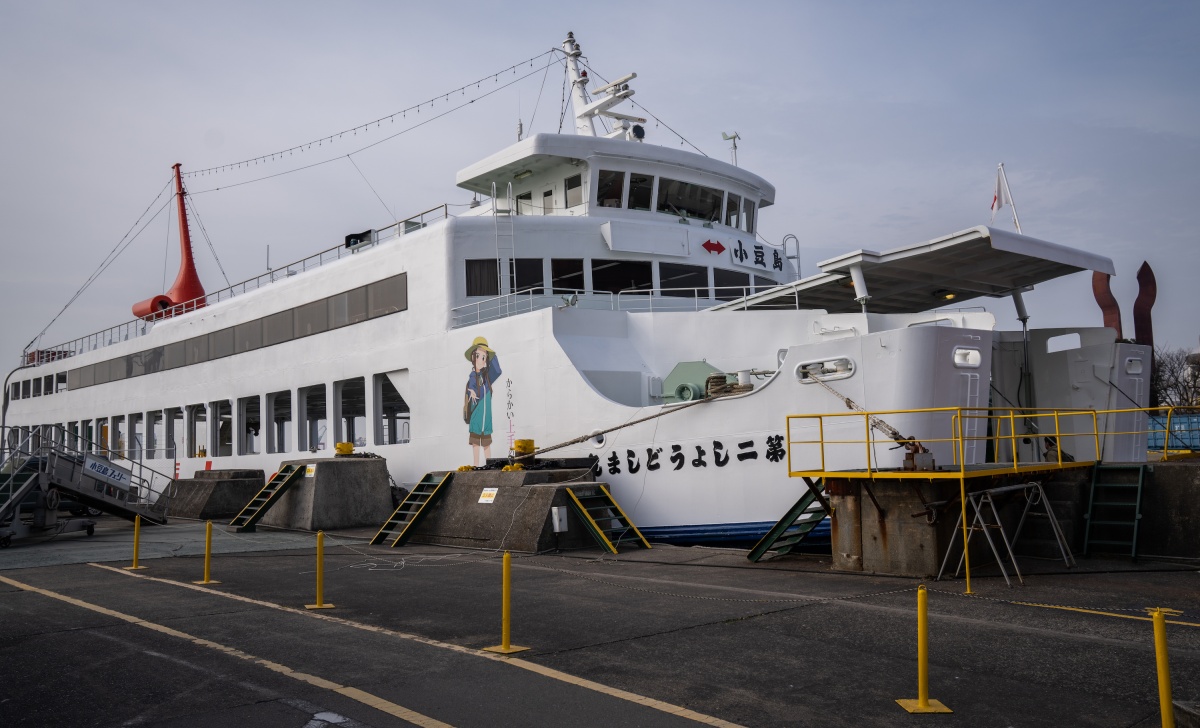
The ferry at Himeji Port, bound for Shodoshima. (Photo: Cindy Bissig)
While most travelers arrive via Takamatsu in Kagawa Prefecture or from ports in Okayama, I prefer the route from Himeji, a ferry that cruises directly to Fukuda Port on the island’s eastern coast. It is one of the fastest (about 4 hours in total from Kyoto) and least complicated ways to reach Shodoshima, with minimal transfers. Most of all, once on board the ferry, the crossing itself feels more like a quietly restorative transition than mere transport.
As the ferry pulls away from the mainland, small islands begin to appear. The pace slows, and by the time Shodoshima comes into view, one has almost adjusted to the slow pace of island time.
An Island Built on Salt and Sun
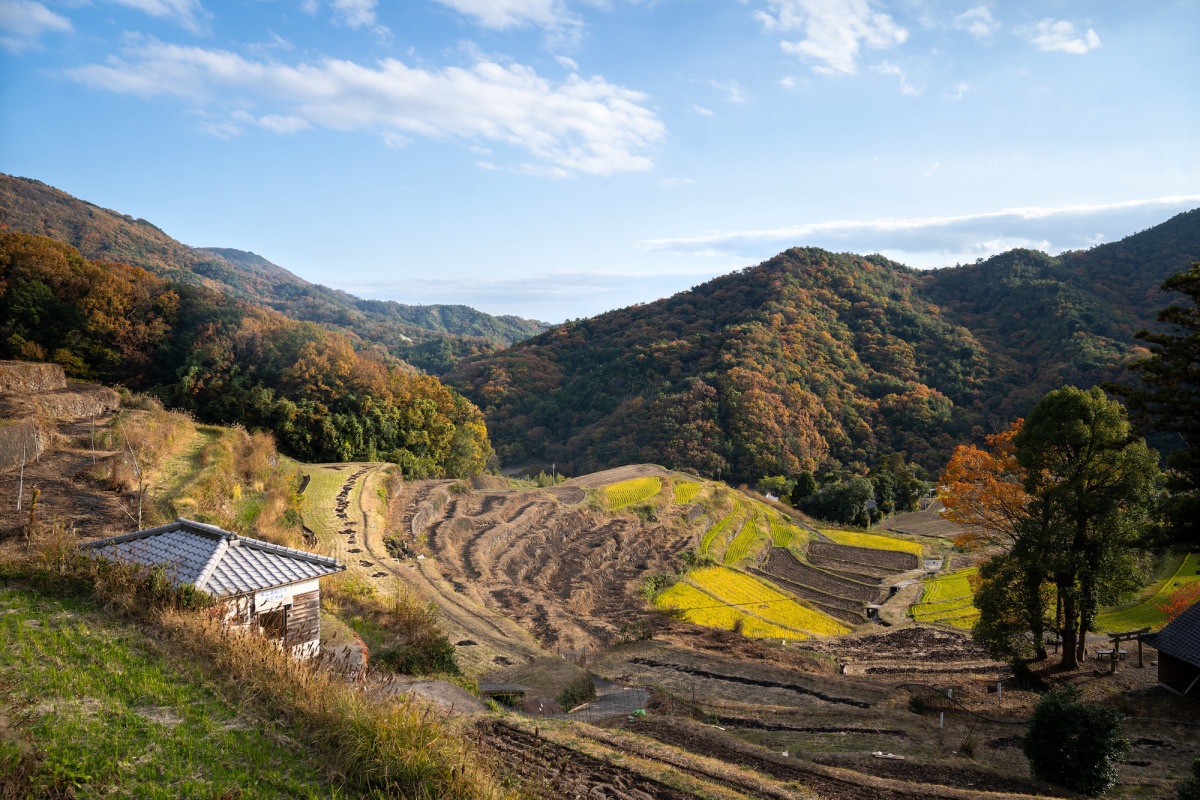
Rice terraces cascade over the hills of Shodoshima, illustrating how agriculture has adapted to the island’s steep terrain and limited flat land. (Photo: Cindy Bissig)
The Seto Inland Sea is sheltered by the islands of Honshu, Shikoku, and Kyushu, which act to protect this area from most extreme weather conditions, and give it one of the mildest climates in western Japan. Rainfall is relatively low, winters are gentle, and the number of sunny days is unusually high.
Over the years, these conditions have shaped the islands’ development. Salt production flourished here from the Edo period, drawing on the abundant seawater, broad coastal shallows, and dry conditions. The salt and stable climate, in turn, made long fermentations for brewing soy sauce viable. And, when olives were introduced in the early twentieth century as part of a national agricultural experiment, they thrived for the same reasons.
So rather than becoming dependent on a single industry, Shodoshima developed a layered economy–fishing, salt and soy sauce production, olive harvesting–that was all tied to its geography and maritime trade. The result is a landscape that feels practical rather than polished.
The Architecture of Fermentation
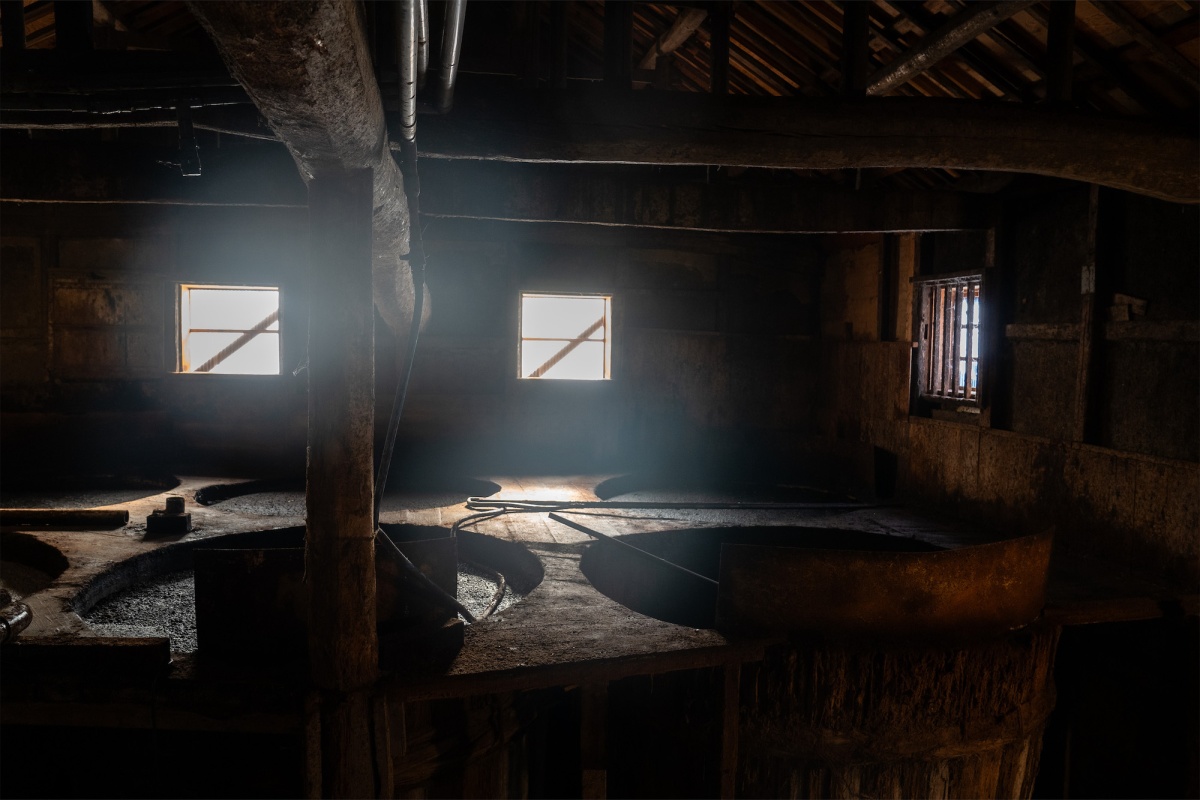
The soy sauce mash slowly ferments in centuries-old kioke barrels. (Photo: Cindy Bissig)
One does not need to look far to find Shodoshima’s fermentation culture. A short coastal drive from any port on the east side, Hishio no Sato, or Soy Sauce Village, is where the liquid gold is brewed in dark wooden kura (traditional storehouses). Many of the soy sauce makers here welcome visitors, but a good place to start is the Marukin Soy Sauce Memorial Hall, which offers an accessible introduction to the island’s soy sauce history, with displays of historic tools and wooden barrels, and hands-on experiences like pressing soy sauce.
Among the most respected producers is Yamaroku Soy Sauce, known for aging its soy sauce in the massive traditional wooden barrels known as kioke. Some are more than a century old, and each contains its own complex microbial ecosystem that has been built up over decades. Time is one of the essential elements here, but the result is a soy sauce with remarkable depth, shaped as much by the accumulated microbial life as by raw materials and experience.
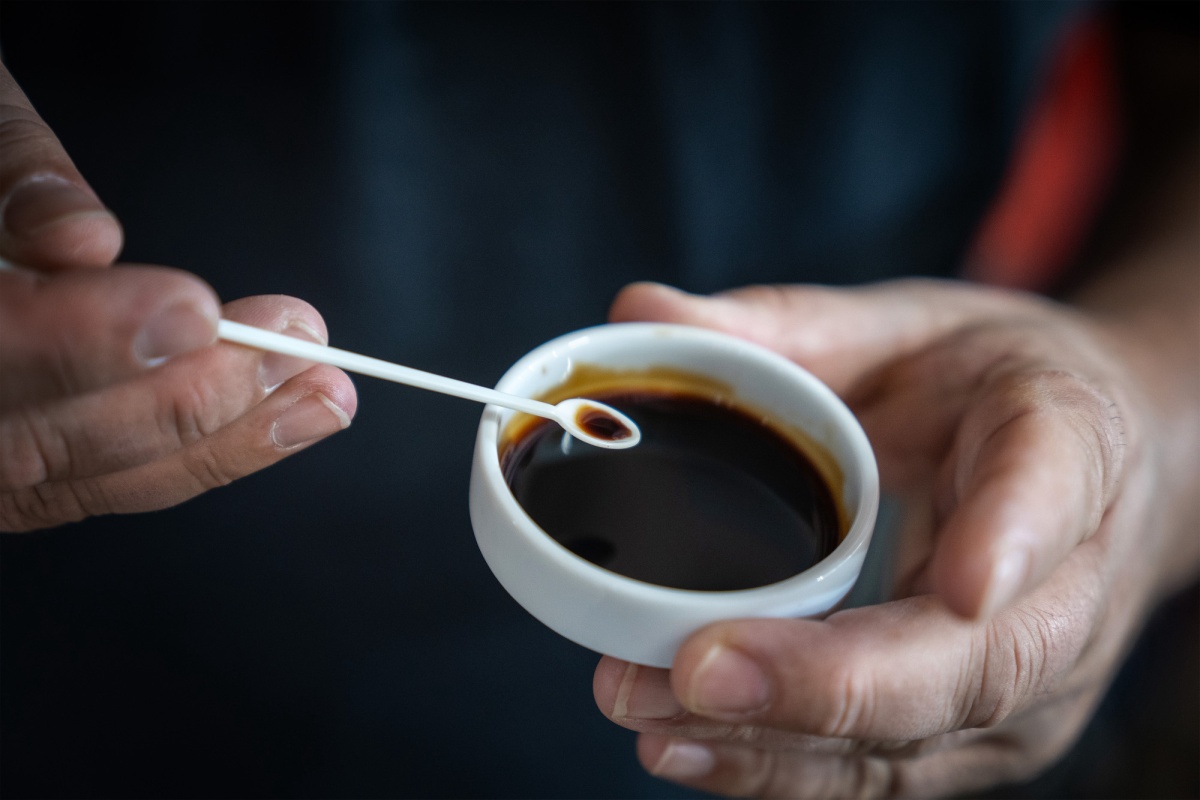
The great part about visiting these local makers is that you get to taste! This traditionally fermented soy sauce was full of depth and incredible umami. (Photo: Cindy Bissig)
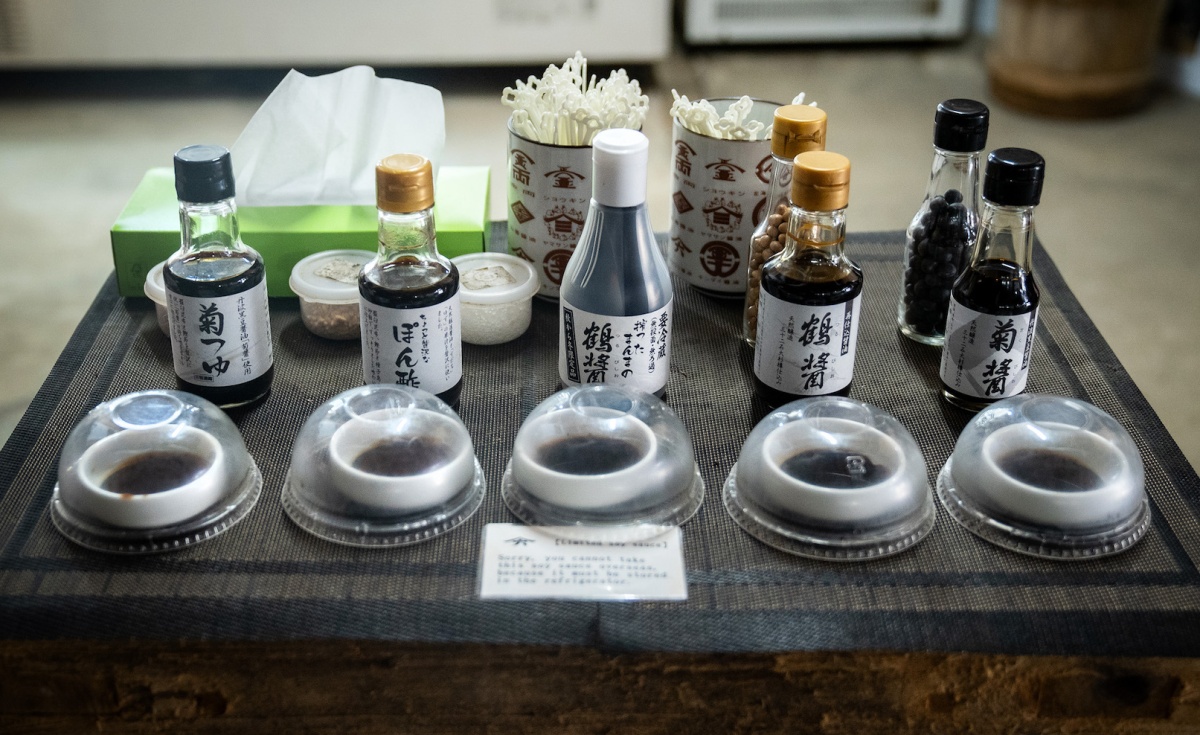
A tasting lineup of Yamaroku soy sauces, each reflecting differences in aging. (Photo: Cindy Bissig)
Reviving the Kioke
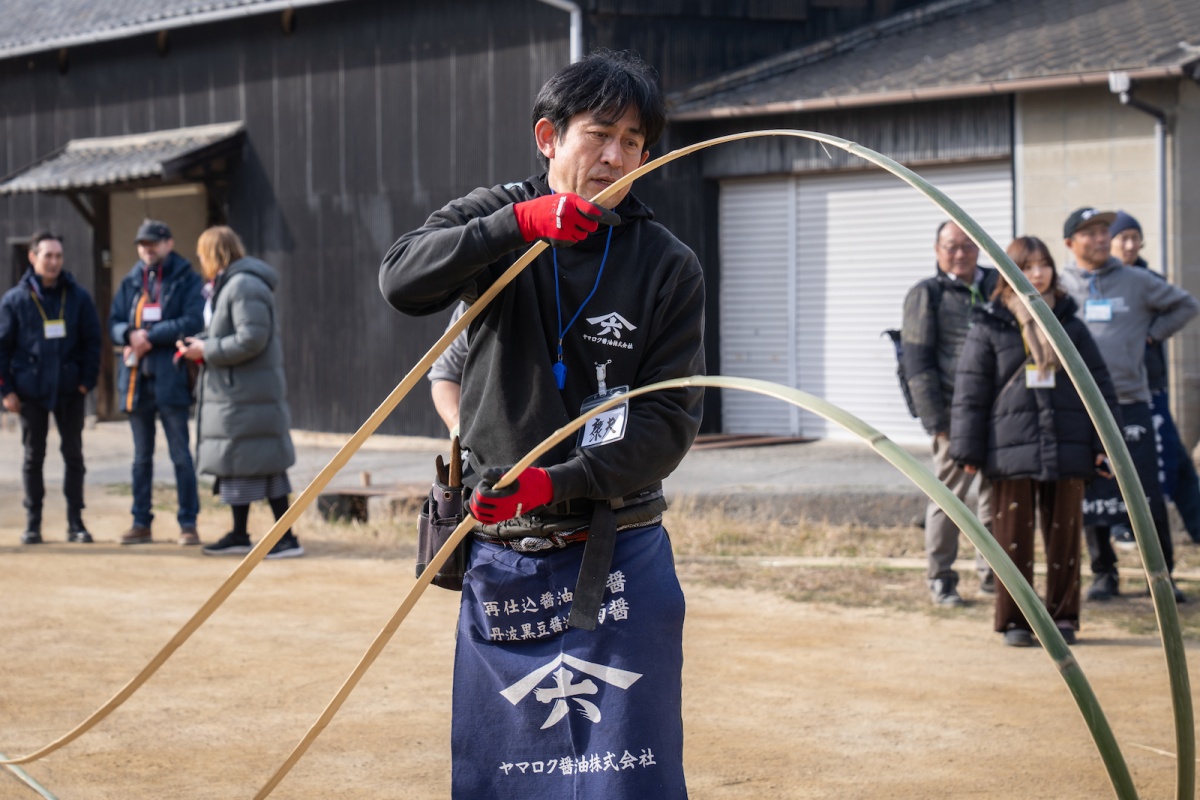
Yasuo Yamamoto weaving a bamboo hoop (take-taga) for a traditional kioke barrel — a skill essential to maintaining Japan’s wooden fermentation vessels. (Photo: Cindy Bissig)
But there is more to Yamaroku. While it is even well known overseas for its soy sauce, its broader impact comes from its role in preventing the disappearance of kioke, and the craftsmanship required to build them.
Wooden barrel production dwindled sharply over the last few decades, as much of Japan’s fermentation industry shifted to stainless steel and plastic for efficiency and cost. So in 2012, Yasuo Yamamoto, Yamaroku’s fifth-generation owner, helped launch the Kioke Craftsmen Revival Project. The initiative brought together producers and craftspeople from across related industries–including soy sauce, miso, mirin, and sake–to revive the specialized knowledge needed to build these barrels and keep the craft alive.
Each February, this effort culminates in the three-day Craft Kioke Revival Matsuri, where participants work side-by-side with master coopers to assemble the traditional barrels. At the end of the festival, the finished kioke are then transported back to producers for use in the fermentation process.
In recent years, the event has drawn increasing international participation, reflecting a rising global interest in traditional fermentation practices and the urgency of preserving these skills. Open to anyone, it offers not only hands-on experience, but the chance to leave with new friendships and a deeper appreciation for the makers and their craft.
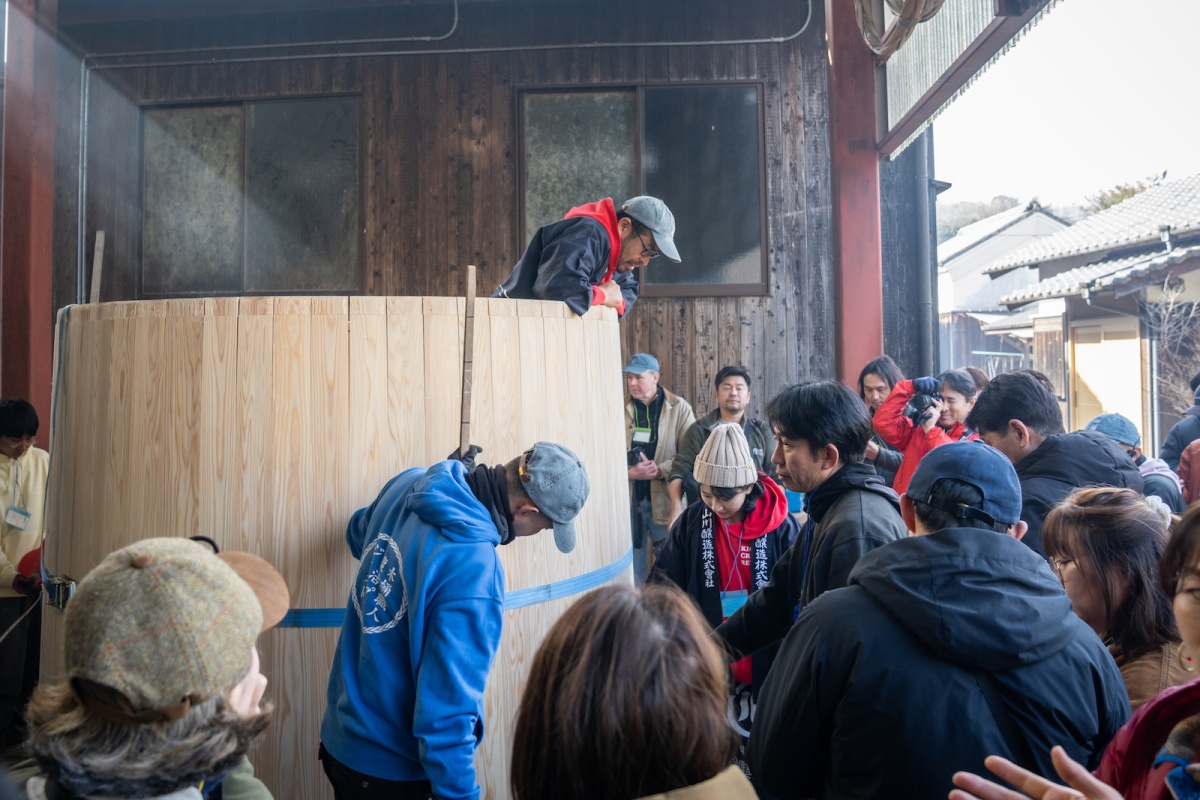
Participants observe the near-completion of a barrel during the Craft Kioke Revival Matsuri, where traditional coopering techniques are preserved through hands-on practice. (Photo: Cindy Bissig)
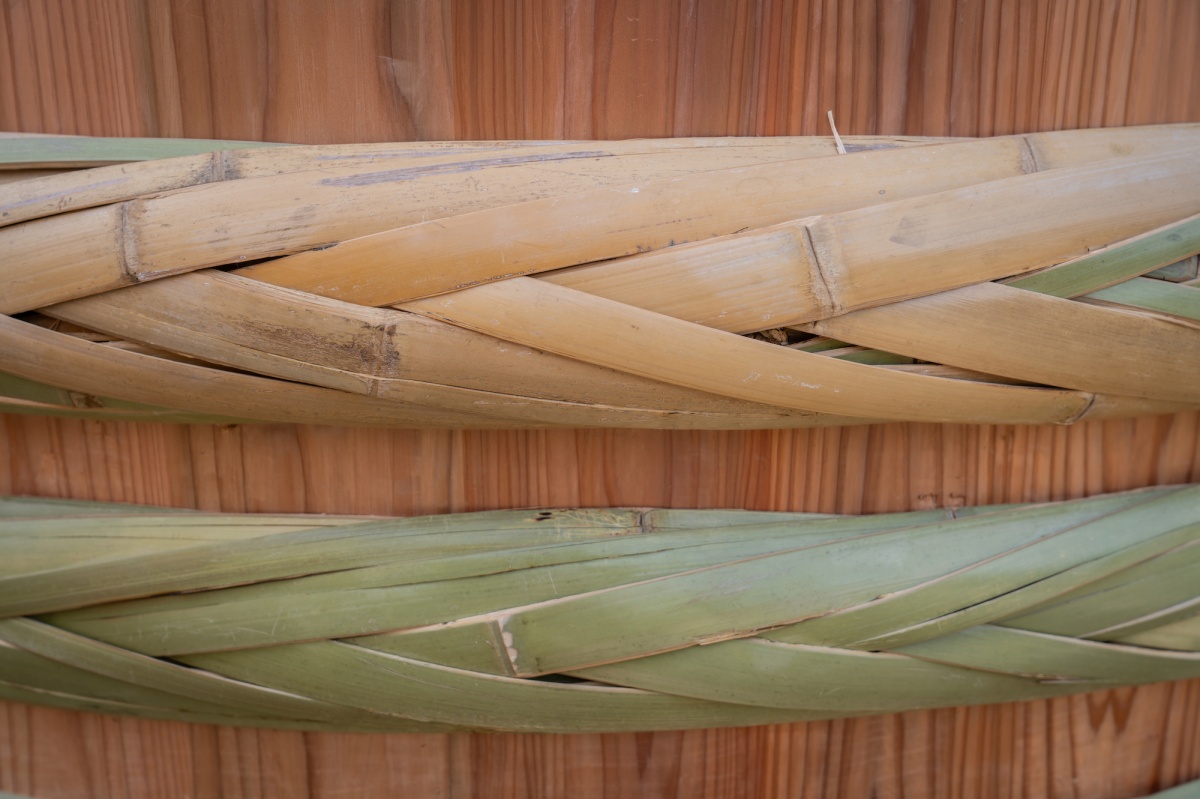
Bamboo hoops (take-taga) used to bind the staves of a kioke barrel, providing structural strength without metal fasteners. (Photo: Cindy Bissig)
The Island’s Other Brew
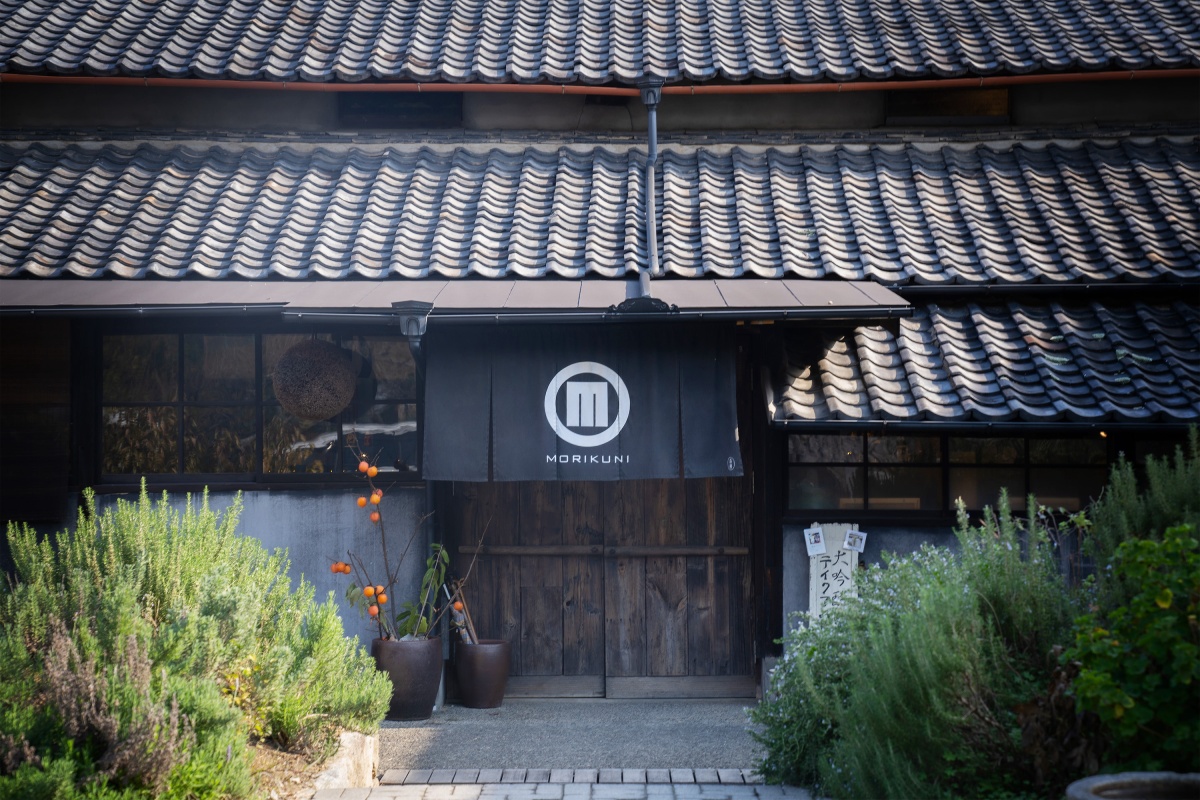
The entrance to Morikuni Sake Brewery, Shodoshima’s only sake producer, housed in a former soy sauce warehouse in the Hishio district. (Photo: Cindy Bissig)
Also in the heart of Hishio stands Morikuni Sake Brewery, Shodoshima’s only sake producer. Housed in a former soy sauce warehouse, the brewery is physically–and symbolically–rooted in the island’s fermentation heritage. I first encountered Morikuni’s sake at a festival in Kyoto and was intrigued to discover that it came from this small island, better known for soy sauce than sake. As well as using locally grown rice and pure island water, the brewery is also known for experimenting with olive yeast–a subtle nod to the island’s agricultural identity as Japan’s olive capital.
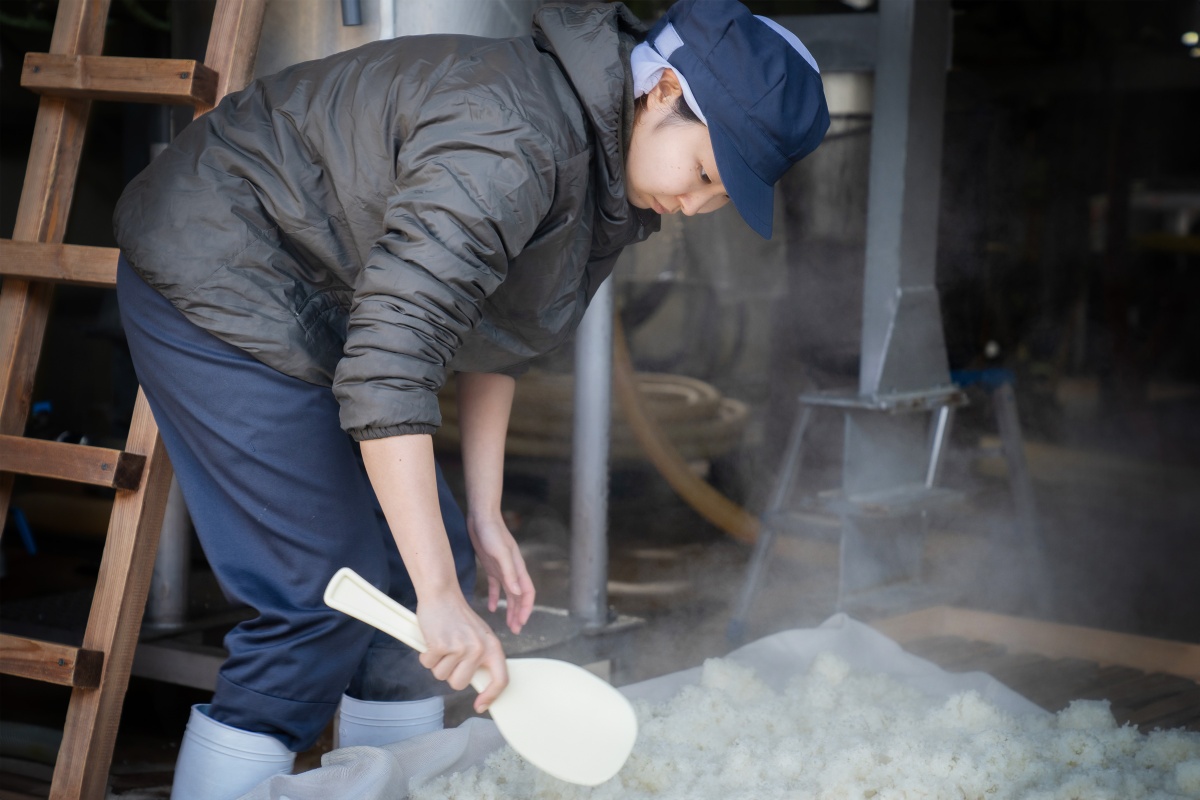
Freshly steamed rice is spread and cooled by brewery staff before the next stage of sake production. (Photo: Cindy Bissig)
An easy walk from the main streets of the Hishio district, the brewery is well worth a visit, whether you are a sake drinker or simply fermentation-curious. Arrive early in the day and you may glimpse the brewing process underway. Staff are usually happy to explain their work (primarily in Japanese), and those keen for a closer look should consider contacting the brewery in advance.
Afterward, sample a selection in their shop and tasting area, and take time to browse their range of sake and secondary products. Even non-sake drinkers will find something to enjoy: the small bakery at the entrance serves coffee and bread made with sake rice and fragrant sake lees, in both sweet and savory varieties. The cream bun is excellent, and their hot dog makes a perfect savory snack.
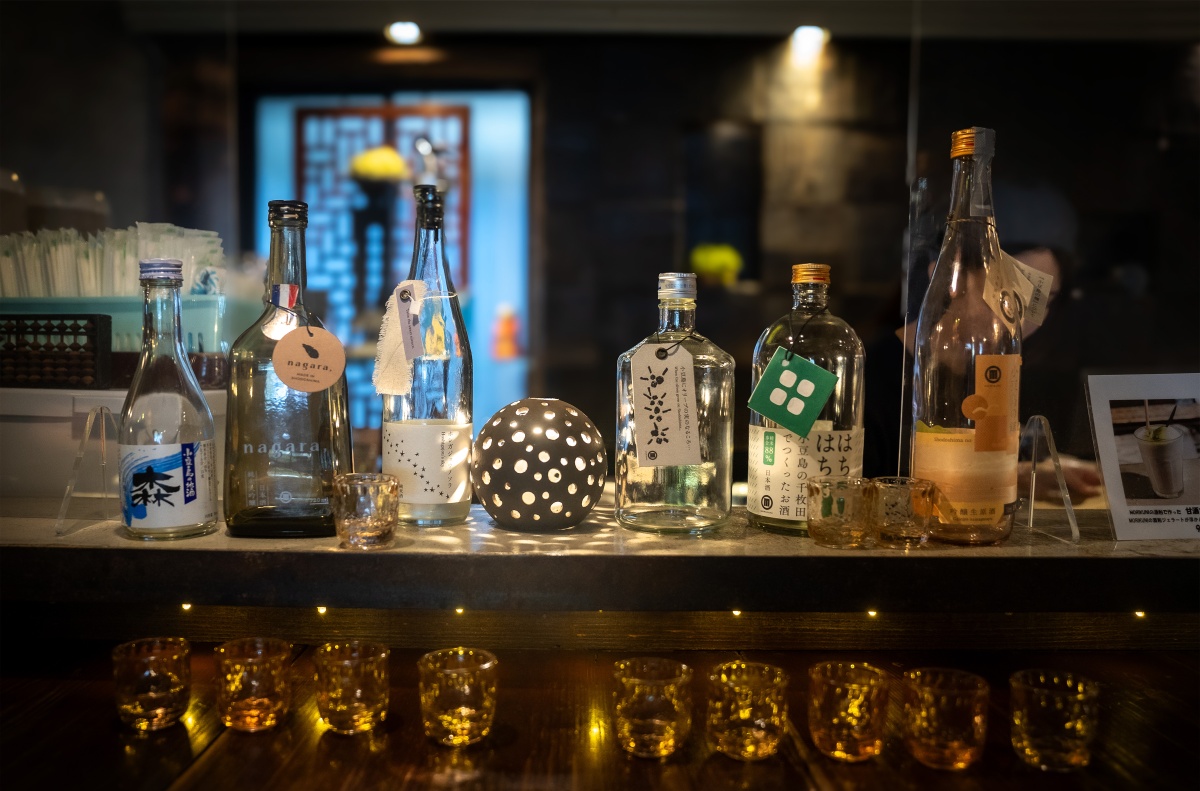
The tasting counter at Morikuni Sake Brewery's shop features some of their amazing brews. (Photo: Cindy Bissig)
Olive Country
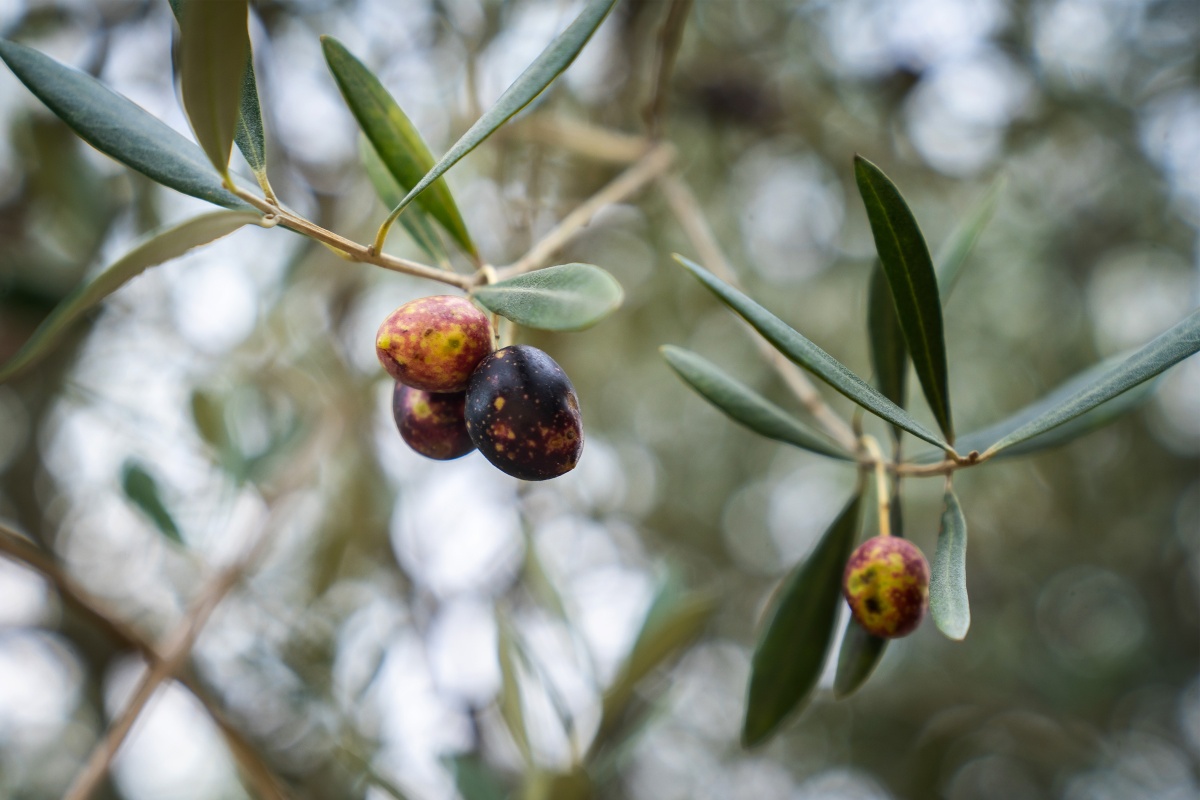
Olive trees, introduced in the early twentieth century, now form a defining element of Shodoshima’s agricultural landscape. (Photo: Cindy Bissig)
Olive trees are everywhere on Shodoshima, their silvery leaves catching the light on hillsides, lining narrow roads, framing sea views. Introduced more than a century ago, olives have become inseparable from the island’s identity. They were first planted here in the early 1900s as part of a government-led experiment to identify suitable domestic growing regions. Thanks to its mild climate, low rainfall, and long hours of sunlight, Shodoshima proved uniquely suitable.
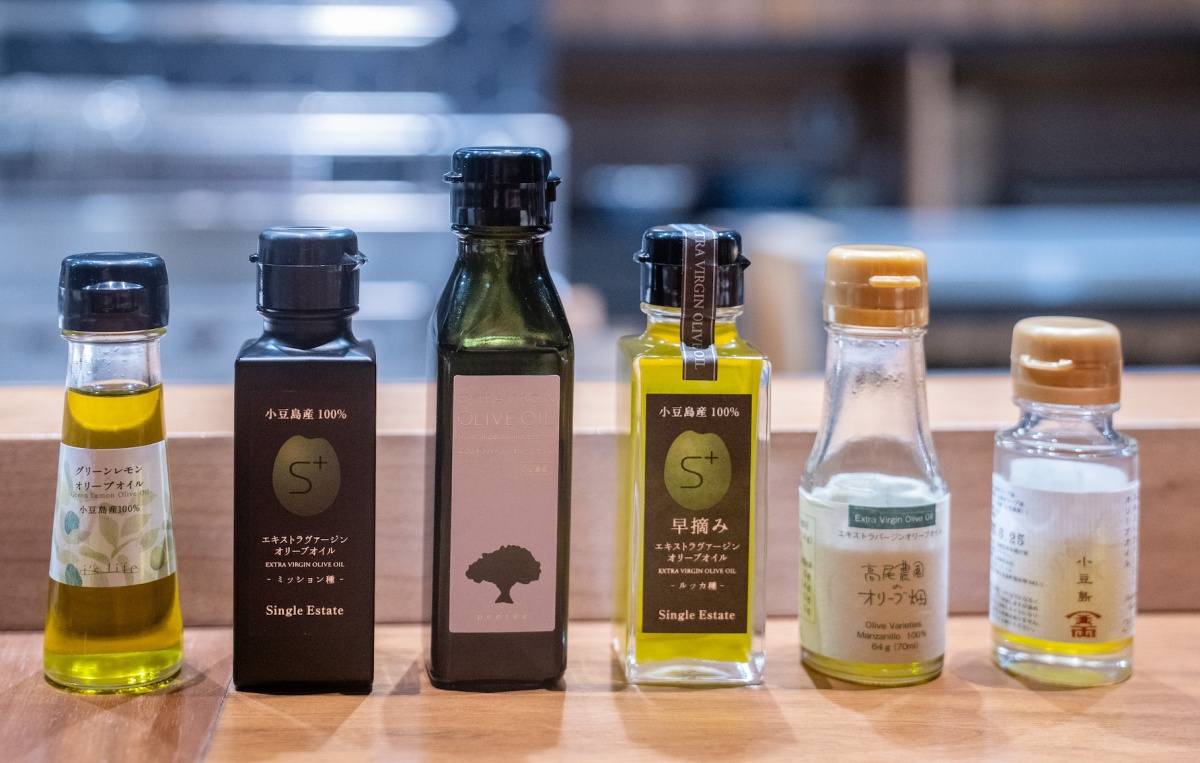
A selection of locally produced olive oils as part of a dining experience. Each expresses subtle differences in cultivar, terroir, and processing methods. (Photo: Cindy Bissig)
While the larger groves are clustered around places like Shodoshima Olive Park, smaller producers are scattered across the island, reflecting a mature agricultural culture rather than a passing novelty. Among them, Setouchi Bio Farm has earned recognition for its careful cultivation and meticulous processing, producing oil that express both the island’s climate and a restrained, quality-focused approach.
Their “Lucca” brand is one of my personal favorites–and a bottle inevitably makes the journey back to Kyoto with me after every visit.
The Slow Geography of Art
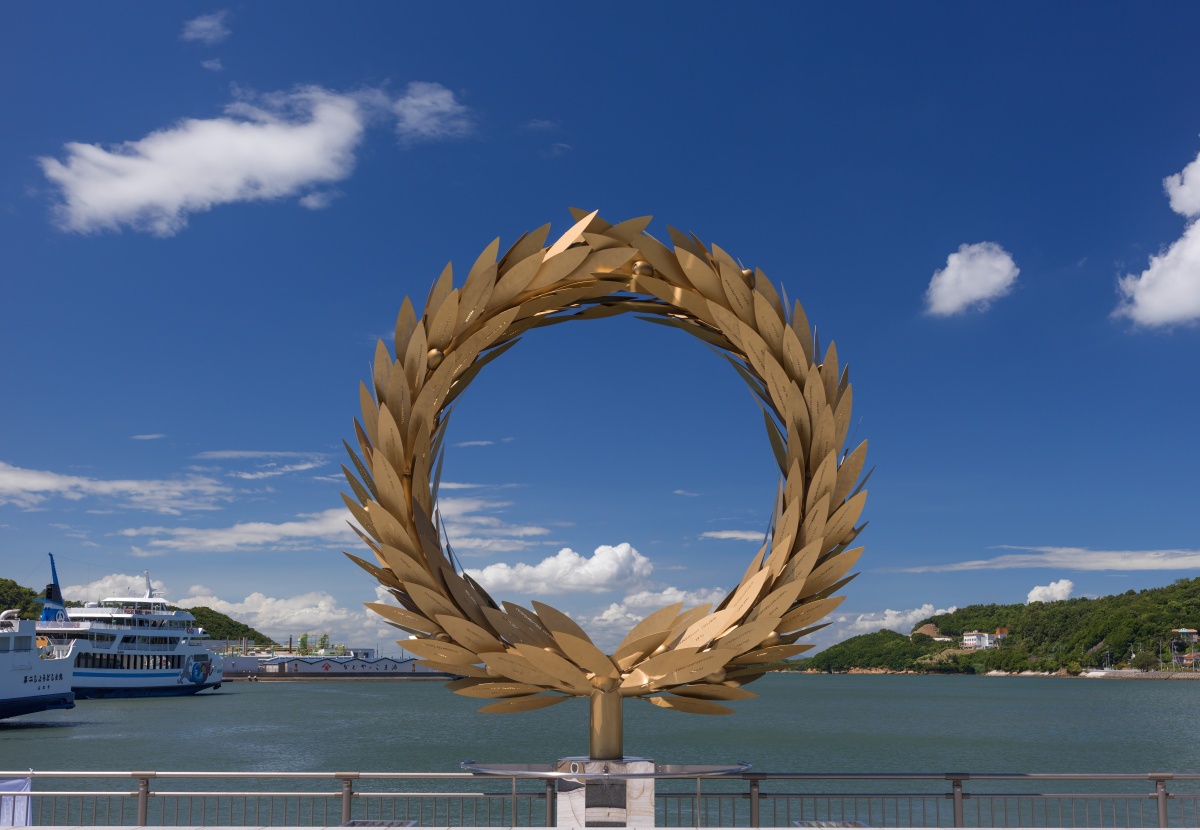
Choi Jeong Hwa “Gift of The Sun”; Photo: Yasushi Ichikawa
Shodoshima is also one of the locations for the Setouchi Triennale, and traces of the festival remain woven into the island’s fabric. Established in 2010 to revitalize aging communities across the Seto Inland Sea, the project uses contemporary art to highlight regional culture, everyday life, and the relationship between people and place–encouraging visitors to travel slowly between islands rather than rush through them.
Held once every three years across multiple seasonal sessions, the festival allows visitors to experience how changes in light, weather, and landscape subtly reshape the works over time. Participating islands include Naoshima, Teshima, Inujima, Megijima, Ogijima, and Oshima, as well as parts of the port towns of Takamatsu and Uno, forming a loose but connected cultural geography.
On Shodoshima, a number of artworks remain accessible year-round, installed permanently or semi-permanently in former schools, along hillside paths, inside abandoned houses, and beside quiet stretches of the coast.
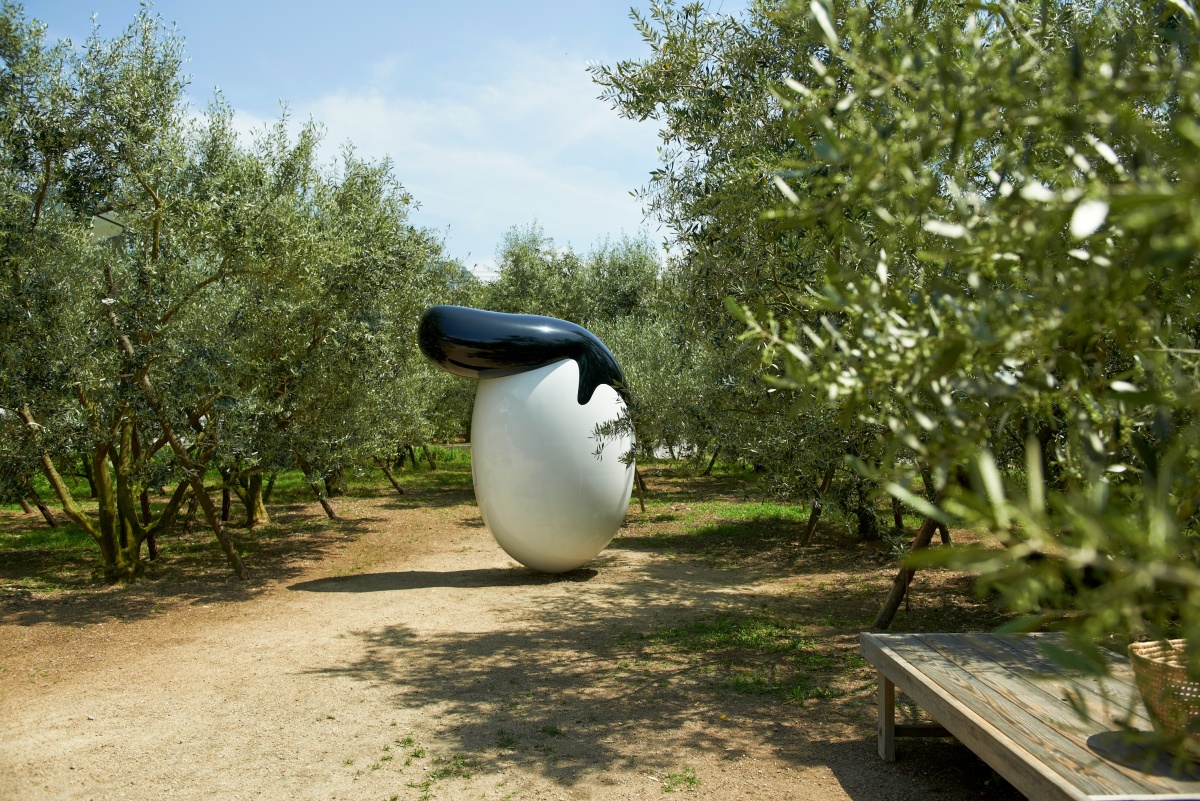
Hisakazu Shimizu “Regent in Olives”; Photo: Kimito Takahashi
Notable examples include Gift of the Sun by Choi Jeong Hwa–a golden olive wreath welcoming visitors to Tonosho Port– and Regent in Olives by Hisakazu Shimizu, an olive-shaped sculpture sporting a 1950s-style pompadour that doubles as an unmanned fruit and vegetable kiosk. More recently, Kenji Yanobe’s A Voyage of SHIP’S CAT around the Seto Inland Sea has joined more than thirty works scattered across the island.
Like the artworks that have made a home on the island, Shodoshima’s appeal lies not in spectacle but in continuity. For travelers willing to slow down, the island offers a rare view of regional Japan on its own terms–where fermentation traditions, working landscapes, and daily life remain shaped by geography. Here, fermentation is not an abstract concept but the result of steady, daily labor. Art is dispersed rather than centralized. Agriculture has adapted quietly over generations, creating a rhythm that feels both deliberate and enduring.
Shodoshima is an island I return to by choice rather than chance. Each visit deepens my understanding of how its many layers fit together, while revealing new, delicious discoveries - a rabbit hole I’m more than happy to continue exploring.
Getting There--and Around
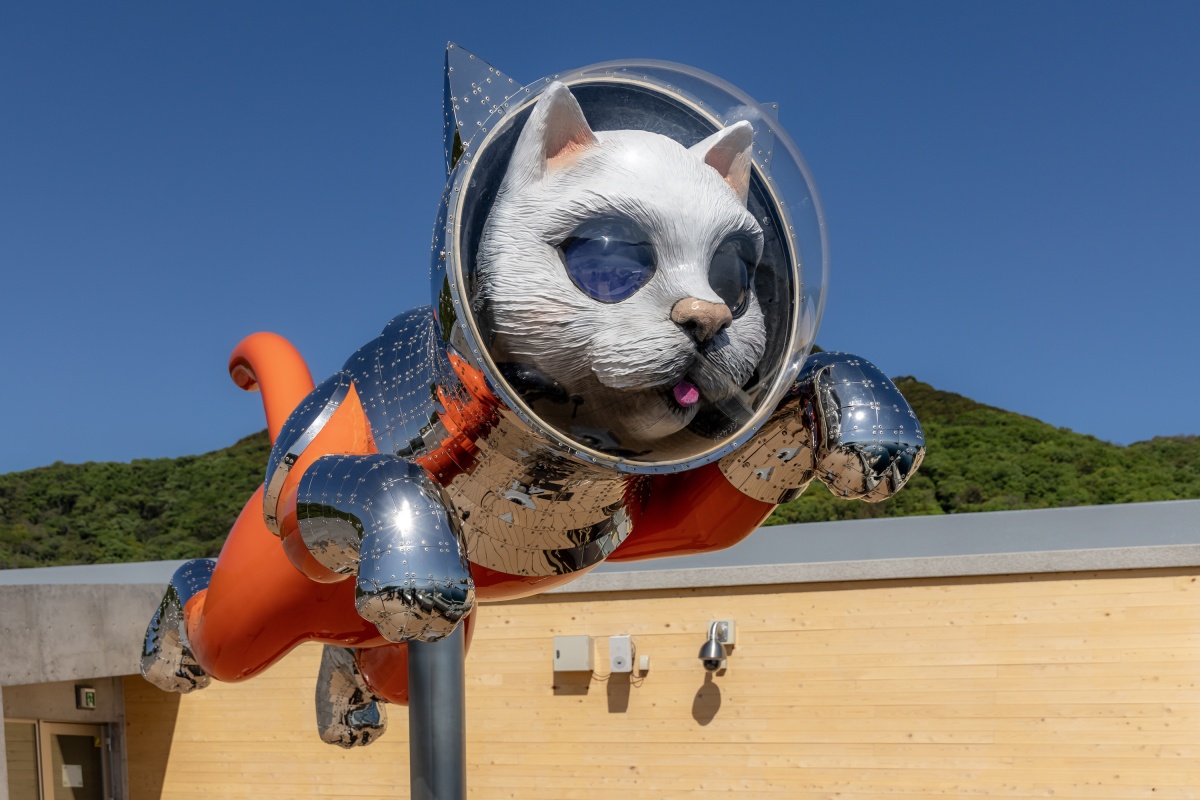
Kenji Yanobe “Journey of SHIP'S CAT 2025:A Voyage of SHIP‘S CAT around the Seto Inland Sea”; Photo: Shintaro Miyawaki
Shodoshima has several ports, each serving different parts of the island. As mentioned above, however, I prefer the route from Himeji, taking the ferry directly to Fukuda Port on the island’s eastern side.
Once on land, taxis are the most practical way to move around, particularly if you want to visit the old soy storehouses, olive groves, or art installations spread across the island. Most drivers offer informal taxi tours (best reserved in advance); let the local driver know where you want to go, and they will happily share their knowledge along the way.
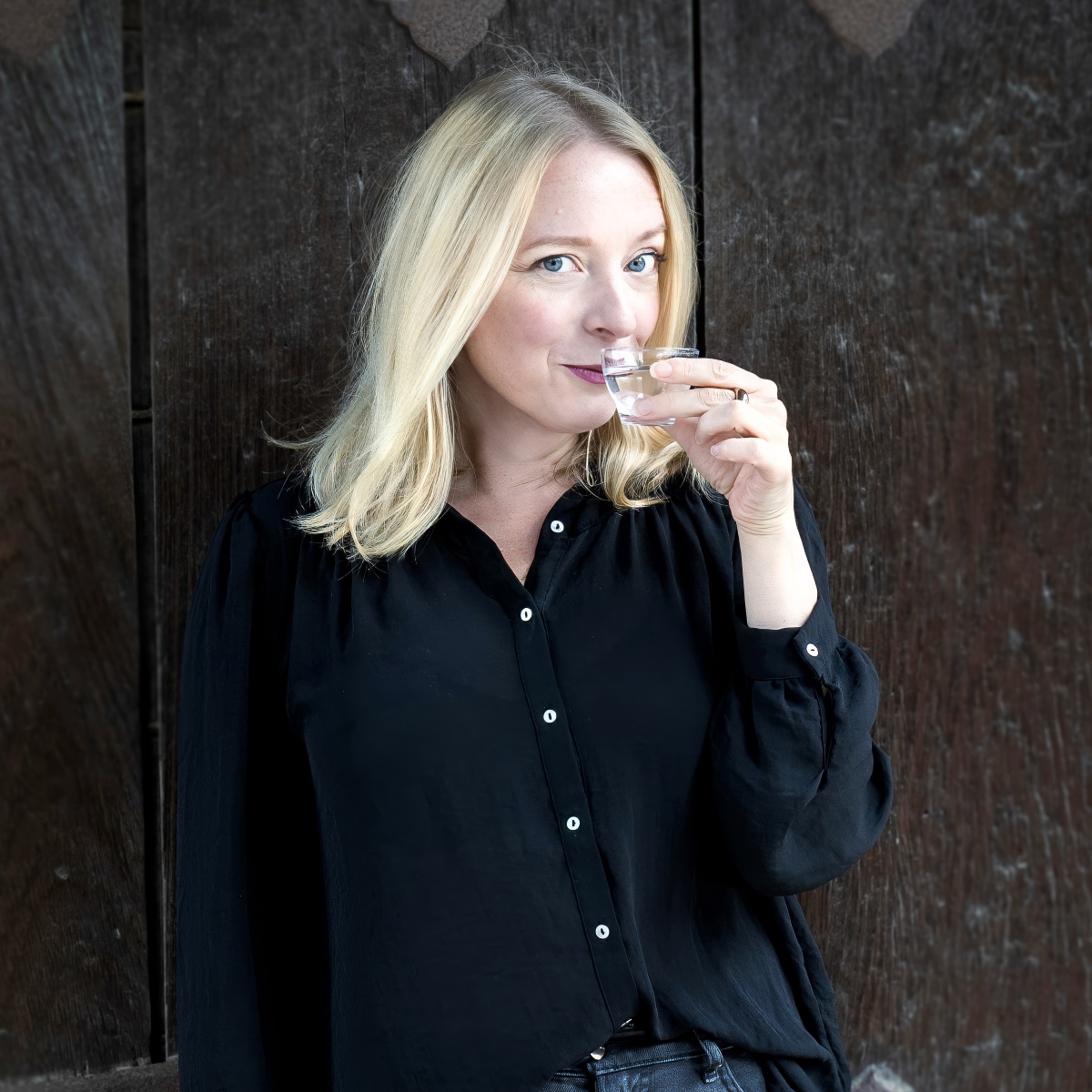
Cindy Bissig is a Swiss-born travel and food writer, photographer, and professional sake sommelier based in Japan. Organizer of the Tokyo Sake Challenge, a doburoku ambassador, and an international sake judge, her work explores the intersection of cuisine, culture, and craftsmanship. She travels widely to document regional food traditions, fermentation, and the chefs and artisans behind them, sharing stories that connect local excellence with a global audience.
www.sakenomad.com