

Get Thunderstruck at a Sumo Training Session
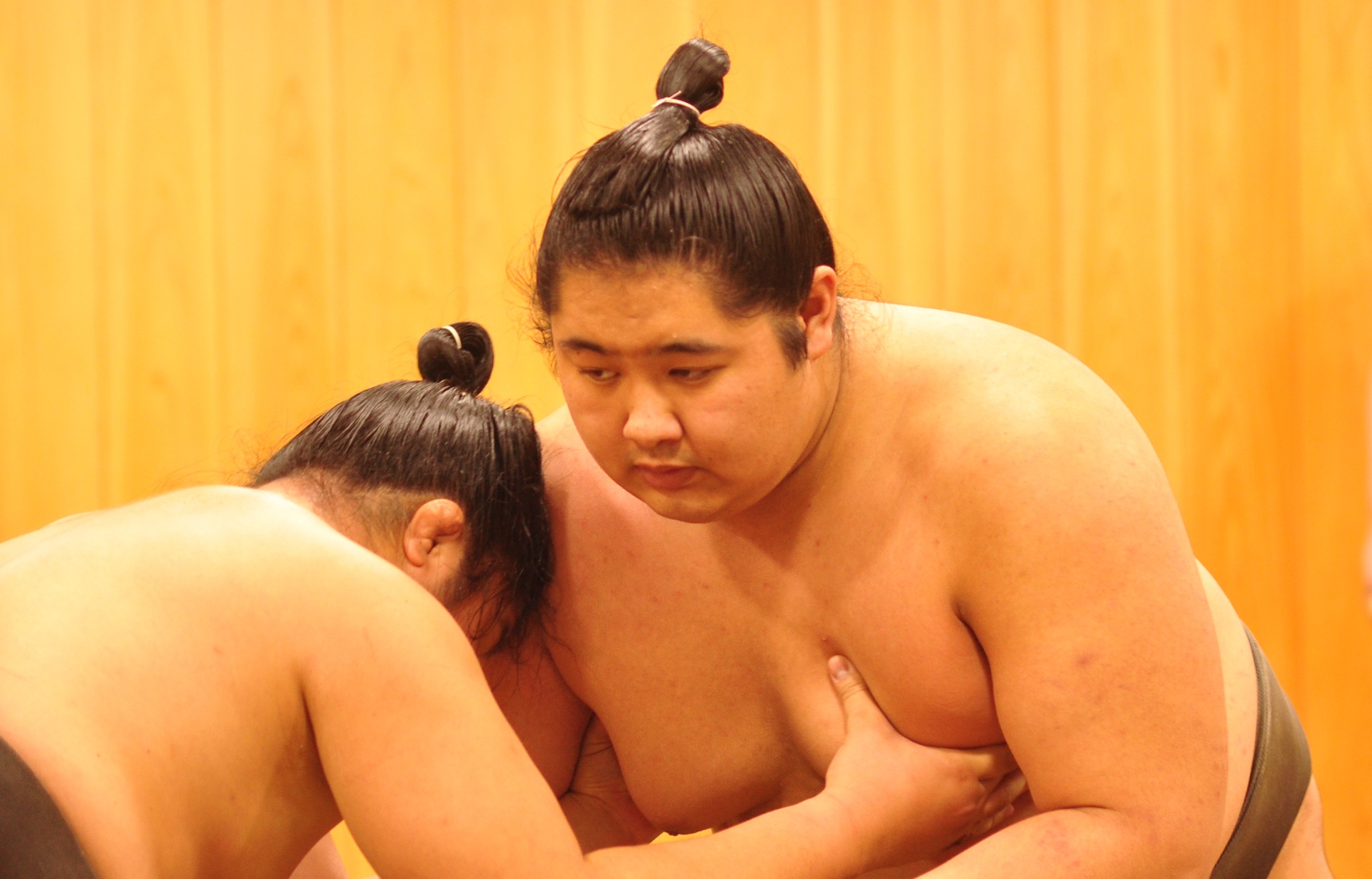
Sumo wrestlers are locked in a shoving match during a training session at Ajigawa Stable in Tokyo. Travelers can get a closeup look at the life of rikishi during a visit to one of the many stables in the capital. (photo: Tim Hornyak)
When sumo wrestlers from Japan clashed at London’s Royal Albert Hall in 2025, the ground shook, the crowds roared and history was made. It was only the second time for a major event to be held abroad in 1,500 years of Japan’s national sport. Larger than life, the rikishi paraded around London in their kimono and posed for fan selfies. Reporters documented the chankonabe stew, topknot dressing and construction of the sacred dohyo ring. In Japan, it’s usually difficult to get close up to wrestlers, but there's one exception: morning training sessions at a sumo stable.
By Tim Hornyak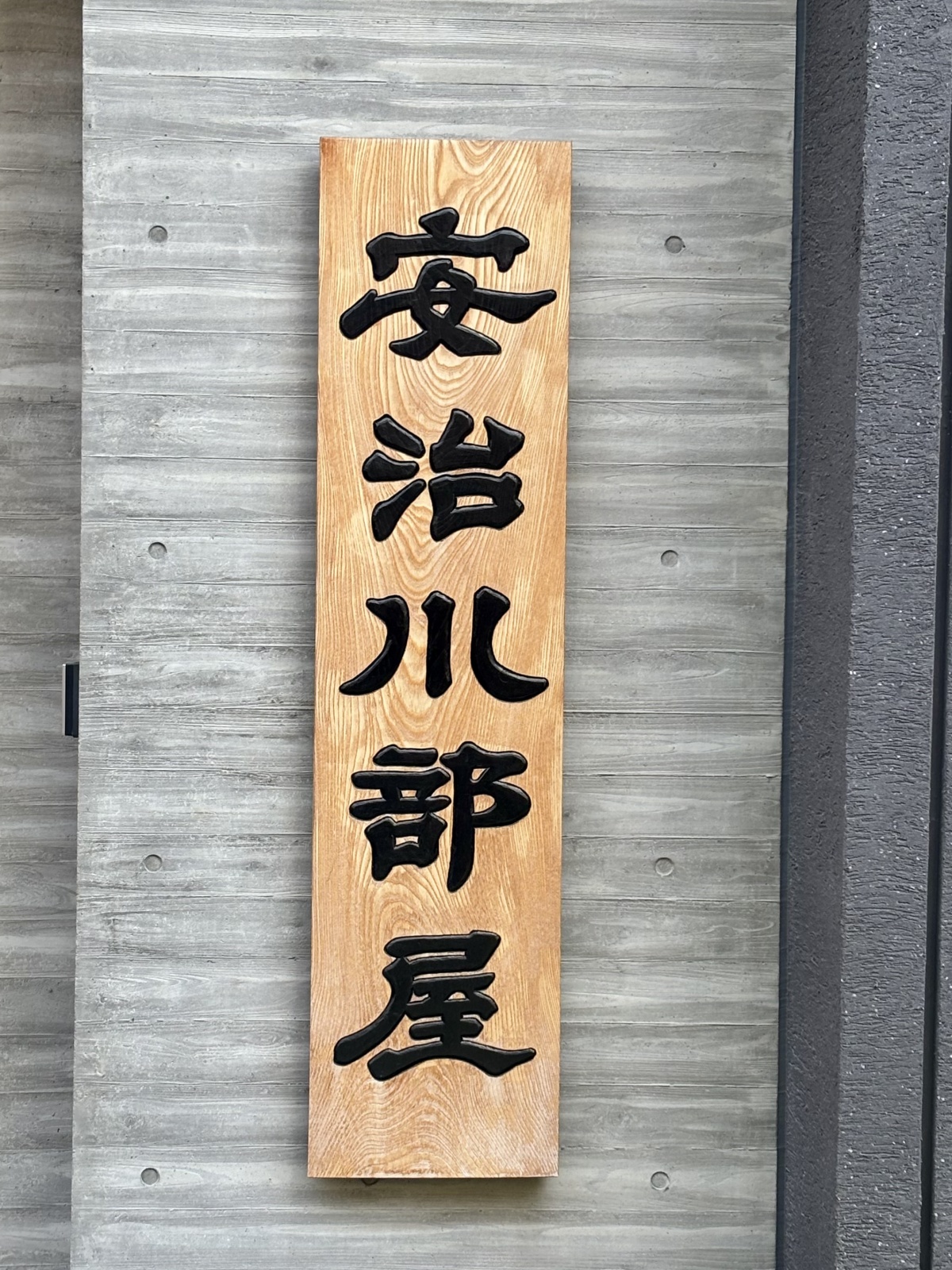
Located in Tokyo’s Koto-ku, Ajigawa Stable was founded in December 2022 by former sekiwake Aminishiki. (photo: Tim Hornyak)
Sumo is all about tradition, training and hierarchy. Most professional grapplers belong to a stable, or heya. These are run by former wrestlers and members of the Japan Sumo Association known as oyakata. They are usually married and live in the stable with their wives (okamisan), who are expected to help run the stable smoothly and assist young wrestlers in adjusting to the traditional discipline
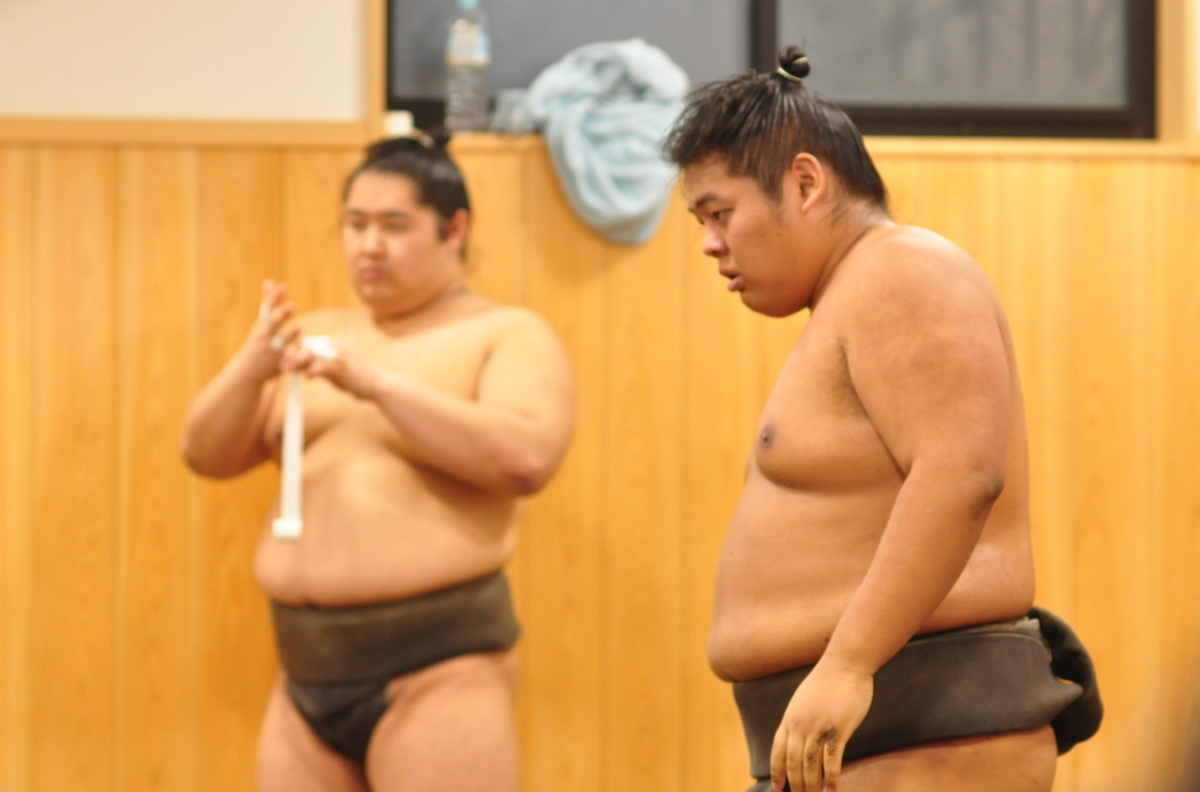
Wrestlers prepare for their morning workout, or keiko, at Ajigawa Stable in Tokyo. (photo: Tim Hornyak)
The stable is where the rikishi live and work out. They undergo intensive training by both conditioning their bodies and improving their technique for winning. The rules are simple: a win comes either by forcing the opponent out of the ring or getting him to touch the ground with any body part other than the soles of his feet. A key part of this training is keiko, or morning practice. The lowest-ranked wrestlers rise earliest and prepare the ring. The tournament ring is perched atop the dohyo, a raised, 5-meter-wide platform built of 11 tons of soil, sand and cement. In a sumo stable, the practice ring is a simple affair, a ring in the clay floor marked by straw bales.
Unlike at sumo tournaments, a visit to a sumo stable puts you ringside. Visitors sit or stand in a designated space and watch the action take place only a few feet away. Depending on the stable, the keiko may begin with a few remarks by one of the stable representatives. Lower-ranked wrestlers will then start the practice under the supervision of the senior rikishi.
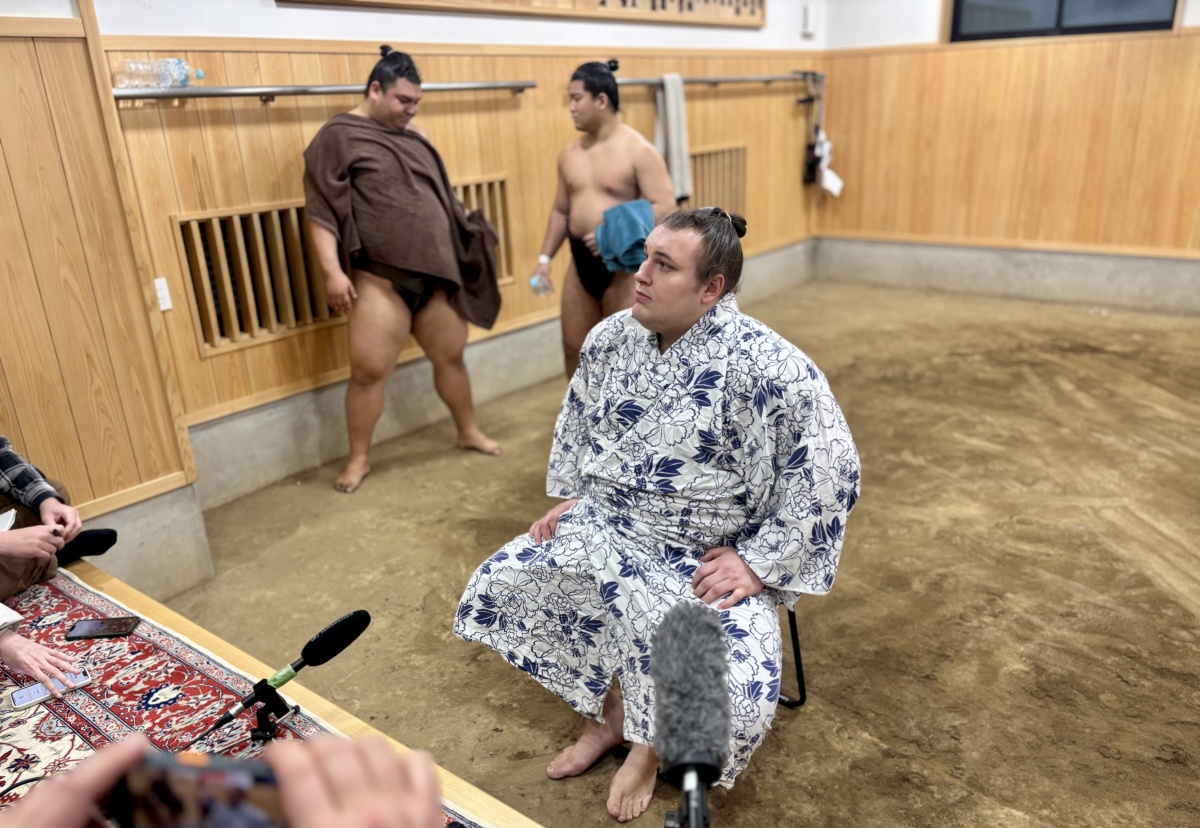
Ukrainian-born sumo star Aonishiki, favored for promotion to yokozuna in 2026, fields questions from reporters at Ajigawa Stable in Tokyo. (photo: Tim Hornyak)
I got a closeup view of the keiko on a recent visit to Ajigawa Stable, founded in December 2022 by former sekiwake Aminishiki. Located in Tokyo’s Koto-ku, Ajigawa is known as the home of one of the brightest stars in sumo today, Ukranian-born Aonishiki. The 21-year-old, 182-cm-tall wrester has had a meteoric rise through the ranks, winning a tournament in late 2025 and securing a promotion to ozeki, the second-highest rank. He is widely expected to become yokozuna, or grand champion, in spring 2026. If that happens, he will become the fastest wrestler to reach the top rank since the six-tournament sumo calendar was established in 1958.
“I’m grateful for the attention I’m receiving,” said Aonishiki, when asked about the possibility of promotion. “I don’t want to think about the pressure, but just continue with my style of sumo.”
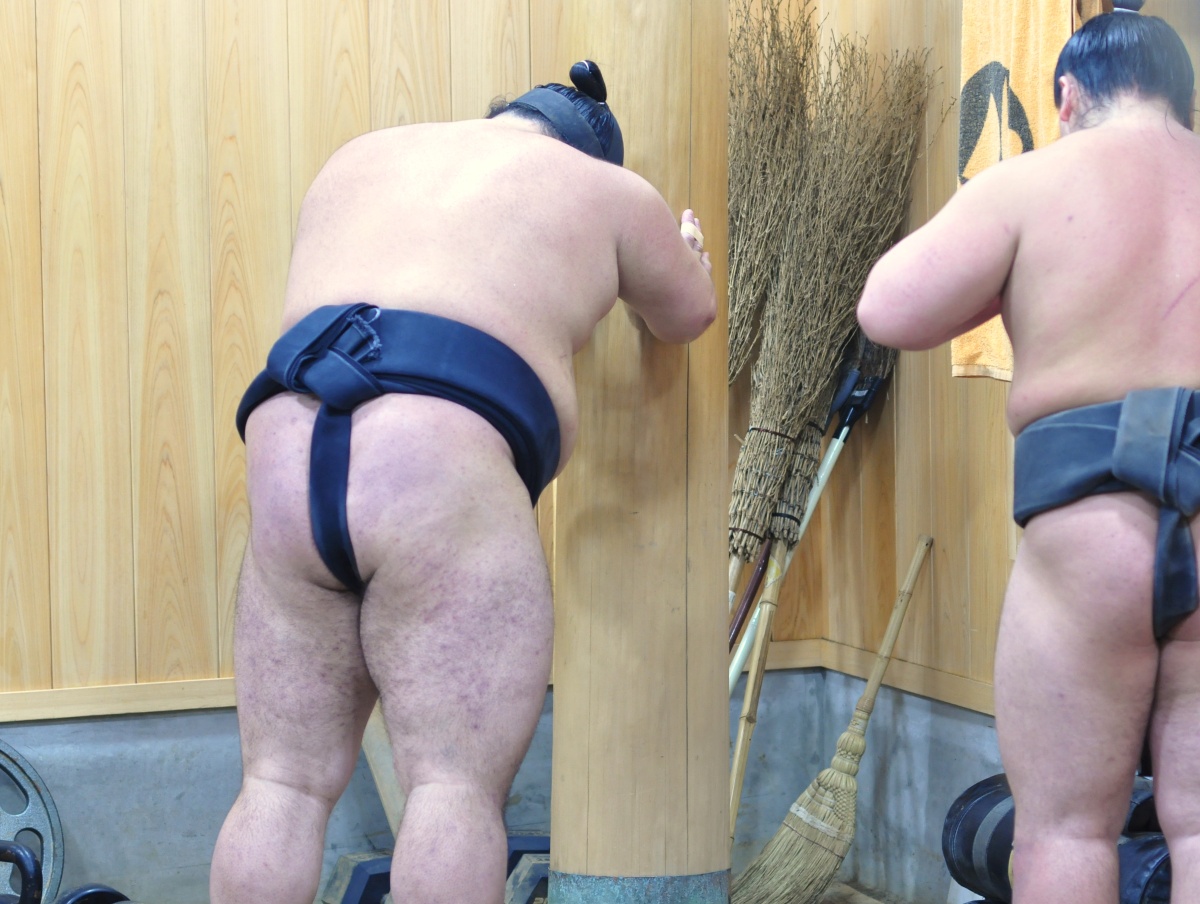
Wrestlers work out with a teppo, or wooden post, to enhance their slapping power. (photo: Tim Hornyak)
During our visit to Ajigawa Stable, we watched the wrestlers going through their paces. They stretched their legs in an exercise called matawari, raised one leg at a time (shiko) and slapped the teppo, a pillar of wood sunk in the ground, with their open hands. They squatted down and shuffled forward across the dohyo with their arms outstretched. And they practiced the tachiai, the initial charge from the faceoff position where each wrestler tries to get the best grip on his opponent.
Watching keiko is much more of a sensory experience than a tournament on TV. You hear the slap of the juggernauts crashing into each other, feel the vibrations of the pounding, and see the perspiration streaming down their bodies. Wresters learn the various holds, lifts and throws from their seniors and then practice with their peers. Toward the end of the session, there’s the butsukari-geiko (collision training) where younger rikishi charge a senior and push him all the way across the ring, repeating the action until they are exhausted.
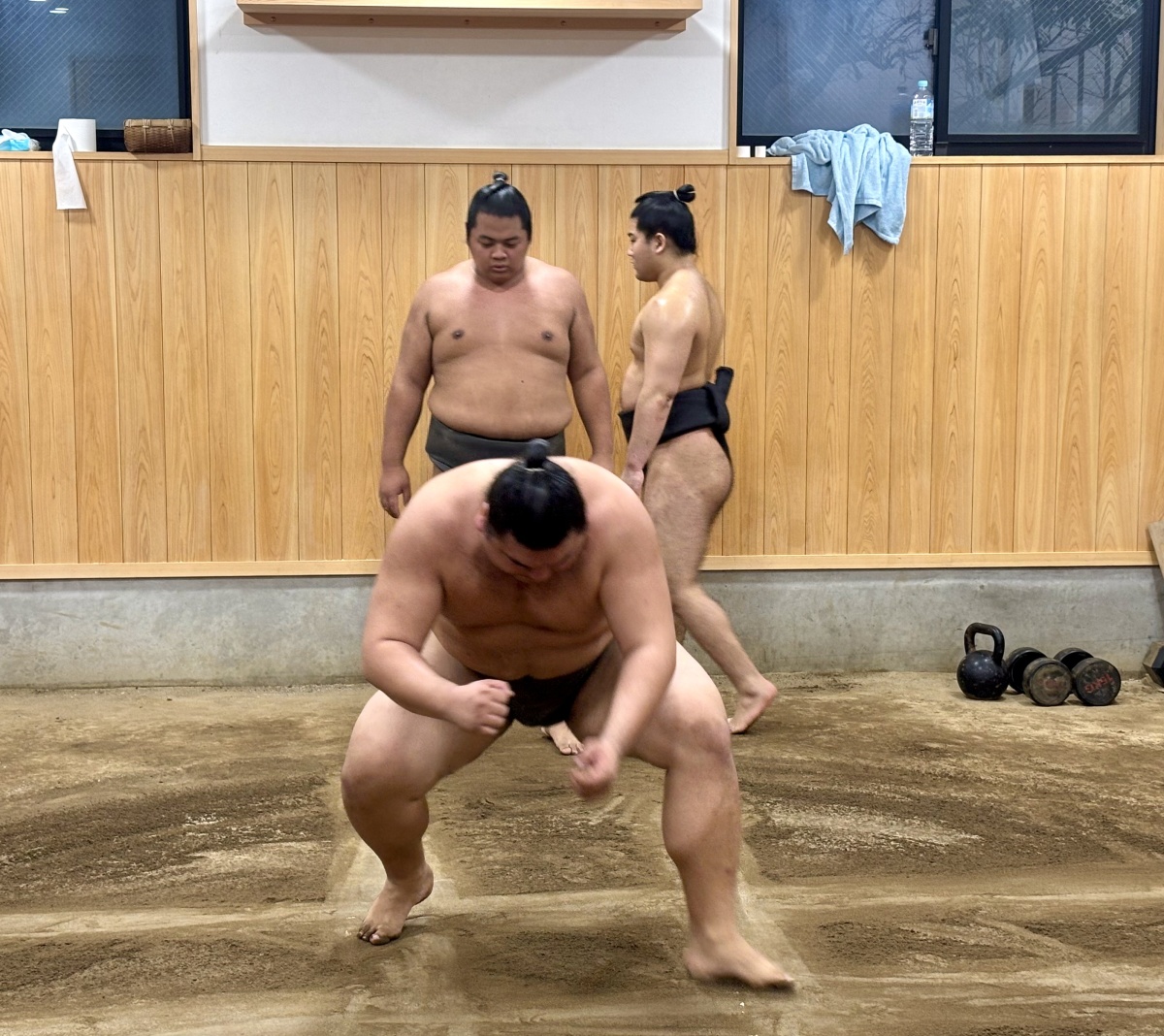
Wrestlers shuffle across the dirt floor to improve their balance and charging technique. (photo: Tim Hornyak)
As Aonishiki looked on, offering the occasional pointer, the wrestlers were soon spattered with sweat and clay from the ring. Soon they were filing out for their post-training bath, another important morning ritual.
It’s important to observe a few points of etiquette when visiting a sumo stable. Remove hats and sunglasses at the entrance. Don't leave the visitors’ area or step into the ring or practice space. Keep quiet, refrain from eating or drinking, and get permission for flash photography or video recording.
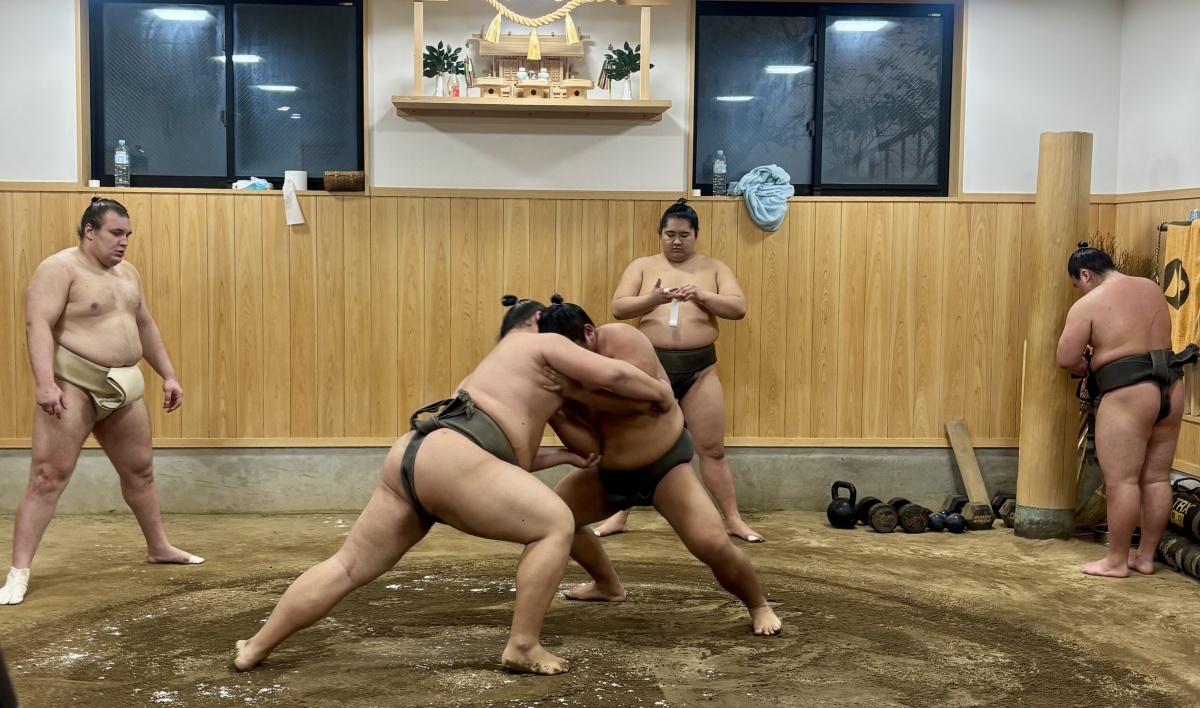
Aonishiki, left, offers pointers as he supervises the morning training session at Ajigawa Stable in Tokyo. (photo: Tim Hornyak)
If you’re interested in visiting a sumo stable, there are plenty of options, but be sure to check availability as visits are not held during sumo tournaments. Sunrise Tours JTB offers tours to Nakamura and Tatsunami stables for 14,500 yen to 18,000 yen, including an audio guide or interpreter and commemorative photo with active rikishi. For details, go to Sunrise Tours.
Chuo Ward’s tourism association, meanwhile, organizes tours to Arashio Stable. They have live explanations in English, and participation is 13,000 yen per person. See their webpage for details. You can also visit Arashio Stable without a tour—it’s free and no reservations are required. Check the calendar to confirm when morning practice is being held. If you’re full of fighting spirit after your tour, head over to Ryogoku Station, where you can find a number of restaurants specializing in chankonabe—and eat hearty like a real rikishi.

Tim Hornyak is a Canadian writer based in Tokyo, Japan, who has worked in journalism for more than 20 years. He has written extensively about travel, food, technology, science, culture and business in Japan for media including The New York Times, Nature, Science, Scientific American, CNBC, CNET, The Japan Times and IDG News. He is the author of Loving the Machine: The Art and Science of Japanese Robots.
www.timhornyak.com